Pomegra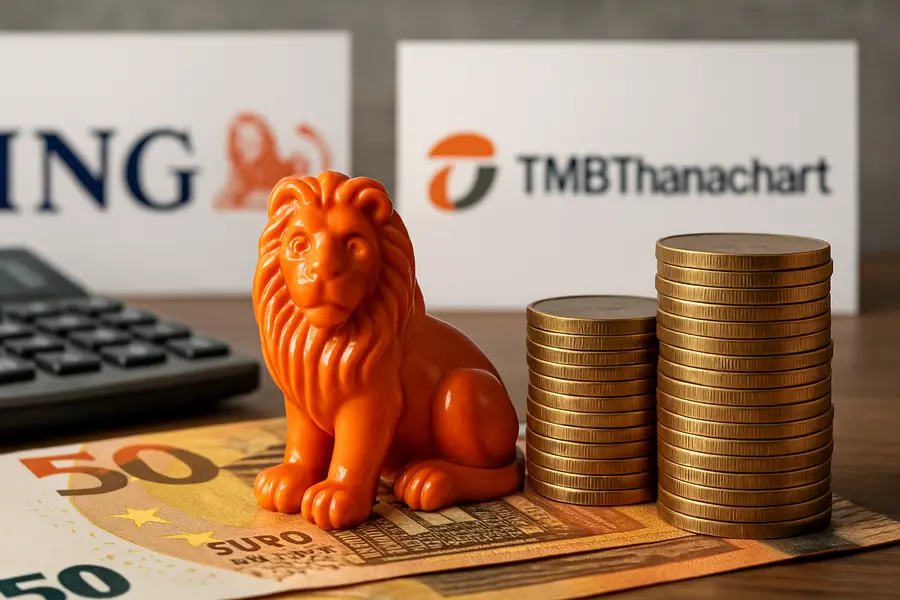
---
- ING's stake in TMBThanachart Bank falls 3.6 percentage points to 19.5% following the Thai lender's share repurchase program.
- The transaction yields €243 million in proceeds for ING, framed as disciplined capital portfolio management rather than a strategic exit.
- TMBThanachart posted THB 20.6 billion in net profit for 2025, down 2% year-on-year amid trade pressures and domestic economic headwinds.
https://upload.wikimedia.org/wikipedia/commons/thumb/4/49/ING_Group_N.V._Logo.svg/1200px-ING_Group_N.V._Logo.svg.png
ING Group reduces its holding in Thailand's TMBThanachart Bank to 19.5% through a share buyback, generating €243 million as the Dutch lender optimises its Asian investment portfolio.
Lead
ING Group reduced its stake in TMBThanachart Bank — Thailand's fifth-largest commercial bank by assets — from 23.1% to 19.5% on June 12, 2026, raising approximately €243 million through the bank's structured share repurchase program. The Dutch financial group described the move as part of its active capital management strategy while affirming its continued commitment to the long-standing partnership with the Bangkok-based lender.What Happened
The stake reduction was executed through TMBThanachart's board-authorised buyback of up to 4,091 million shares at THB 2.26 per share — a program with a total authorised value of THB 9,245 million. Rather than selling on the open market or to a third-party acquirer, ING's proportional shareholding was reduced as TMBThanachart repurchased its own equity. The transaction had no material impact on ING's profit and loss account, shareholders' equity, or capital ratios, the company stated.
Strategic Context
For ING, the divestment reflects a broader pattern of disciplined balance-sheet management across its banking M&A portfolio in emerging markets. By monetising a portion of a legacy position through a buyback mechanism — rather than a secondary placement — the group avoided open-market price pressure on TTB shares while crystallising gains from an investment that has appreciated since the bank's merger-driven restructuring.
The transaction does not signal a full exit. A 19.5% stake remains above the threshold typically associated with passive financial holdings and preserves ING's influence over governance and strategic direction at a time when Thailand bank sector consolidation is reshaping competitive dynamics across Southeast Asia. Thailand's banking landscape has faced compressing net interest margins and tighter regulatory capital requirements, prompting lenders to pursue buybacks and efficiency programmes to sustain return-on-equity metrics.
TMBThanachart's Financial Position
TMBThanachart's 2025 results reflected the difficulties confronting Thai commercial lenders. Net profit reached THB 20,639 million for the full year, a 2% decline from 2024, on revenue of THB 49.19 billion — itself down 0.72% year-on-year. Management attributed the softness to a convergence of external shocks: global trade tensions curtailing export-linked credit demand, a domestic economic slowdown, severe flooding disruptions, and the lingering impact of seismic events.
In response, TTB's board prioritised four strategic pillars for 2025 and into 2026: efficient asset-liability management, selective quality loan growth, prudent operational and risk cost control, and active capital management to enhance shareholder value. The share repurchase programme itself is an expression of that fourth pillar — deploying surplus capital to support the share price and return value to investors including ING.
Market and Sector Implications
The transaction illustrates how banking M&A dynamics in Southeast Asia increasingly unfold through structured repurchase mechanisms rather than traditional block trades or strategic sales to rival financial groups. For foreign institutional holders of Thai bank equity, buybacks offer an orderly exit path that sidesteps the liquidity constraints common in mid-cap SET-listed stocks.
Thailand's banking sector posted a combined net profit of approximately THB 265 billion across 11 domestic lenders in 2025, according to regulatory filings, underscoring the sector's overall resilience even as individual banks navigated asset-quality headwinds.
Outlook
ING's retention of a 19.5% stake in TMBThanachart signals that the group views its Thailand bank investment as a long-term strategic asset rather than a position to be unwound. Further reductions, if they occur, are likely to follow the same buyback-driven mechanism, contingent on TMBThanachart's capital position and board authorisations. For TTB, the buyback programme consolidates ownership, reduces share count, and positions the bank to improve per-share metrics as it navigates an uncertain macro environment in 2026. Near-term earnings visibility depends on the trajectory of Thai interest rates, credit growth, and the resolution of global trade frictions affecting export-oriented borrowers.
Mentioned tickers: INGA.AS, TTB.BKDeals