Pomegra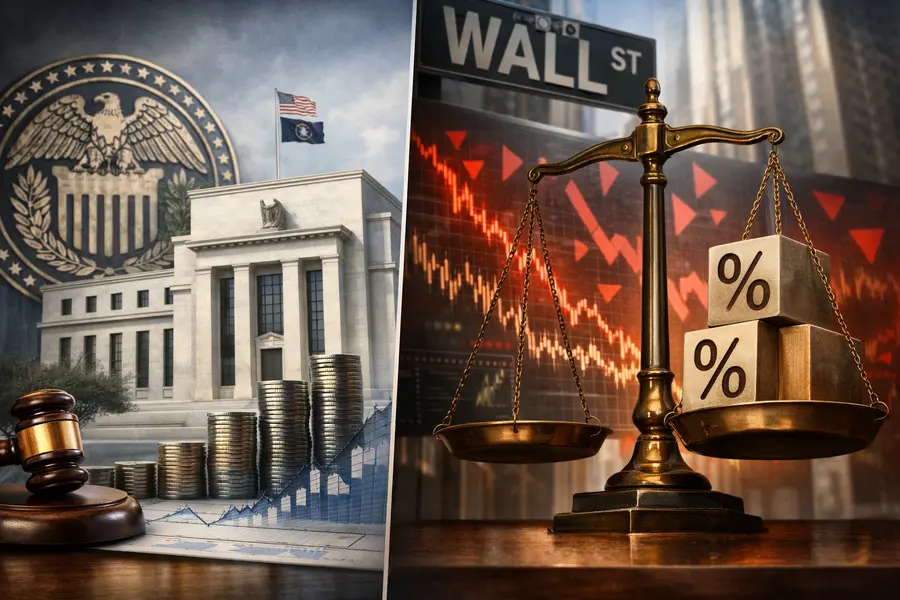
The Federal Reserve is set to hold rates at 3.50–3.75% on Wednesday, yet persistent core inflation and rising oil prices have driven futures hike odds to roughly 33% under Chair Kevin Warsh.
- The FOMC is expected to keep the federal funds rate at 3.50–3.75% on July 29, even as futures markets price roughly 33% probability of a quarter-point hike.
- Core PCE inflation reached 3.4% in May 2026 — the highest reading since October 2023 — sustaining pressure on the Fed to tighten further.
- Chair Kevin Warsh, confirmed in May 2026, has pledged a monetary policy "regime change" aimed at eliminating inflation that has run above the 2% target for five years.
Lead
The Federal Reserve convenes for its July 28–29 policy meeting against a backdrop of stubborn price pressures and a split committee. The central bank is widely expected to leave the federal funds rate unchanged at 3.50–3.75% — but federal funds futures contracts now price approximately 33% odds of a quarter-point hike, a sharp escalation from the 12% probability recorded at the start of the month. The meeting is the second chaired by Kevin Warsh, who took his seat at the head of the table following a narrow 54-to-45 Senate confirmation vote in May 2026.
What Happened
The probability of a July hike surged through mid-month as crude oil rebounded sharply on renewed tensions in the Middle East, raising the near-term inflation outlook for an economy already running well above the Fed's target. CME FedWatch data showed the probability of a July move peaking above 46% before settling back toward the 33% level.
At the same time, June nonfarm payrolls came in at a seasonally adjusted +57,000 — well below the revised +129,000 recorded in May — suggesting the labor market is cooling even as prices remain elevated. The unemployment rate ticked to 4.2%. The combination of slowing job creation and elevated prices places the committee in a classic stagflationary bind.
The federal reserve building on Constitution Avenue in Washington will set the scene Wednesday afternoon when Warsh delivers what markets expect to be a hold announcement accompanied by hawkish forward guidance.
Inflation Context
The Fed's preferred measure, core PCE inflation, registered 3.4% year-over-year in May 2026 — the highest reading since October 2023 and more than one and a half percentage points above the 2% objective. Headline inflation sits at 4.1%, the highest since April 2023. The Fed lifted its own 2026 inflation forecast to 3.6% headline and 3.3% core at the June meeting, acknowledging that the disinflationary trend it expected has stalled.
Oil price volatility is complicating the picture further. A fresh escalation in geopolitical risk pushed energy prices higher during the third week of July, feeding directly into goods and transportation costs across the supply chain.
Strategic Context
Kevin Warsh enters this meeting having already signaled a clear break from the policies of his predecessor. Since taking office following his confirmation, he has characterized the "flexible average inflation targeting" framework adopted by the Fed in 2020 as "a mistake," arguing it allowed price pressures to entrench. He has formed five internal task forces to examine Fed communications, balance sheet composition, data sourcing, the productivity-jobs nexus, and the economic impact of artificial intelligence.His rhetoric has sharpened market expectations in both directions. On one hand, a genuine commitment to price stability argues for higher rates. On the other, a weakening labor market and a first-term record still short on visible wins suggest Warsh will avoid a surprise hike that disrupts financial conditions before evidence hardens.
The June meeting's minutes showed that "a few" committee members saw a case for tightening as early as last month — a phrase that FOMC watchers read as at least two voters. That language helped push hike speculation into the mainstream of market pricing.
Market Reaction
Equity markets have absorbed the shifting rate odds with relative composure. The S&P 500 has oscillated within a tight band as investors balance slowing earnings growth against the prospect of rates peaking at or near current levels. Treasury yields have steepened modestly, with the two-year note — most sensitive to near-term Fed action — trading at its highest level in six weeks heading into Wednesday's decision.
The U.S. dollar strengthened against major peers as hike probabilities climbed, though the move remained orderly.
What Comes Next
Even if the Fed holds Wednesday, futures markets already price an 82% probability of a rate hike at the September 16–17 FOMC meeting, implying investors expect this pause to be brief. The path between now and September will run through two more monthly inflation reports, one additional jobs print, and the second estimate of Q2 GDP — which follows Q1's upward-revised 2.1% annualized growth rate.
The committee's communications strategy will matter as much as the rate decision itself. Any shift in the post-meeting statement's language around the word "appropriate" — the signal phrase governing future moves — will be parsed immediately.
Outlook
The Fed faces its most difficult communication challenge since the 2022 tightening cycle began: holding rates steady while keeping a credible threat of further increases on the table. Kevin Warsh's ability to anchor long-run inflation expectations without triggering a credit contraction will define his early tenure. With core PCE running at 3.4% and energy prices reaccelerating, the 33% hike probability in futures markets serves as a standing warning that this hold is conditional, not conclusive. September will be the next decisive moment.
Mentioned tickers: SPY, TLT, DXY, USO