Pomegra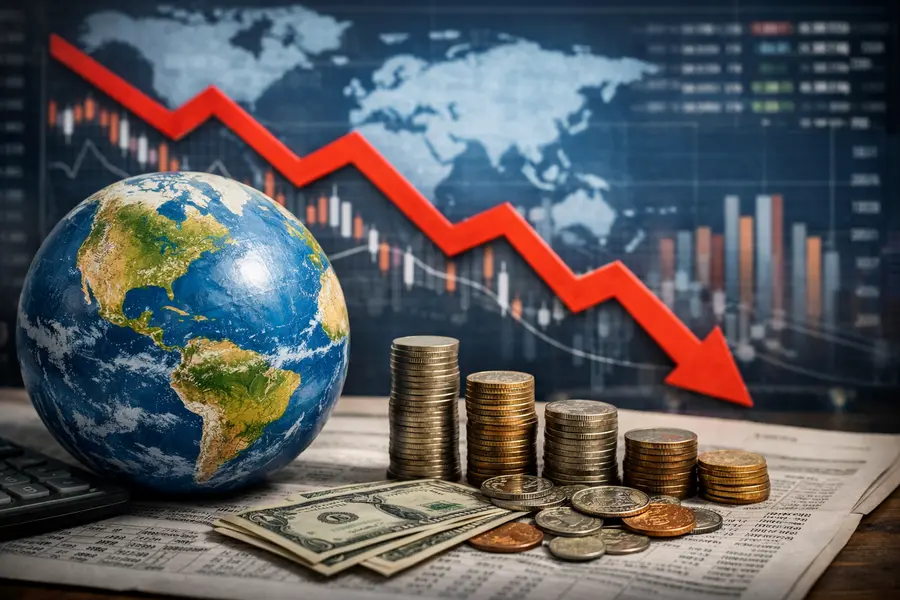
The IMF trimmed its 2026 global growth forecast to 3.0%, citing Middle East war-driven energy shocks and stalled disinflation as AI-sector strength provides a partial offset.
- IMF's July 2026 update lowers global growth to 3.0%, down 0.1 point from the April projection of 3.1%.
- Global headline inflation revised up to 4.7%, driven by energy costs running 25% above pre-conflict levels.
- Recovery to 3.4% is projected for 2027, contingent on conflict containment and continued AI-driven demand.
Lead
The International Monetary Fund cut its 2026 global growth forecast to 3.0 percent on July 8, pulling the estimate down a tenth of a percentage point from the 3.1 percent projection issued in April, as the prolonged Middle East war continues to distort energy markets and stall a two-year global disinflation trend. The fund simultaneously raised its 2026 global headline inflation projection to 4.7 percent, reflecting oil prices that have averaged roughly $89 per barrel this year — approximately 25 percent above their pre-conflict baseline.
What Happened
The IMF's July 2026 World Economic Outlook Update, titled Global Economy in Crosscurrents of War and Technology, marks the second consecutive downgrade to the IMF global growth forecast 2026 and frames the world economy as navigating opposing forces: a war-induced supply shock on one side and accelerating artificial intelligence-driven demand on the other.
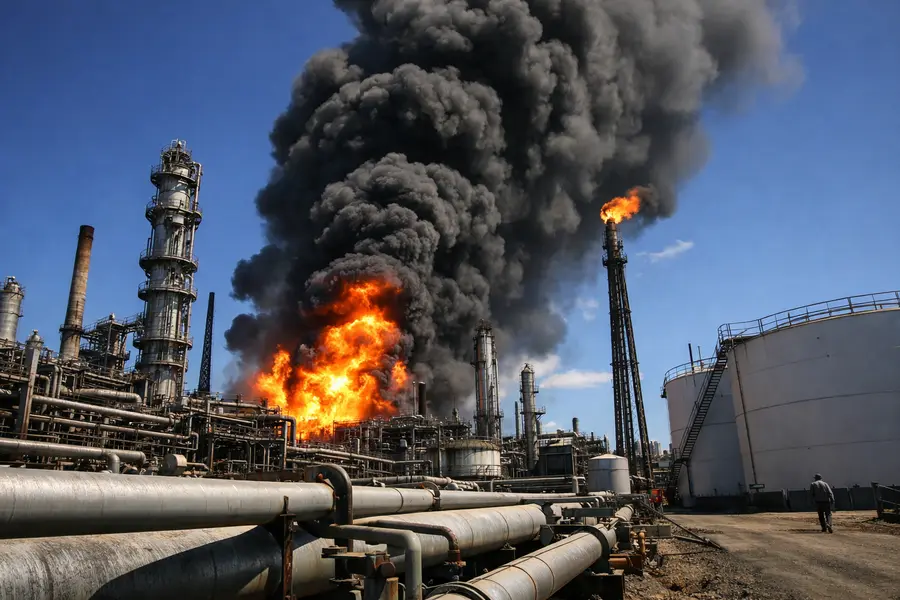
The global economic outlook has deteriorated since the Strait of Hormuz was effectively closed to commercial transit in late February, following the outbreak of direct hostilities between Iran, the United States, and Israel. Global oil supply dropped by more than 10 million barrels per day in March — the largest single disruption in the history of petroleum markets — forcing Brent crude above $120 per barrel at its peak. Energy importers, particularly in emerging markets and South Asia, absorbed disproportionate cost shocks as rerouting through the Cape of Good Hope added weeks to shipping timelines and drove freight rates sharply higher.
Geopolitical Dimension
The Middle East war impact extends well beyond the oil market. Roughly 25 percent of the world's seaborne crude and 20 percent of global LNG flows through the Strait of Hormuz. With those volumes stranded or redirected at considerable cost, Gulf Cooperation Council economies are confronting structural dislocations to their export models. The Middle East and North Africa region faces a cumulative growth revision of nearly three percentage points for 2026 — among the steepest regional downgrades in the IMF's current dataset.
Global shipping capacity remains under stress. Major carriers suspended Strait transits and related Red Sea routes simultaneously, concentrating disruption across the two most critical maritime chokepoints in the eastern hemisphere. Food security in import-dependent nations has deteriorated, with consumer price spikes for staple commodities reported in multiple markets.
Technology Offset
The primary counterweight to the war shock is an accelerated AI and technology demand cycle. Countries and companies integrated into global semiconductor and software value chains have recorded stronger-than-expected revenue and investment activity, partially offsetting the drag from elevated energy costs. The IMF explicitly credits this dynamic for preventing a steeper downgrade — though it cautions that a reassessment of AI-driven productivity expectations remains a significant tail risk in its own right.
Inflation and Monetary Policy Outlook
The inflation revision — to 4.7 percent globally — complicates monetary policy across major economies. The disinflation trend that had been running since early 2024 has stalled. Central banks navigating residual post-pandemic tightening cycles now face renewed upward pressure on energy and food prices, limiting their capacity to ease policy even as growth softens. The IMF marked up its 2026 inflation estimate by 0.3 percentage points compared with April, attributing the revision chiefly to surging energy and food costs rather than demand-driven wage pressures.
Divergence Across Economies
Advanced economies are experiencing comparatively modest effects from the war shock. Their relative insulation reflects greater energy diversification, deeper financial buffers, and direct exposure to the AI demand cycle. Emerging market and developing economies face a more acute squeeze: higher import bills for energy and food, tighter external financing conditions, and currencies under pressure against the dollar.Downside Scenarios
The IMF's own scenario analysis quantifies how much worse outcomes could become. An adverse scenario — featuring prolonged conflict and a broader supply dislocation — puts 2026 global growth at 2.5 percent. A severe scenario, in which energy supply disruptions extend into 2027, produces growth of just 2.0 percent with headline inflation exceeding 6 percent. These scenarios remain tail risks, not baseline projections, but they define the range of outcomes policymakers are managing against.
Outlook
The IMF's baseline projects global growth recovering to 3.4 percent in 2027, a figure that remains below the 3.5 percent average recorded across 2024 and 2025. That recovery depends on two conditions holding simultaneously: containment of the Middle East conflict within its current geographic scope, and continued delivery on the productivity promises underpinning the global technology cycle. Any broadening of hostilities, renewed trade fragmentation, or a correction in AI-linked valuations would bring the downside scenarios closer to center.