Pomegra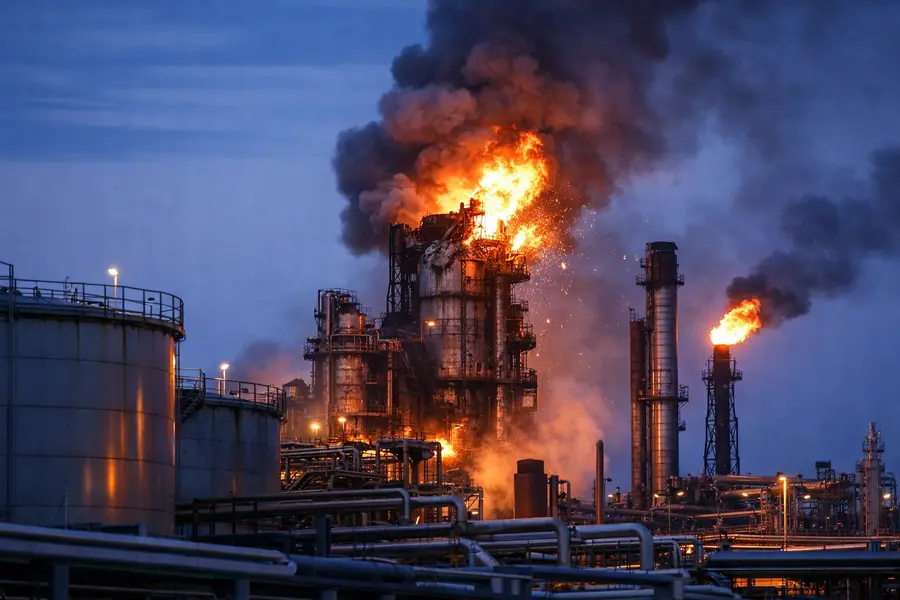
Houthi strikes on a Saudi Aramco office in Dhahran pushed the EU-Gulf summit off its October 24 date and dragged Gulf stocks lower, with Brent near $105.
- Houthis hit an Aramco administrative building in Dhahran on October 13, causing a fire but no reported casualties.
- The EU-GCC summit set for October 24 in Riyadh is postponed, with no new date.
- Qatar fell 1.4% and Dubai 1.1% on October 15; Saudi Arabia is heading for a sixth weekly loss.
Lead
Yemen's Iran-backed Houthis struck an administrative building belonging to Saudi Aramco (Tadawul: 2222) in Dhahran on Tuesday, October 13, starting a fire. The Saudi Ministry of Energy said the blaze was limited, and no injuries were reported. The strike came hours after a Saudi-led coalition hit a Yemeni oil facility in Houthi-held Sanaa.
On October 15, the Gulf Cooperation Council secretariat said the second EU-GCC summit, planned for October 24 in Riyadh, would be rescheduled. Gulf equities fell the same day.
What Happened in Dhahran and Sanaa?
The Houthis hit the Aramco building in Dhahran, in the Eastern Province, on October 13, and the exchange of strikes with Riyadh escalated within hours. The coalition had earlier struck the al-Sabah central station of the Yemen Oil Company in Sanaa after issuing an evacuation order. It also hit the Ras Isa port and an oil station in Hodeidah province.
The Houthis also fired missiles toward Riyadh. Debris from intercepted missiles injured four people and damaged 15 homes. A Houthi spokesman had warned of a "harsh and painful" response to any Saudi strike on Sanaa. The Saudi cabinet said the group would face "consequences."
The fighting follows an earlier wave of attacks on Saudi airports. A strike on King Khalid International Airport in Riyadh on October 10 killed at least 12 people and injured more than 300. Flights there have been suspended for an extended period. The escalation stems from the wider US-Iran conflict. Saudi Arabia backs Yemen's government, and the Houthis seized strategic territory in September.
Why Was the EU-GCC Summit Postponed?
The summit was postponed because of continued Houthi attempts to target Saudi civilian sites, the long closure of Riyadh's main airport, and the need to protect visiting delegations. GCC Secretary General Jasem Mohamed Albudaiwi announced the decision on October 15.
Crown Prince Mohammed bin Salman was due to co-host the gathering with European Council President Antonio Costa. All 27 EU leaders were expected. The new date is to be agreed between the two sides, and none has been set.
The delay removes the main diplomatic occasion for EU-Gulf talks on energy security, trade and regional de-escalation. It also shows that the conflict is reaching Saudi Arabia's political calendar as well as its infrastructure.
Why Did Gulf Markets Fall?
Gulf markets fell because investors are pricing a higher risk of attacks on energy and transport infrastructure, which raises the required return on regional assets. On October 15, the main indexes closed as follows:
- Saudi Arabia (TASI): down 0.3% at 10,107, heading for a sixth straight weekly loss.
- Qatar: down 1.4% at 8,810. Earlier in the session the index touched its lowest level in more than six years.
- Dubai: down 1.1% at 5,830.
- Oman: down 1.0% at 7,678.
- Kuwait: down 0.6% at 8,892.
- Abu Dhabi: down 0.3% at 9,805.
- Bahrain: down 0.2% at 1,876.
Among individual stocks, ACWA Power (Tadawul: 2082) slid 3.1%, Aramco lost 0.4% and Emirates NBD (DFM: EMIRATESNBD) fell 1.7%. Egypt's EGX30 rose 1.5% and was the only major regional gainer.
The IMF has named a prolonged war, with disruption to energy output, shipping or critical infrastructure, as the biggest macro risk for the Middle East and Central Asia. Two commercial vessels sank near the Strait of Hormuz within 24 hours after projectile strikes, which added to the pressure.
What Does This Mean for the Crude Oil Price?
Brent crude is trading near $105 a barrel, and the Houthi strikes have so far added less to the crude oil price than the supply picture would suggest. Brent fell $1.15, or 1.1%, to $104.91 on October 15. It had dropped $1.30 to $105.35 on October 13, its first daily decline in nearly a week.
Two factors have held the price down. A US Treasury license now allows Russian diesel imports through April 2027, with 300,000 tonnes due immediately, 500,000 in November and 1 million a month after that. OPEC has also cut its 2026 demand growth forecast to 400,000 barrels a day from 1.4 million. Brent remains more than $21 below its April 30 peak of $126.41.
Saudi supply routes are still strained. Traffic through Hormuz is down about 94%, and the East-West pipeline is carrying about 5.8 million barrels a day. Aramco cut its November Arab Light price to Asia by $3 a barrel, the widest discount to Oman and Dubai benchmarks since June 2020. Saudi Arabia's 2026 budget deficit is now put at 245 billion riyals against 165 billion budgeted, with real GDP down 3.6%.
Geopolitical Dimension
The Houthis' threat to oil sites and airports shifts the Yemen conflict from a border war to a direct challenge to Saudi economic infrastructure. Aramco's Dhahran campus is the operational center of the world's largest oil exporter. A strike there carries symbolic weight even when physical damage is limited. For Europe, which is seeking Gulf energy and investment links, the postponement reduces near-term diplomatic leverage.
The near-term risks are further strikes on Aramco facilities and Saudi airports, and a longer closure of Riyadh's main airport. Each would raise insurance costs and shipping rates. Gulf-to-China charter rates for very large crude carriers are already near $1.2 million a day, about 15 times the level before the war.
Outlook
Over the next three to twelve months, the Houthi-Saudi exchange of strikes will be shaped by the wider US-Iran conflict, Hormuz traffic and the security of Saudi energy sites. The EU-GCC summit stays on hold until the security situation improves. Gulf equities remain tied to attack risk, and Brent is being held in a $102 to $106 range by Russian diesel supply and weaker demand growth.
Mentioned tickers: 2222.SR, 2082.SR, EMIRATESNBD