Pomegra
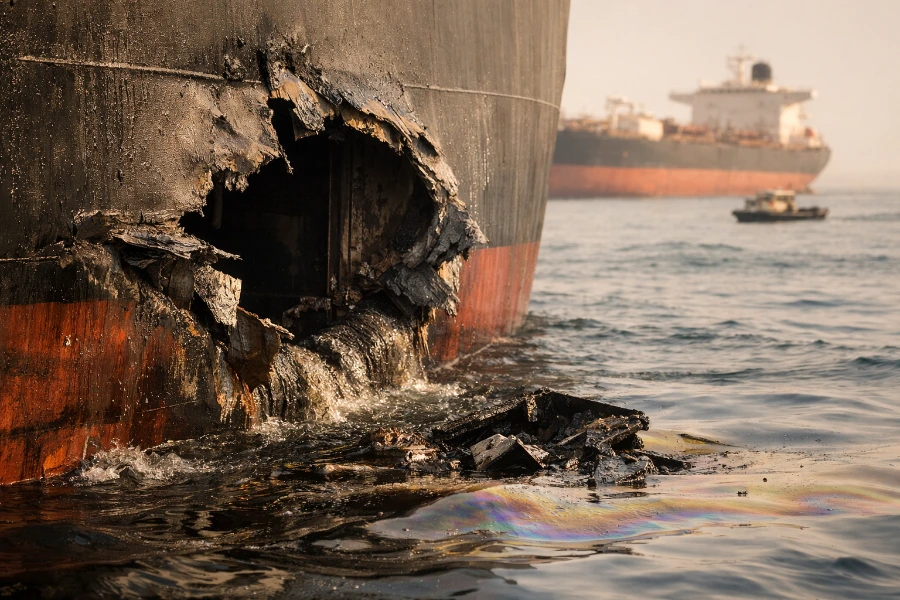
Two more oil tankers caught fire after hitting mines east of the Strait of Hormuz, Iran says, as Tehran vows "every means" to counter the US naval blockade.
- Iran's navy says four tankers have hit mines in and near Hormuz; the latest two caught fire east of the strait on Tuesday, November 24.
- Trump has threatened to sink Iranian vessels that try to break the US blockade of Iranian ports.
- Brent crude fell to about $88 a barrel, a three-month low, as supply concerns outweighed shipping risk.
Lead
Two more oil tankers caught fire on Tuesday, November 24, after striking naval mines in waters east of the Strait of Hormuz. The Islamic Revolutionary Guard Corps (IRGC) Navy reported the incidents. It put the number of tankers hit in the waterway at four. The IRGC said the latest vessel exploded at dawn after trying a "false and unauthorized route." It said two other tankers travelling with it turned back to the Persian Gulf.
The Joint Maritime Information Centre has described the mine claims as unconfirmed. The strikes came as Iran pledged to use "every means" against the US naval blockade of its ports, and as President Donald Trump renewed threats against Iranian vessels.
What Happened in the Strait of Hormuz?
The IRGC Navy reported three tankers hit by mines first, one near the southern coast and two in the eastern part of the strait. It then announced a fourth tanker had exploded and caught fire after striking a mine in restricted waters east of the waterway. Iran says the vessels were violating new crossing rules it has imposed on the strait.
Iranian officials have framed the incidents as enforcement against ships moving without Tehran's approval. The attacks form part of a wider campaign against shipping through Hormuz. The campaign is meant to raise global energy prices and pressure Washington to lift the blockade on Iranian ports.
Iran's army commander-in-chief has ordered the navy to close the strait "further day by day" until the United States meets Tehran's conditions. He warned that any new US military action would bring blows "more severe, more crushing and without geographical limitation."
How Has Washington Responded?
Washington has tightened the blockade and sharpened its rhetoric. On Sunday, Trump threatened to resume large-scale strikes on Iran if negotiations fail. He also threatened to sink Iranian vessels attempting to breach the blockade. He has warned that if mines are placed and not removed immediately, the military consequences for Iran will be "unprecedented." He has also said he does not rule out resuming hostilities after year-end.
The US Navy has added a third aircraft carrier, the USS Theodore Roosevelt, to the Gulf. It joins two other carriers enforcing the blockade. US forces struck Iranian minelayers earlier in the conflict, in March, when Iran first began mining the strait. The Treasury Department has also widened sanctions on Iran this week.
Qatar is seeking to revive stalled peace talks. Neither side has shown movement on core demands.
What Is Happening to the Crude Oil Price?
The crude oil price is falling, not rising. Brent crude futures dropped to $88.22 a barrel on November 24, the lowest since late August, before trading near $88.67. West Texas Intermediate was near $79.59. Both benchmarks are well below their October highs above $100.
Traders have largely discounted the mine reports. Recovering production and swelling global inventories have outweighed the shipping risk. The market has stopped paying a war risk premium, and attention has shifted to the accumulating supply surplus. Commercial traffic through Hormuz has fallen sharply, with transits down about 40 percent by one count. Even so, supply conditions remain comfortable enough that the closure is not lifting prices.
Why Does Hormuz Still Matter to Markets?
Hormuz is the narrowest point on the main export route for Gulf crude, and a large share of seaborne oil passes through it in normal times. A prolonged closure carries consequences beyond the headline price. Insurance premiums, freight rates and delivery schedules react to each incident, even when futures do not.
Market pricing also depends on diplomacy. Futures currently assume that surplus inventories and recovering output can absorb the disruption. That assumption weakens if the blockade escalates into direct naval clashes or if Washington resumes large-scale strikes. A fire on a loaded tanker, or any attack on a vessel with a Western escort, would change that calculation quickly. The risk of a renewed price rise has not gone away, because the US-Iran talks have not moved.
Strategic Context
The standoff pits two coercive tools against each other. The US blockade cuts Iran's oil revenue. Iran's mining and closure of Hormuz threaten the shipping lanes that carry the world's energy. Each side is betting the other will concede first.
The mine strikes carry a specific message. Iran says it can disable tankers moving under US protection or outside its approved routes. Washington's response has been to widen sanctions and add naval power. The Gulf now holds three US carriers, which raises both deterrence and the chance of miscalculation in crowded, mined waters.
Outlook
Iran says four tankers have hit mines, and its leaders have promised "every means" against the blockade. Trump has promised to sink vessels that try to break it. The oil market is looking past the disruption for now, with Brent near three-month lows on ample supply. The near-term path depends on whether Qatar's mediation revives talks or whether a confirmed mine strike, or the first sinking of an Iranian vessel, forces a more direct confrontation. The 3 to 12 month risks are a prolonged closure of Hormuz, higher shipping and insurance costs, and a return of the war risk premium if inventories tighten.
Mentioned tickers: None