 Pomegra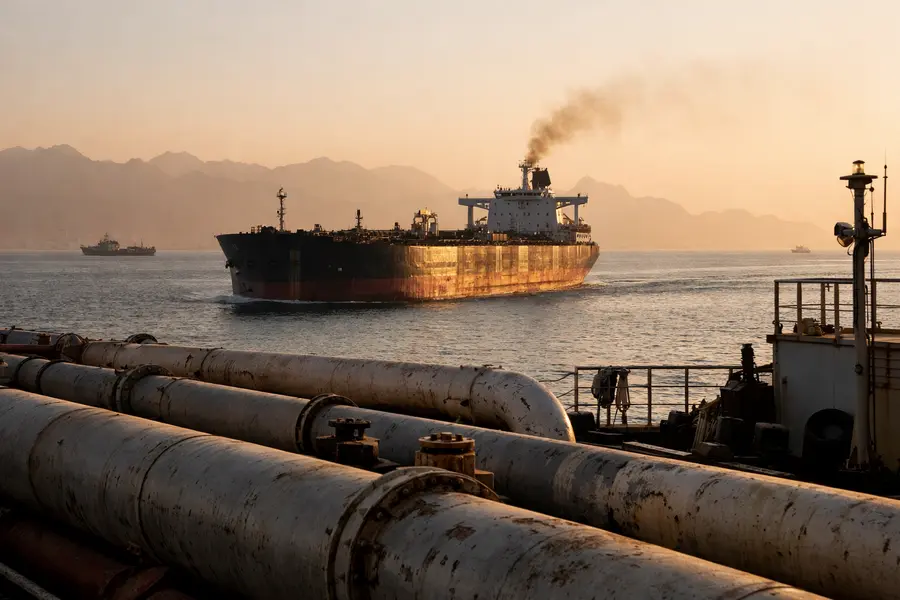
The Strait of Hormuz has effectively closed to commercial shipping as war-risk premiums reach 40 times normal and six P&I clubs pull all tanker cover, marking the gravest disruption to global energy logistics in four decades.
- Tanker transit through the Strait of Hormuz has collapsed to 1% of pre-crisis levels, with no timeline for return to normal operations.
- War-risk insurance now costs 40 times its historical baseline, while six Protection & Indemnity clubs have withdrawn tanker coverage entirely.
- The crisis exceeds the maritime insurance dislocation of the 1980s tanker wars and threatens crude oil supply chains serving Europe and Asia.
The Strait of Hormuz Closes in All but Name
Commercial shipping through the Strait of Hormuz has ground to near standstill, with transit volume collapsing to 1% of pre-crisis levels in what maritime analysts are calling the worst disruption to global energy logistics since the Iran-Iraq war. Six Protection & Indemnity clubs - cooperative mutual insurers that together underwrite more than 90% of the world's oceangoing tonnage - have withdrawn tanker coverage for Hormuz transits entirely. War-risk premium rates, priced dynamically by London marine markets, have reached 40 times their pre-crisis baseline, rendering most transits commercially unviable. The waterway, through which roughly 20% of global crude oil and approximately one-fifth of the world's liquefied natural gas ordinarily flow, has no clear reopening timeline.
Why Has Transit Volume Fallen to 1%?
Vessel owners face a structural double bind that makes Hormuz passage commercially impossible for most operators. Without P&I club indemnification, a casualty event leaves shipowners exposed to unlimited third-party liability, crew injury claims, and environmental damage costs with no recourse. Frontline (FRO), one of the world's largest tanker operators, along with International Seaways (INSW) and Nordic American Tankers (NAT), have each suspended Hormuz route commitments. The withdrawal of even a handful of major operators has cascaded into near-total traffic suppression. Spot war-risk cover remains technically available at Lloyd's of London, but the premium rate of 40 times normal implies underwriters are pricing the route as a near-certain loss scenario rather than a remote tail risk - a distinction that transforms insurance from a cost of business into a prohibitive barrier.
How Did the Maritime Insurance Crisis Reach This Scale?
The collapse of the P&I club coverage framework is the structural feature that distinguishes the current crisis from previous periods of elevated Gulf risk. P&I clubs operate as mutual indemnity pools rather than conventional insurers; they cannot selectively exit named high-risk zones without creating systemic gaps in the global liability architecture that underpins all commercial maritime trade. The six clubs that have withdrawn coverage collectively represent the majority of the world's supertanker fleet. The last comparable insurance market dislocation occurred during the 1980-1988 Iran-Iraq war, when approximately 552 vessels were attacked and Lloyd's war-risk markets briefly faced comparable pricing dislocations. The current episode has reached or exceeded that benchmark in terms of P&I withdrawal depth - a threshold that maritime insurance historians have not previously recorded in the post-Cold War era.
Crude Oil Price Impact and Supply Chain Rerouting
Benchmark Brent crude has surged as energy markets absorb the rerouting premium now embedded in global logistics. Tankers previously delivering Persian Gulf crude to Asian refiners in approximately three weeks now face voyages of six to eight weeks sailing around the Cape of Good Hope, adding substantial fuel, crew, and charter rate costs to every barrel delivered. Saudi Aramco, Abu Dhabi National Energy Company (TAQA), and Kuwait Petroleum face export bottlenecks that constrain supply irrespective of production capacity. TotalEnergies (TTE), Shell (SHEL), ExxonMobil (XOM), and Chevron (CVX) have activated contingency procurement plans, drawing on strategic reserves and purchasing spot cargoes from Atlantic Basin and West African producers. Refined product markets have followed crude higher, with jet fuel and diesel premiums in Asian import markets reaching multi-year highs.
Alternative export routes are operating at or near capacity: Saudi crude diversions through the East-West Pipeline to Yanbu on the Red Sea, Emirati exports via the Abu Dhabi Crude Oil Pipeline to Fujairah, and Qatari LNG moving through non-Hormuz corridors have each absorbed incremental volume - but none individually or collectively replaces the strait's normal throughput.
What Would It Take to Reopen Hormuz to Commercial Traffic?
Normalization requires conditions - political, military, and actuarial - that cannot be sequenced quickly. Lloyd's Joint War Committee would need to remove or substantially downgrade its Hormuz Listed Area designation before mainstream war-risk underwriters could return at commercially viable premiums. P&I clubs require formal notification periods of seven to fourteen days before reinstating cover even after a designated zone is delisted, meaning a sudden diplomatic resolution would still produce a minimum two-week lag before freight could move again. The actuarial judgment of insurance markets operates on its own timeline and has historically lagged ceasefire announcements in the Gulf by weeks to months, given the need to observe a sustained period of incident-free navigation before risk models reset.
Outlook
The Strait of Hormuz crisis constitutes a structural shock to global energy logistics with no modern precedent. The depth of the insurance withdrawal - six P&I clubs and near-total war-risk unaffordability - means recovery is not triggered by a diplomatic announcement alone. Energy importers across East Asia and Europe face a sustained period of elevated crude oil prices, extended supply lead times, and constrained spot availability. Strategic reserve policy is under active reassessment in multiple importing nations. The maritime insurance industry confronts a structural question: whether the P&I mutual model, designed for distributed shipping risk across thousands of global voyages, provides adequate resilience when a single geographic chokepoint concentrates systemic exposure at crisis scale.
Mentioned tickers: FRO, INSW, NAT, TTE, SHEL, XOM, CVX, TAQA