Pomegra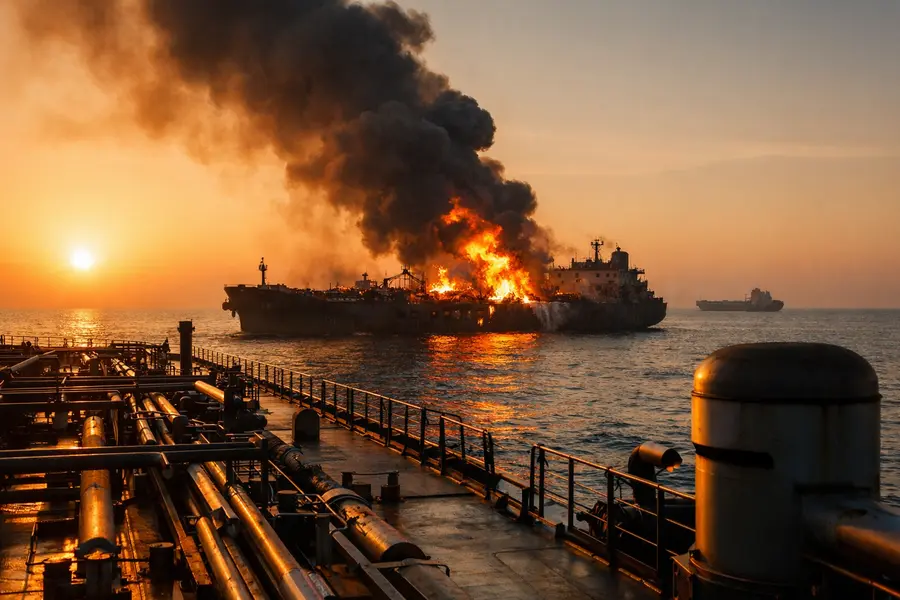
Saudi Arabia, Qatar, Jordan, and the GCC condemned Iran's Saturday ADNOC tanker strike in Hormuz, invoking Resolution 2817 and demanding unconditional freedom of navigation.
- Iran's IRGC struck an ADNOC tanker on August 8 — the 16th attack since hostilities began February 28 — with no crew injuries reported.
- Qatar backed any UAE defensive response, affirming solidarity as Gulf condemnation reached its most coordinated posture of the conflict.
- Resolution 2817, passed March 11 with a record 135 co-sponsors, explicitly bans IRGC interference with freedom of navigation through Hormuz.
Lead
Iran's Islamic Revolutionary Guard Corps struck an Abu Dhabi National Oil Company tanker transiting the Strait of Hormuz in the early hours of Saturday, August 8, 2026 — the 16th attack on ADNOC vessels since hostilities opened February 28. No crew injuries were reported, though the cumulative toll across sixteen incidents stands at one death and twenty injuries. Saudi Arabia, Qatar, Jordan, and the Gulf Cooperation Council issued sweeping condemnations within hours, with Doha explicitly affirming solidarity with Abu Dhabi and backing any UAE defensive response calibrated to international law — marking the sharpest expression of unified Gulf condemnation since the Hormuz crisis began.
What Happened
The strike follows a sustained pattern of IRGC targeting of commercial and state-owned vessels in the strait since Iran militarized the waterway following U.S. and Israeli operations against Iranian nuclear and military infrastructure. The ADNOC tanker was in lawful transit when the missile impacted; crew brought the situation under control and no environmental incident was reported.
The UAE Foreign Ministry attributed the attack to the IRGC, characterizing the series of strikes as "acts of piracy" and condemning the latest incident as a "flagrant violation" of UN Security Council Resolution 2817 — the landmark measure adopted March 11, 2026, with a record 135 co-sponsors, the highest total ever recorded for a Security Council resolution. Resolution 2817 explicitly prohibits interference with freedom of navigation through the Strait of Hormuz and condemns attacks on commercial vessels.
Gulf Condemnation Takes Coordinated Form
The depth of Gulf condemnation distinguished Saturday's response from earlier communiqués in the conflict. Qatar's Foreign Ministry issued a statement rejecting use of the strait "as a tool of pressure or a political bargaining chip," affirming solidarity with the UAE and backing any defensive response Abu Dhabi considers proportionate under Article 51 of the UN Charter. Qatar's alignment with a potential UAE response marks a notable sharpening from Doha's earlier, more measured position.
Resolution 2817 and the Legal Architecture
Resolution 2817 provides the legal framework around which Gulf and Western condemnations are now organized. Bahrain presented the resolution to the Security Council on behalf of the GCC and Jordan; it passed with 13 votes and subsequently accumulated 135 co-sponsors — a historic benchmark reflecting near-universal diplomatic consensus on freedom of navigation in the strait. The resolution explicitly states that any attempt to impede lawful transit passage constitutes a threat to international peace and security.Iran's IRGC has since framed reopening as conditional on Washington's acceptance of Tehran's negotiating terms, a position in direct conflict with Resolution 2817's unconditional language. Foreign Minister Abbas Araghchi indicated Iran is nearing a legal-framework agreement through Oman-brokered talks but continues to tie Hormuz access to U.S. compliance with bilateral understandings. President Masoud Pezeshkian cited what he described as a U.S. "breach" of a memorandum to justify the continued campaign.
Energy and Trade Stakes
Approximately one-fifth of the world's traded oil and gas transits the Strait of Hormuz daily, making it the single most consequential maritime chokepoint for global energy markets. Since Iran effectively closed the strait in late February, energy traders have been routing cargoes through alternative pipelines and longer maritime corridors at significant cost premium. The sixteen confirmed ADNOC vessel strikes — representing only publicly disclosed state-oil company targets — signal a deliberate strategy to pressure UAE energy infrastructure and raise the economic cost of continued Western military support for Israeli operations.
Gulf officials warned Saturday that compounding disruptions will damage the global economy at a moment when alternative supply routes are operating near capacity limits.
Outlook
The coordinated Gulf condemnation and Qatar's explicit backing of any UAE defensive response represent the clearest signal yet that GCC members are prepared to move beyond diplomatic protest. Resolution 2817, with its 135-nation co-sponsor coalition, provides the multilateral legal basis for intensified pressure on Tehran. Unless Iran agrees to unconditional freedom of navigation through the strait — a position it has publicly and repeatedly rejected — the combination of continued IRGC strikes, rising energy costs, and deepening diplomatic isolation is set to define the next phase of the Hormuz crisis through the remainder of 2026.