Pomegra
Goldman Sachs warns an AI safety-driven pullback in Big Tech data center spending could erase 20% of S&P 500 valuations and collapse 2026's earnings thesis.
- Goldman's research finds a reversion of AI growth estimates to 2023 levels implies 15-20% downside to S&P 500 valuations.
- AI safety pledges from Anthropic, OpenAI, xAI, and Google DeepMind rattled markets, sending Nasdaq 100 futures down 1.2% Sunday.
- Big Tech has committed roughly $735 billion in 2026 AI data center capex; any pullback directly threatens NVDA, MSFT, AMZN, META, and GOOGL.
Lead
A Goldman Sachs (GS) research note circulating this weekend warns that industry-wide AI safety pledges - which brought the chief executives of the four largest AI labs into rare public agreement over slowing model development - risk triggering a pullback in hyperscaler data center spending that could erase 15% to 20% of the S&P 500's current valuation multiple. The warning lands as equity markets open the week under pressure: contracts tracking the Invesco QQQ Trust (QQQ) fell 1.2% and the SPDR S&P 500 ETF Trust (SPY) slipped 0.5%, as investors begin repricing a rally Goldman has explicitly tied to AI capital expenditure growth. Dow futures lost approximately 180 points at the same time.
Why Did AI Safety Pledges Rattle Equity Markets?
The trigger was a weekend of coordinated industry statements unprecedented in speed and scope. On September 12, Anthropic CEO Dario Amodei published an essay titled "We Must Pace the Frontier," arguing that AI companies should deliberately slow capability improvements to prioritize safety over growth. Within nine hours, the heads of OpenAI, xAI, and Google DeepMind publicly endorsed the position - an alignment that has rarely, if ever, occurred among competing labs in the history of the AI race.
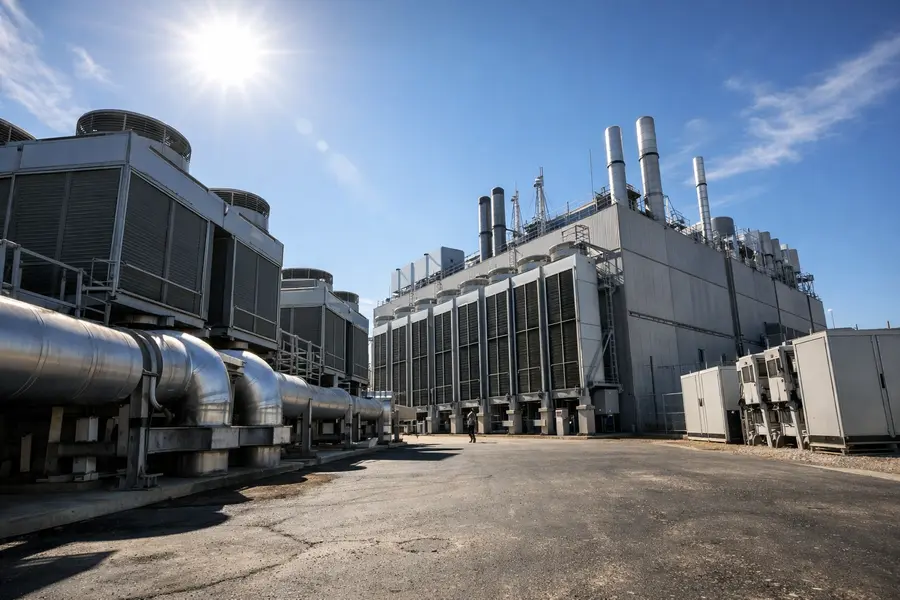
For equity markets, the concern is arithmetically direct. Microsoft (MSFT), Amazon (AMZN), Alphabet (GOOGL), and Meta (META) are collectively on pace to deploy roughly $735 billion on AI data center infrastructure in 2026 - Microsoft at $175 billion, Amazon at $220 billion, Meta at $135 billion, Alphabet at up to $205 billion. Any signal from affiliated AI labs that development will slow feeds investor concern that capital expenditure commitments could be revised downward, removing the most direct driver of semiconductor and cloud earnings.
Software names bore the brunt of Sunday's selling. Salesforce (CRM) and Intuit (INTU) each fell approximately 4%, while ServiceNow (NOW) dropped 5%, pulling the S&P 500 software and services sub-index down 1.4%. Semiconductor stocks extended a slide that has taken the VanEck Semiconductor ETF (SMH) and the Direxion Daily Semiconductor Bull 3X Shares (SOXL) down 20% from June peaks - crossing into technical bear market territory.
What Happens to S&P 500 Earnings If AI Spending Slows?
Goldman's analysis quantifies the systemic risk in precise terms. Chief U.S. equity strategist Ben Snider's team calculated that AI now accounts for roughly half of S&P 500 earnings growth in 2026. Goldman researcher Ryan Hammond's note underscores the double-edged nature of that figure: the same AI infrastructure cycle that powered Goldman's S&P 500 year-end target of 8,000 - predicated on $340 in earnings per share, a 24% increase year over year - is the variable most exposed to a change in lab strategy.
Hammond's note states that a reversion of long-term AI growth estimates to early 2023 levels would imply 15% to 20% downside to the S&P 500's current valuation multiple, pointing to a potential correction toward the 6,400 range. The concentration math amplifies that risk. Nvidia (NVDA) alone accounts for approximately 7.6% of SPY, and combined, NVDA, MSFT, GOOGL, AMZN, and META represent roughly 24% of the benchmark. Nvidia's revenue trajectory illustrates the stakes: $26.9 billion in fiscal 2022, $215.9 billion in 2025, and $358.7 billion forecast for 2026 - growth entirely downstream of the hyperscaler capex budgets now under scrutiny.
Capex Commitments vs. the Safety Consensus
Whether this weekend's lab-level statements translate into actual spending reductions remains the central uncertainty for ai stocks heading into the week. The hyperscalers are separate legal entities from the AI labs that endorsed the slowdown, and none of Microsoft, Amazon, Meta, or Alphabet has signaled a reduction in capital budgets. The Trump administration has publicly indicated that a unilateral US development pause carries strategic risk relative to China's continued AI investment, and bipartisan AI safety legislation gaining momentum on Capitol Hill targets guardrails rather than spending caps.
A proposed AI Data Center Moratorium Act, introduced by Senator Bernie Sanders and Representative Alexandria Ocasio-Cortez, remains a legislative long shot with limited industry backing. Yet the speed with which four lab CEOs reached public consensus - nine hours, over a weekend - introduces a policy risk premium that equity markets had not previously priced into valuations. If the consensus holds and translates into pressure on corporate boards, hyperscaler CFOs face a new variable on their Q3 earnings calls.
Outlook
Goldman Sachs' 20% downside scenario arrives at the moment of maximum vulnerability for the AI trade. Chip stocks are in a bear market, software multiples are compressing, and the most prominent names in AI development have publicly endorsed a growth slowdown. The clearest near-term resolution point is Q3 earnings season in October, when MSFT, AMZN, META, and GOOGL will report capital expenditure figures alongside forward guidance. If capex commitments hold at current levels, markets will likely treat this weekend as a sharp volatility event without structural consequence. A single guidance cut from any of the four largest spenders, citing the new safety consensus, would shift Goldman's theoretical correction scenario into an active market test.
Mentioned tickers: GS, SPY, QQQ, NVDA, MSFT, AMZN, GOOGL, META, CRM, INTU, NOW, SOXL, SMH