Pomegra
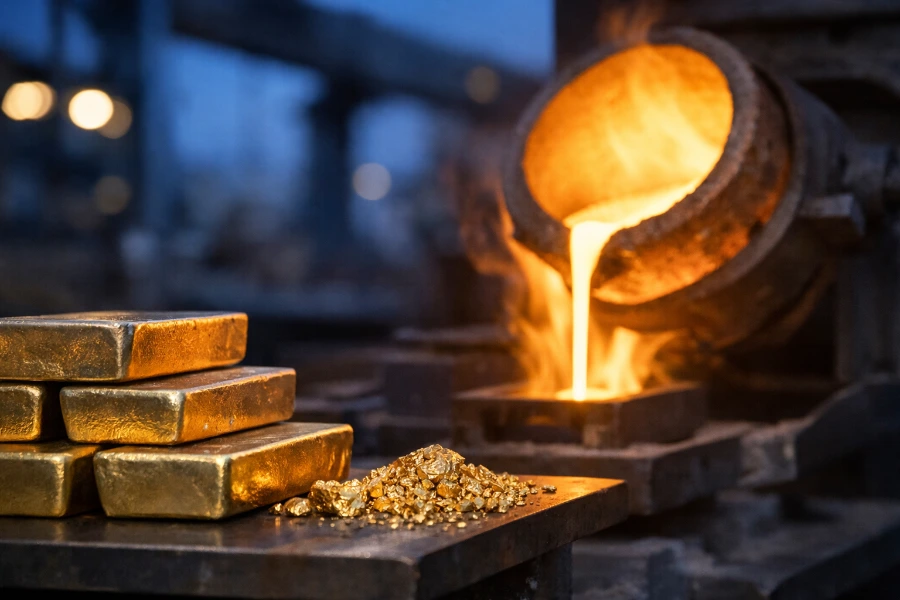
Gold fell 1.6% to about $4,074 an ounce on Nov. 10 as hawkish Fed signals and higher Treasury yields boosted rate-hike bets and hit precious metals.
- Spot gold fell 1.6% to about $4,074 on hawkish Fed remarks, then extended losses past 2% after hot October CPI.
- Futures price about an 85% chance of a 25 bp Fed rate hike on Dec. 9, with a 50 bp move gaining odds.
- The 10-year Treasury yield rose toward 4.94% and the dollar strengthened, pushing silver down about 3%.
Lead
Gold fell 1.6% to roughly $4,074 an ounce on Tuesday, Nov. 10, after Federal Reserve Governor Christopher Waller backed a December rate increase and flagged that a larger move could be warranted. The decline deepened after October consumer price data came in above forecasts. Spot gold traded near $4,055 by the morning report, down more than 2% on the session and below the prior day's high of about $4,148. The Fed rate outlook, rather than any shift in physical demand, drove the move.Why Did Gold Fall After the Fed's Hawkish Signal?
Gold fell because higher expected interest rates raise the opportunity cost of holding a metal that pays no yield. Waller said he would still support a 25 basis point increase in December. He added that a half-point rate hike may be needed if core inflation printed around 0.3% or higher.
That framing moved the market before the data arrived. Treasury yields rose across the curve and the US dollar index held above 102.00, making dollar-priced bullion more expensive for buyers using other currencies.
Gold had entered the week near $4,148 after a run of gains driven by safe-haven demand and falling yields. The reversal erased much of that advance in a single session.
What Did the October CPI Report Show?
October consumer prices rose 0.4% on the month, above the 0.3% forecast but slower than September's 0.6% gain. Core CPI, which strips out food and energy, rose 0.3% against a forecast of 0.2%. That was the third straight monthly core reading of 0.3%.
Annual rates were not available for October because the federal government shutdown disrupted data collection. September's headline annual rate stood at 3.7%.
The core overshoot met the exact threshold Waller had set for a larger move. Core CPI is the gauge the Fed watches most closely for underlying price pressure, and a 0.3% pace annualizes to roughly 3.7%, well above the central bank's 2% target.
How Did Rates, the Dollar and Other Markets React?
Yields and the dollar rose together, and both worked against metals. The 10-year Treasury yield climbed toward 4.94% and the 2-year yield advanced toward 4.69%. The dollar index extended gains after the release.
Silver fell about 3% to near $51.70 an ounce, a steeper drop than gold, reflecting its higher sensitivity to both rate expectations and industrial demand. Bullion-backed funds such as SPDR Gold Shares (GLD) and iShares Silver Trust (SLV) track those moves directly.
Energy markets were weaker. WTI crude traded near $84 to $85 a barrel and Brent near $90.50, with WTI down more than 15% over the past month. Lower oil prices ease some of the inflation pressure that supported the case for gold as a hedge.
How Are Futures Pricing the December Fed Decision?
Futures price roughly an 85% chance of a 25 basis point increase at the Dec. 8-9 meeting, up from about 84% before the report. The probability of a 50 basis point increase has risen to between 10% and 15%, depending on the snapshot, from near zero before Waller's comments.
A hike would extend a tightening cycle that has changed the backdrop for non-yielding assets. Gold's earlier gains in 2026 came as markets expected policy to ease. Pricing has since flipped toward higher rates, and the metal is now trading against that tide.
What Are the Key Levels for Gold Prices?
Gold's chart now centers on $4,000. The metal trades near its 20-day moving average of about $4,059, with the lower Bollinger band near $3,901 and the year-to-date low at $3,870. A close below $4,000 would put the lower end of that range in view. Resistance sits well above, near $4,148 and then $4,400.
The market remains sensitive to rate pricing. The prior two weeks showed that gold can rebound quickly when Fed hike bets ease, as it did in early November when yields slid and the metal climbed to about $4,124.
What Comes Next for Gold and the Fed?
Three events will set direction before the December meeting: further Fed commentary, the next inflation and labor readings, and the pace of Treasury yields near 5%. A softer core print would reduce odds of a 50 basis point move and could steady bullion. Another 0.3% or higher reading would strengthen the case for a larger hike and keep pressure on gold and silver.
Structural demand has not vanished. Central bank buying, fiscal deficits and geopolitical risk continue to underpin the long-term case for gold, which remains far above where it started the year. In the near term, however, the interest rates path dominates.
Outlook
Gold's 1.6% slide to about $4,074 reflects a market repricing from rate cuts to rate hikes. With October core inflation at 0.3% and the 10-year yield near 4.94%, a December increase is close to fully priced, and the debate has shifted to size. The $4,000 level is the immediate test for bullion, and the next inflation data will determine whether the Fed's tone hardens further.
Mentioned tickers: GLD, SLV