Pomegra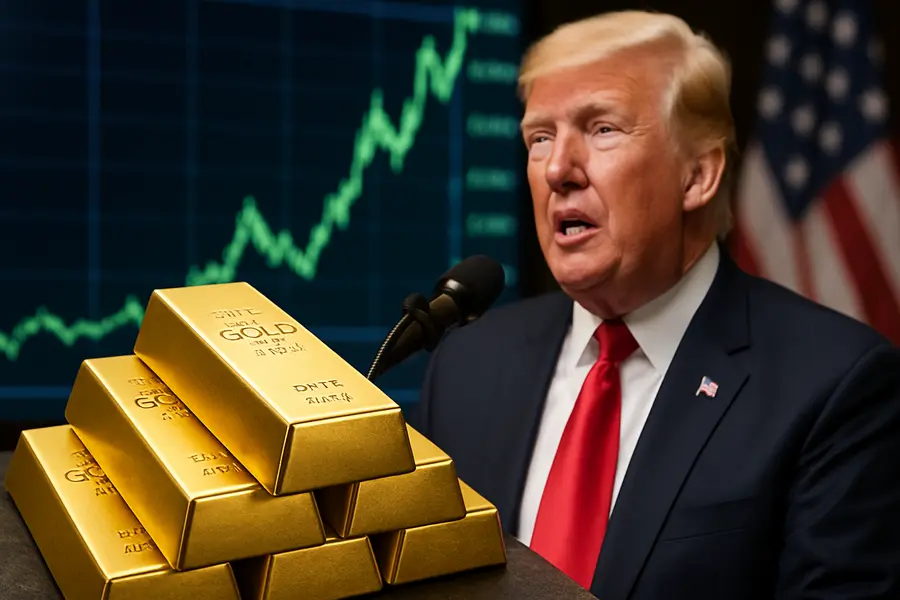
Gold August futures surged 3.4% to $4,234.90 per troy ounce on June 12, 2026, after President Trump declared the U.S.-Iran war over, citing a near-final 14-point peace memorandum.
- Gold price opened at $4,234.90 on June 12, 2026, the strongest session open since the conflict began, up 3.4% overnight.
- Trump declared the U.S. had "ended the war with Iran," saying a formal accord could be signed as early as this weekend.
- The proposed Iran peace accord includes reopening the Strait of Hormuz within 30 days and lifting U.S. oil sanctions on Tehran.
Lead
Gold futures surged 3.4% to open at $4,234.90 per troy ounce on Friday, June 12, 2026, after President Donald Trump told supporters at a Georgia political rally that the United States had "ended the war with Iran." The rally statement, delivered in support of Georgia Lt. Governor Burt Jones, came as both governments confirmed they are reviewing a 14-point memorandum of understanding that would constitute a formal Iran peace agreement. Oil prices fell sharply while the U.S. dollar weakened on the news, amplifying the rally in the yellow metal.What Happened
Trump stated at the Georgia event that both sides had agreed to "a very strong memorandum of understanding" and that a formal signing could occur as soon as this weekend. Iran's state news agency IRNA reported separately that negotiations had "effectively reached their final stage," and Iran's chief negotiator indicated the 14-point framework represented Tehran's final position.
The announcement follows a June 11 declaration by Trump of a 60-day ceasefire, itself a product of Pakistani diplomatic mediation, after a round of U.S. military strikes inside Iran. The ceasefire declaration temporarily halted a conflict that had rattled commodity markets and global shipping lanes for weeks.
Bitcoin joined gold in its advance, rising more than 3% alongside bullion in what market participants described as a coordinated flight toward hard assets unwinding as de-escalation sentiment took hold.Market Reaction
The gold price briefly pushed above $4,200 per ounce during overnight trading before the U.S. open, then settled near $4,218 by mid-morning Eastern time as early euphoria moderated. Spot gold (XAU/USD) traded at $4,192.11 in New York hours, down slightly from the session peak but still representing a substantial recovery from recent lows.
Oil prices moved in the opposite direction. Brent crude retreated on expectations that a reopened Strait of Hormuz would restore roughly 20% of daily global seaborne oil traffic, easing the supply disruption premium that had pushed energy costs higher. The dollar index slipped as risk appetite improved across asset classes.
Gold remains 22.1% above its level one year ago, though it had fallen 10.6% over the prior month as repeated ceasefire signals had kept markets on edge without producing a durable settlement.
Geopolitical Dimension
The 14-point draft agreement, as described by Iranian state media, encompasses five principal elements: Iran's commitment to reopen the Strait of Hormuz within 30 days; the phased withdrawal of U.S. forces from Iranian territory; a U.S. and allied commitment to present a reconstruction plan for Iran valued at no less than $300 billion; a 60-day nuclear negotiation window conducted within Iran's declared framework, including its right to uranium enrichment; and the lifting of U.S. oil sanctions as talks progress.
Iranian officials were careful to note that Tehran had not committed to ceding management of the strait or restoring pre-conflict conditions unconditionally. The nuclear provisions are deliberately open-ended, giving both sides flexibility — and political cover — to claim progress without locking in specific obligations at this stage.
Investor Caution Remains
Despite the sharp morning advance in the gold price, a note of market skepticism tempered the rally. Traders pointed to more than 30 prior statements by the Trump administration over recent months that signaled imminent breakthroughs, none of which produced a signed agreement. That pattern has conditioned investors to treat preliminary announcements as starting points rather than conclusions.
Iran's failure to issue an unambiguous official confirmation as of Friday morning added another layer of uncertainty. While IRNA's language was encouraging, no Iranian government spokesperson confirmed that a deal had been finalized or that a signing ceremony was scheduled.
Outlook
A signed Iran peace accord would carry significant structural implications for commodity markets. Strait of Hormuz reopening would ease the geopolitical risk premium embedded in oil, reducing inflationary pressure at a moment when central banks are already managing elevated rate expectations. For gold, the picture is more nuanced: a durable peace removes a key safe-haven driver but leaves intact the longer-term monetary and fiscal forces — including global debt levels and central bank accumulation — that have supported the metal's 22% year-on-year advance. Markets will focus on whether a formal signing materializes over the weekend and on Iran's official response to Trump's declaration in the hours ahead.
Markets