Pomegra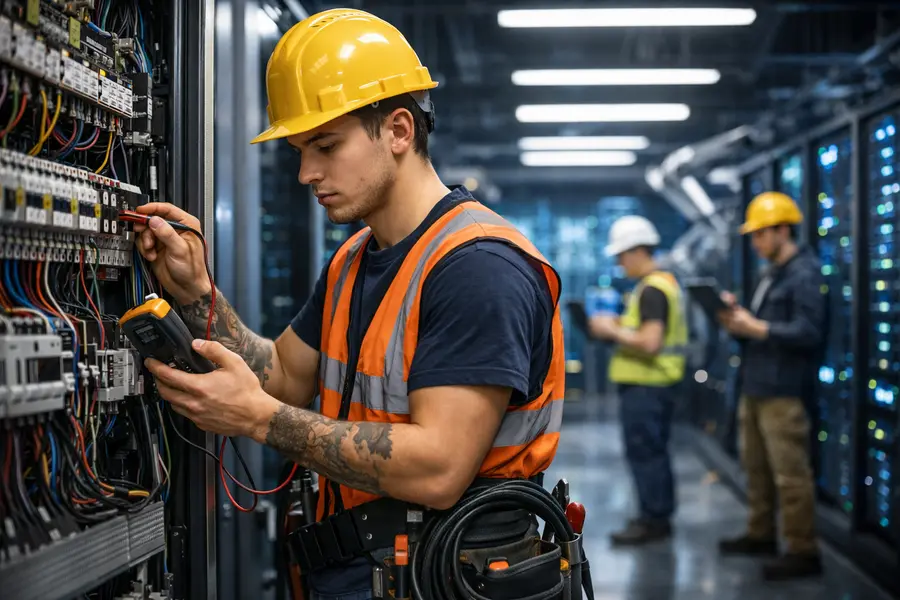
AI data center jobs are fueling record wages for Gen Z trade workers, with electricians earning $80,000 to $280,000 annually as hyperscaler infrastructure spending surpasses $725 billion in 2026.
- Data center electricians command a median base salary of $94,500—roughly 50% above the national median—with total compensation routinely exceeding $160,000 at major sites.
- Google, Amazon, Microsoft, and Meta are collectively spending $725 billion on infrastructure in 2026, making AI infrastructure labor demand the dominant force reshaping blue-collar wages.
- An estimated 340,000 data center roles remain unfilled against more than 600,000 annual job postings, creating a structural shortage that continues to push compensation higher.
The New Six-Figure Trade
Three electricians under 30 working a data center campus in Plano, Texas earn between $240,000 and $280,000 per year—no college degree, no student debt. Their story is becoming less exceptional and more illustrative of a broader structural shift in how AI infrastructure labor demand is reshaping the American labor market.
The Bureau of Labor Statistics pegs the median annual wage for all U.S. electricians at $62,350 as of May 2024. For those specializing in critical-facilities and data center work, that figure climbs to a median base of $94,500, with entry-level roles starting around $68,000 and senior commissioning electricians commanding $135,000 to $165,000 in base pay alone. Overtime, hazard premiums, and benefits push total annual compensation well above those figures at the largest sites.
Construction workers on AI data center projects earn an average of $81,800 annually—approximately 32% more than their peers on conventional commercial builds. Year-over-year wage growth for critical-facilities electricians is running near 8%, placing the category among the fastest-rising pay segments across the entire data center industry.
AI Infrastructure Spending Drives Labor Surge
The wage premium reflects the scale of capital flowing into physical infrastructure. Google (GOOGL), Amazon (AMZN), Meta (META), and Microsoft (MSFT) are projected to spend a combined $725 billion on data centers and related infrastructure in 2026—a 77% increase from the $410 billion deployed in 2025. Of that total, roughly $450 billion, or 75%, is directly tied to AI infrastructure: GPU clusters, power systems, cooling, and the facilities to house them.
U.S. data center power demand is expected to more than triple by 2030, rising from 25 gigawatts in 2024 to over 80 gigawatts—a buildout that requires not software engineers but pipefitters, ironworkers, fiber optic installers, precision cooling technicians, and, above all, high-voltage electricians. Seventy-six new projects valued at $88 billion were set to break ground by early 2026 alone.
The permanent workforce at U.S. data centers is on track to reach 650,000 positions by 2026, yet approximately 340,000 of those roles are currently unfilled. Against 600,000-plus annual job postings for major skilled trades, only around 150,000 new workers enter the labor pool each year through apprenticeship programs—a structural imbalance that is unlikely to resolve quickly.
Gen Z Trade Skills Fill the Gap
The labor crisis is arriving precisely as a generational pivot reshapes who pursues skilled trades. Six in ten members of Gen Z plan to pursue trade careers in 2026, up sharply from fewer than 40% a few years prior. Among the cohort, 77% cite AI automation risk as a reason to favor careers that cannot be easily replicated by software—and electricians, plumbers, and welders rank prominently on that list.
Teenagers considering vocational and trade school more than doubled between 2018 and 2024, rising from 12% to 30% of that age group. Community college enrollment in construction trades, engineering technologies, and mechanical repair is among the fastest-growing categories in post-secondary education. About 25% of all new hires in skilled-trade industries in 2024 were between 18 and 25 years old—outpacing that cohort's 18% share of the broader workforce.
The appeal is straightforward: high paying blue collar jobs at data centers offer starting wages of $27 per hour, scaling to $60 per hour after structured training, with total compensation that rivals—and in many cases exceeds—entry-level technology roles that require four-year degrees and carry an average of $37,000 in student debt.
Major technology companies are accelerating supply-side solutions. Google committed $10 million in 2025 to support the Electrical Training Alliance's effort to train 100,000 new electricians and 30,000 apprentices. The alliance currently operates nearly 300 training centers with approximately 55,000 apprentices enrolled. Amazon, Microsoft, and Meta are separately partnering with community colleges to compress credentialing timelines for high-demand data center roles.
BLS projects employment for electricians to grow 9% from 2024 to 2034—faster than the average across all occupations—with roughly 81,000 openings projected annually over the decade. Nearly 30% of current union electricians are approaching retirement age, intensifying the shortage and providing further upward pressure on Gen Z trade skills compensation.