Pomegra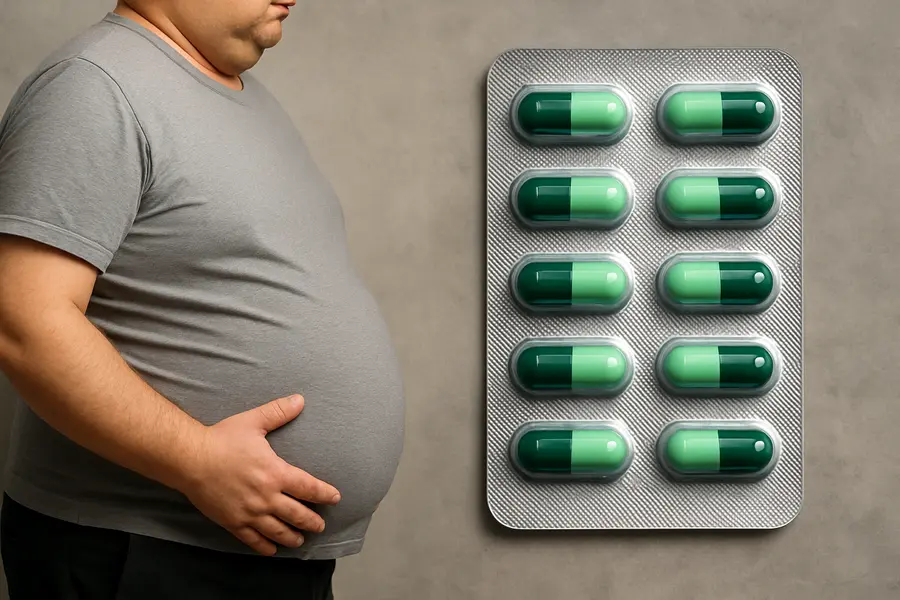
Eli Lilly's Foundayo emerges as a lifetime obesity drug, backed by weight regain data and analyst forecasts of $14.8 billion in peak annual sales.
- Foundayo (orforglipron) won FDA approval April 1, 2026 for chronic obesity management at $149–$349/month for self-pay patients.
- GLP-1 discontinuation triggers rapid weight regain, strengthening the case for continuous, multi-year use of Eli Lilly weight loss drugs.
- Analysts forecast Foundayo peak sales above $14.8 billion; Lilly's next-gen retatrutide posted 28.3% average weight loss in Phase 3 trials.
Lead
Eli Lilly's (LLY) newly approved obesity pill Foundayo secured FDA clearance on April 1, 2026, and market analysts are rapidly coalescing around a single, commercially powerful thesis: this is a drug patients will take for the rest of their lives. The shift repositions Lilly's oral weight loss drug portfolio not as a finite intervention but as a permanent layer of chronic disease management — a framing that underpins peak annual sales forecasts as high as $14.8 billion for Foundayo alone and carries sweeping implications for pharma industry trends and for investors tracking Eli Lilly stock.What Happened
Foundayo, the brand name for orforglipron, became the only GLP-1 receptor agonist pill cleared by the U.S. Food and Drug Administration for weight management that carries no food or water restrictions. The once-daily, small-molecule tablet can be taken at any time of day — a structural advantage over existing injectable therapies such as Lilly's own Zepbound and Novo Nordisk's Wegovy, which require weekly injections and refrigeration.
In its pivotal Phase 3 ATTAIN-1 trial, the highest dose of orforglipron (36 mg) produced average weight loss of 12.4% — or roughly 27.3 pounds — over 72 weeks, compared with 0.9% on placebo. A separate Phase 3 study, the first of its kind, demonstrated that orforglipron maintained weight loss in patients who had previously been using injectable GLP-1 therapies, validating its use as a long-term maintenance bridge.
Lilly priced Foundayo at $149 per month for the lowest self-pay dose, rising to approximately $349 for higher doses, with commercially insured patients eligible for as low as $25 per month through LillyDirect. The lower price threshold relative to injectable alternatives — which can exceed $1,000 monthly — is a central pillar of the lifetime drug narrative.
The Chronic Disease Case
The clinical argument for indefinite use is unambiguous. Studies show that patients who stop GLP-1 medications regain approximately two-thirds of lost body weight after discontinuation. Critically, that regain occurs four times faster than weight gained after patients stop conventional dieting — a finding that points directly toward continuous pharmacological management as the medical standard.
Obesity is now formally classified as a chronic, relapsing disease by major health organizations, placing it in the same long-term treatment paradigm as hypertension or type 2 diabetes. That classification is the conceptual foundation for analysts projecting that Eli Lilly obesity pill revenues will compound over decades rather than peak and recede.
Patient persistence data supports the thesis. The share of GLP-1 users still filling prescriptions twelve months after starting rose to 63% among those who began treatment in early 2024, nearly double the 33% retention rate recorded in 2021. As access expands and out-of-pocket costs fall, adherence is expected to improve further.
Financial Momentum
The commercial backdrop is exceptional. Lilly posted first-quarter 2026 revenue of $19.8 billion, up 56% year-over-year, driven by blockbuster sales of its injectable portfolio. Mounjaro alone generated $8.7 billion in the quarter, exceeding consensus estimates by more than $1 billion. Zepbound contributed significantly to a combined weight-loss and diabetes franchise approaching $11 billion per quarter.
Following the Foundayo launch, Lilly raised its full-year 2026 revenue guidance to between $82 billion and $85 billion, with adjusted earnings per share projected at $35.50 to $37.00. On Foundayo specifically, 2026 sales estimates range from $1.5 billion (Guggenheim) to $2.8 billion (Citi), with GlobalData projecting $13 billion in annual revenues by 2031 and a FactSet consensus pointing to $14.79 billion by 2030. Peak sales projections across multiple analyst models exceed $40 billion.
Competitive Landscape
The Eli Lilly obesity pill entered the oral GLP-1 market approximately three months behind Novo Nordisk's pill-form Wegovy, setting up the next phase of what has become the decade's defining pharmaceutical rivalry. Newly approved oral GLP-1 treatments collectively had been prescribed to roughly 170,000 patients by early March 2026, outpacing the adoption curve of earlier injectable GLP-1 launches.
Lilly's conviction in the oral category is reinforced by its pharma industry pipeline. Retatrutide, the company's next-generation triple agonist targeting GIP, GLP-1, and glucagon receptors simultaneously, delivered 28.3% average weight loss — equivalent to 70.3 pounds — over 80 weeks in Phase 3 TRIUMPH-1 results announced in May 2026. In a 104-week extension cohort with higher BMI participants, average weight loss reached 30.3%, or 85 pounds — approaching outcomes historically associated only with bariatric surgery. Retatrutide's FDA application is expected to target a 2027 regulatory pathway.
The global anti-obesity drugs market is projected to grow from $19.6 billion in 2025 to $104.9 billion by 2035, a compound annual growth rate of 18.3%.