Pomegra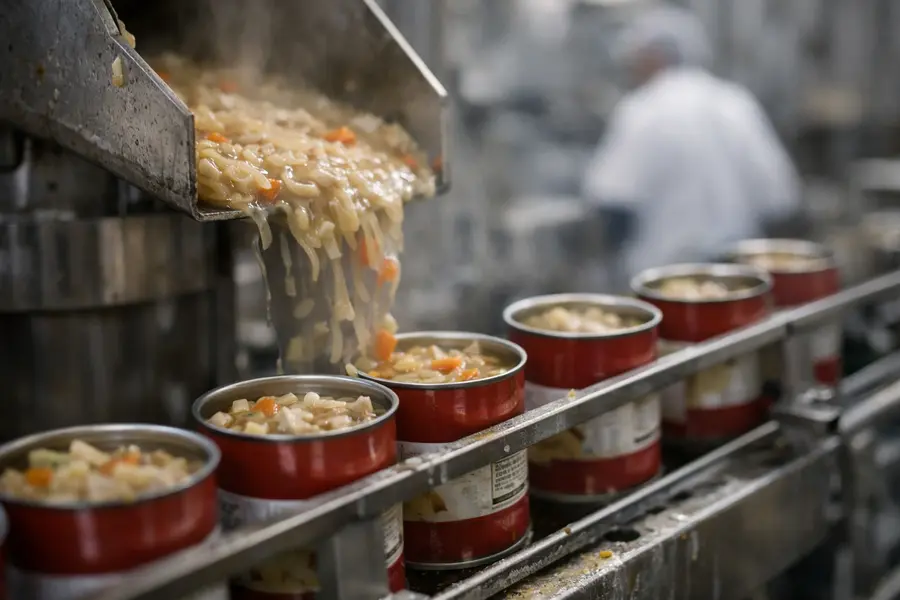
Campbell's (CPB) tumbled 7% after FY2027 EPS guidance of $1.65-$1.80 missed the $1.83 FactSet consensus, marking consumer staples' first explicit post-rate-hike margin guidance casualty of September 2026.
- CPB shares dropped approximately 7% after FY2027 adjusted EPS guidance of $1.65-$1.80 came in as much as 11% below the $1.83 FactSet consensus.
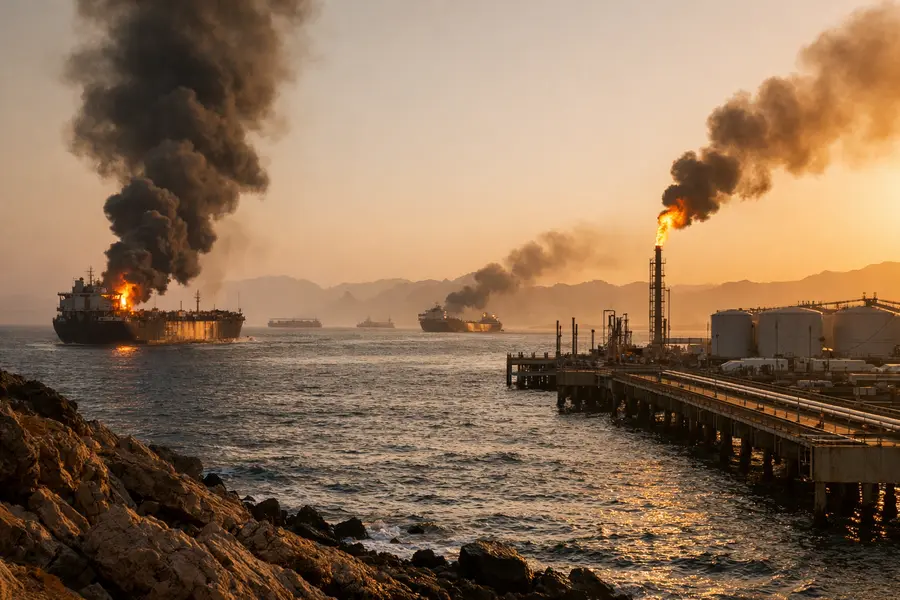
- Brent crude trading near $97-$98 per barrel is compressing processed food supply chains through packaging, freight, and agricultural input costs simultaneously.
- Campbell's joins a growing list of consumer staples names revising outlooks lower as the Iran conflict's inflationary effects reach packaged-food earnings.
Lead
Campbell's Soup (CPB) shares fell roughly 7% in early September trading after the company issued fiscal year 2027 adjusted EPS guidance of $1.65 to $1.80 - well short of the $1.83 FactSet consensus - signaling that the Iran-driven oil shock has begun transmitting directly and materially into processed food supply chain costs. The guidance miss, announced alongside fourth-quarter results showing a 37% year-over-year drop in adjusted EPS to $0.39 per share, makes Campbell's the consumer staples sector's most visible margin guidance casualty of September 2026, the first full month in which crude prices have sustained above $90 per barrel following an intensified round of U.S.-Iran strikes.Why Did Campbell's Miss the Consensus by This Margin?
Three interlocking cost pressures overwhelmed Campbell's partial productivity savings. First, plastics packaging - a direct petrochemical derivative - has risen roughly 15% since hostilities escalated, and Campbell's high-volume soup and snack lines consume packaging at industrial scale. Second, diesel and freight rates roughly doubled over the prior three months as Strait of Hormuz disruptions removed approximately 20% of global oil supply transit, sending trucking and cold-chain logistics costs sharply higher. Third, oil-linked fertilizer costs pushed wheat prices up approximately 19% and contributed to broader agricultural commodity inflation, squeezing the raw ingredient side of the margin equation simultaneously.
Full-year fiscal 2026 net sales had already contracted 5% to $9.7 billion, and the company's fourth-quarter revenue declined 8% to $2.1 billion. Against that deteriorating revenue base, the additional input cost layer landing in fiscal 2027 left management with a guidance range that concedes a further 17% to 24% decline in adjusted EPS versus the prior year.
How Does an Iran Oil Shock Flow Through Processed Food Supply Chains?
Oil functions as a cost input at nearly every node of a processed food company's supply chain, not just at the fuel pump. The transmission mechanism begins at the farm level, where diesel powers harvesting equipment and oil-derived fertilizer determines crop yields and prices. It continues through ingredient processing, where energy costs are embedded in every ton of tomatoes cooked, grain milled, or broth produced. The shock then flows downstream into packaging, because polyethylene and polypropylene - both petrochemical derivatives - are the primary materials for cans, pouches, and carton liners. The final leg is logistics, where diesel-priced trucking and maritime freight carry finished product to retail shelves.
For companies like Campbell's, all five channels are activated simultaneously when crude oil sustains above $90 to $100 per barrel, as it has since early September. Bloomberg Intelligence estimates suggest a prolonged conflict scenario could compress gross margins for consumer staples companies by 200 to 500 basis points if oil holds above $100. With Brent crude at $97.73 per barrel as of the latest session, the sector is approaching that threshold.
Market Reaction
The 7% single-session decline in CPB represented a roughly two-year low for the stock on elevated volume. The move reflected not only the magnitude of the EPS guidance shortfall but also the accompanying announcement of a 36% dividend cut - from $0.39 to $0.25 per quarter - which the company framed as a mechanism to accelerate debt reduction following the $2.7 billion acquisition of Sovos Brands in 2023. The simultaneous delivery of a guidance miss, a dividend reduction, and a new $500 million cost-savings program extending to fiscal 2030 signaled to investors that a multi-year reset is underway rather than a one-quarter correction.
Broad consumer staples sector pressure accompanied the move, with investors reassessing margin assumptions across packaged food peers given the shared oil-price exposure.
What Does This Signal for Consumer Staples Sector Earnings This Quarter?
Campbell's September guidance revision confirms what many sector analysts had modeled as a risk scenario: the Iran oil shock is no longer theoretical for consumer staples income statements. The company's explicit linkage between crude costs, packaging inflation, and freight in its FY2027 outlook provides a template that peers with similar cost structures - heavy reliance on petrochemical packaging, commodity ingredients, and national trucking networks - will likely echo in their own autumn reporting cycles.
Net sales for fiscal 2027 are guided to decline a further 2% to 4%, deeper than the 0.8% contraction FactSet had modeled. The gap implies that volume pressures from price-sensitive consumers and cost headwinds from the energy complex are compounding, rather than offsetting, each other.
Outlook
Campbell's fiscal 2027 guidance establishes a new, lower floor for consumer staples earnings expectations at a moment when crude oil remains within striking distance of $100 per barrel and Strait of Hormuz throughput is not expected to return to pre-conflict levels until the first half of 2027. The $500 million cost-savings program and dividend reduction provide some financial flexibility, but meaningful margin recovery is contingent on either a normalization of energy prices or a consumer environment that can absorb further list-price increases - neither of which appears imminent. For the broader sector, CPB's September guidance miss will function as an early indicator of how deeply the Iran-driven oil shock has embedded itself in processed food cost structures heading into the fiscal year-end reporting season.
Mentioned tickers: CPB