Pomegra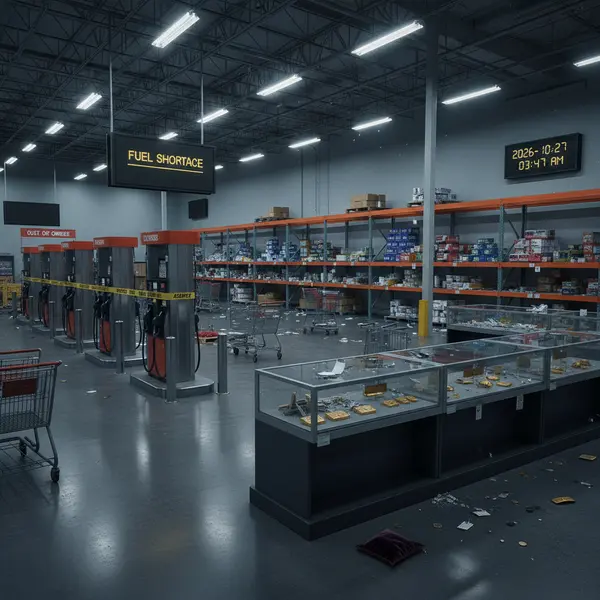
A new wave of Costco panic buying 2026 — spanning fuel, gold, and GLP-1 drugs — powered Q3 revenue to $70.53 billion and the chain's five best-ever sales weeks.
- Costco gas stations set five consecutive all-time volume records in Q3 2026's final weeks, with fuel comparable sales rising into the "positive high twenties."
- Gold bars, GLP-1 prescriptions, and self-care products joined gasoline as breakout categories on the Costco shortage list, each delivering double-digit growth.
- Total Q3 revenue of $70.53 billion beat Wall Street estimates of $69.81 billion; net income climbed 15.2% to $2.19 billion, or $4.93 per diluted share.
Lead
Costco Wholesale (COST) reported its strongest quarterly performance on record for the third fiscal quarter of 2026, as an unexpected wave of panic buying swept its 924 warehouses — this time centered not on toilet paper but on gasoline, gold bars, and weight-loss medications. Net sales reached $69.15 billion, up 11.6% year-over-year, with total revenue of $70.53 billion clearing consensus estimates of $69.81 billion. Net income rose 15.2% to $2.19 billion. CEO Ron Vachris, announcing results on May 28, described the final stretch of the quarter as the company's best sales period in its four-decade history.What Happened
Gasoline was the defining story. All three four-week fiscal periods in Q3 set successive all-time company volume records, and the final five weeks produced the five highest-volume sales weeks Costco has ever logged. Vachris tied the surge directly to the ongoing conflict in the Middle East, which has elevated crude prices globally and pushed average U.S. pump prices above $4 per gallon — and past $6 on the West Coast.
Costco's retail fuel prices, which typically run 10 to 30 cents per gallon below competitors, became a powerful draw for both existing members and first-time visitors. Stations at multiple locations required tanker-truck deliveries several times per day to avoid running dry. Fuel comparable sales landed in the "positive high twenties" — a figure that ordinarily tracks commodity price swings but now reflected a simultaneous surge in volume as well.The Unexpected Surge
Beyond fuel, Q3 revealed a Costco shortage list that caught the retail sector by surprise. Gold and jewelry emerged as one of the quarter's sharpest growth categories, with double-digit digital gains. The retailer's one-ounce PAMP Suisse gold bars, priced at approximately $4,119 — up roughly 108% over two years as gold surpassed $5,000 per troy ounce — routinely sold out within hours of restocking online. Purchase limits tightened to four units per 24-hour period per membership as demand consistently outpaced supply.
Tariff-driven stockpiling rounded out the unexpected demand picture. Members loaded carts with consumer electronics — phone chargers, cables, and portable gaming consoles — alongside small kitchen appliances including blenders and vacuum cleaners, in anticipation of price increases on imported goods. Grocery categories sensitive to trade policy, among them imported coffee, smoked salmon, and Canadian maple syrup, also saw accelerated purchasing as consumers sought to lock in pre-tariff prices.
Retail Supply and Tariff Dynamics
Retail supply execution was a key differentiator. Costco's buying team executed a domestic sourcing pivot across health and beauty, tires, and mattresses, while expanding its Kirkland Signature private label to absorb import-cost increases. Less than one-sixth of U.S. goods are sourced from China, Mexico, and Canada, limiting direct tariff exposure relative to many competitors. Vachris confirmed the company is "actively filing for refunds on tariffs struck down by the Supreme Court," with recovered amounts committed to member price reductions.Membership growth reinforced the underlying business model. Total paid members reached 82.9 million, up 4.1%, with worldwide renewal rates holding at 89.7%. Executive memberships — which carry higher annual fees and drive elevated per-visit spending — grew 9.6% to 41.2 million. Membership income rose 10.7% to $1.37 billion. Digital engagement accelerated alongside in-store volumes: site and app traffic increased 37% and digitally-enabled comparable sales rose 21.5%.
Costco shares have rallied 18% year-to-date in 2026, reflecting investor confidence in the company's tariff resilience and membership-driven recurring revenue model.Outlook
The Costco panic buying 2026 surge differs structurally from prior episodes. The triggers — fuel-price inflation tied to geopolitical disruption, gold prices reflecting macro uncertainty, GLP-1 demand rooted in healthcare consumerism, and broad tariff-driven stockpiling — are secular in nature and unlikely to reverse quickly. With a renewal rate near 90%, five consecutive record gas-sales weeks, and unexpected breakout growth in gold and pharmacy, Costco enters the second half of fiscal 2026 with operating momentum that rivals in conventional retail will find difficult to replicate.
Mentioned tickers: COST