Pomegra
China drafted export curbs on 40 AI, biotech and solar technologies as Taiwan readies criminal penalties for AI chip smuggling under its US trade deal.
- China proposed adding 40 technologies to its export restriction catalogue: 23 in AI, 12 in solar and five in biomedicine.
- Taiwan will add AI servers and advanced chips to its controlled list, making unauthorized shipments to China a crime.
- Both moves reflect a fragmenting technology order in which AI inputs and outputs are managed as strategic assets.
Lead
On October 16, 2026, China's Ministry of Commerce and Ministry of Science and Technology published a draft revision of the national catalogue of technologies prohibited and restricted from export. The draft adds 40 items across artificial intelligence, photovoltaics and biomedicine. The same day, Taiwan signaled that it will align its own export controls on AI hardware with Washington's, a commitment tied to the Agreement on Reciprocal Trade it signed with the United States this year. Together, the announcements tighten control over both sides of the AI supply chain: the chips that train models and the models themselves.
What Did China Propose to Restrict?
China proposed adding 40 technologies to its export catalogue, split into 14 prohibited and 26 restricted items. Twenty-three relate to AI, including advanced large language models, AI agents and computing clusters. Twelve cover solar power, including polysilicon production. Five cover biomedicine, including cell and gene therapy.
The AI provisions are the most consequential. Exports of model weights, checkpoints, code and training methods would be restricted for models with 2 trillion parameters or more, models trained at roughly 10^26 floating-point operations, or those ranked among the global top 10. AI systems trained on sensitive national data, and agents built for defense or critical infrastructure, would be prohibited outright.
The draft exempts access through application programming interfaces, websites, apps and software-as-a-service platforms. Overseas users could keep using Chinese AI services such as those from DeepSeek, Moonshot and Alibaba (BABA), while the underlying model assets stay inside China. Public comment runs through November 15.
The commerce ministry called the step necessary for "reinforcing the security bottom line, preventing misuse and abuse, and ensuring that AI remains under human control."
What Is Taiwan Changing on AI Chip Exports?
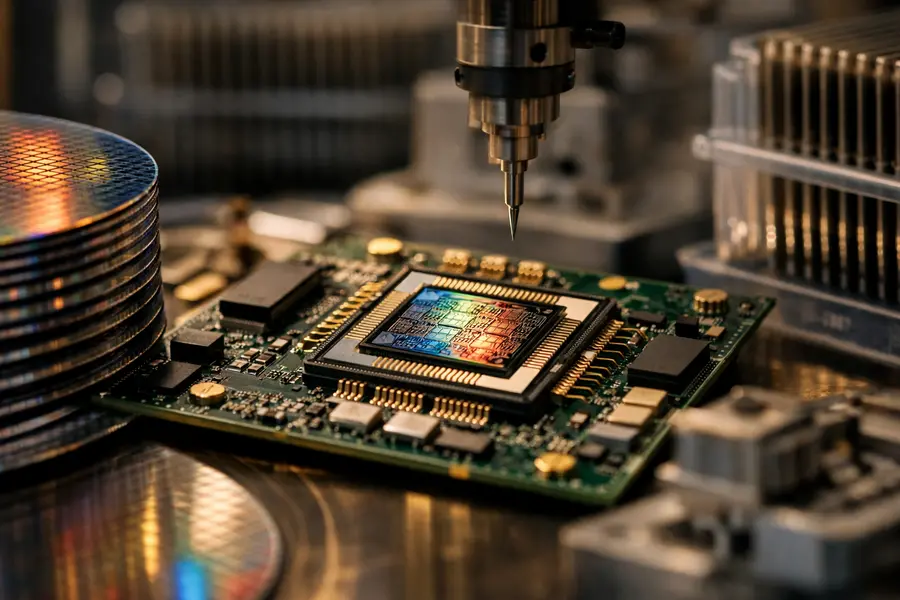
Taiwan will add AI servers and cutting-edge semiconductors to its list of controlled items, and shipping restricted AI hardware to China will become a criminal offense under the Foreign Trade Act. Economic Affairs Minister Kung Ming-hsin said some of Taiwan's controlled-item measures will "correspond to American ones" because of commitments made in the trade agreement. No implementation date has been given.
The change closes a legal gap. Taiwan does not currently treat unauthorized AI chip exports to China as a crime. Officials have warned sellers that shipments may breach US rules, but prosecutors have had to rely on other local statutes to charge suspected smugglers.
Why Does the Smuggling Issue Matter to Markets?
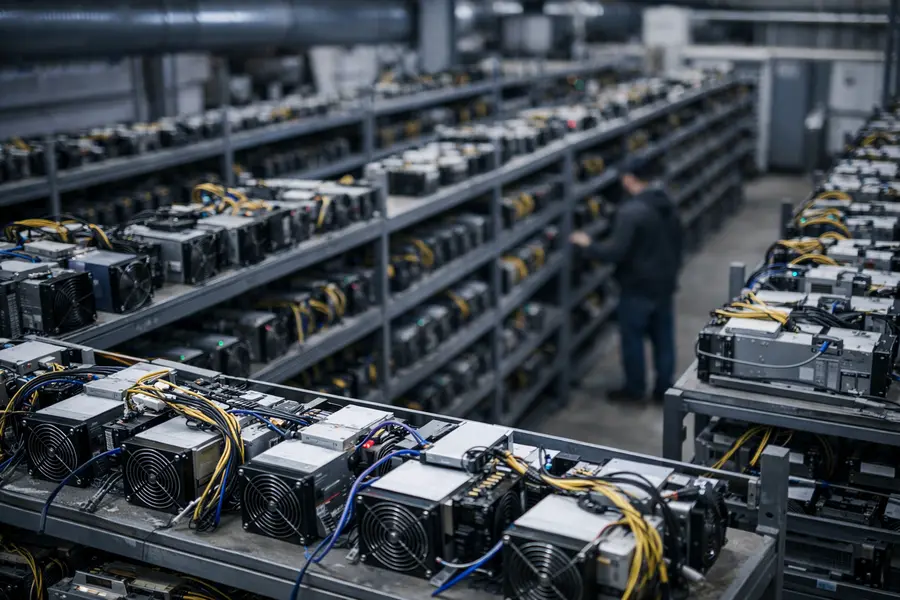
Smuggling has become the main leak in US export policy, and Taiwan is a central transit and assembly point for AI hardware. US prosecutors have alleged that employees of Super Micro Computer (SMCI) were involved in diverting at least $2.5 billion of Nvidia (NVDA) chips to China, and that the company's co-founder Yih-Shyan Liaw was arrested. Nvidia staff in Taiwan have also been linked to a smuggling ring.
For Nvidia, whose official China sales are already limited by Washington's licensing rules, a tighter Taiwan channel would curb gray-market demand that never appeared in reported revenue. It would also lower regulatory risk for suppliers and server makers, including TSMC (TSM) and AMD (AMD), that sit in the chain. Shares of these companies are central to many ai stocks portfolios, so any enforcement that changes shipment volumes will be watched closely, though neither announcement alters company guidance.
Strategic Context
The two moves differ in kind but share a logic. Taiwan is conforming to US policy as the price of its trade arrangement and as protection for its role in the semiconductor supply chain. Taipei is also planning to raise billions of dollars for industrial parks in the United States to support AI hardware production.
China's draft is a response to Western demands for technological sovereignty. It mirrors the US approach of controlling a strategic technology at its source, applied to software and know-how rather than hardware. It arrives as Beijing and Washington have made limited progress on AI safety dialogue, including a mechanism to notify each other of AI security incidents. Cooperation on safety is coexisting with competition on supply.
What Comes Next for AI Supply Chains?
In the next three to twelve months, the key variables are the final catalogue after the November 15 comment deadline, the timing of Taiwan's legislative and regulatory steps, and enforcement by US and Taiwanese prosecutors.
- China's catalogue: Thresholds based on parameter count and compute are likely to draw attention from developers near the cutoff, and the API exemption leaves the commercial model for Chinese AI services largely intact.
- Taiwan's penalties: Criminal liability raises compliance costs for server assemblers and distributors, and for intermediaries in Southeast Asia.
- Biotech and solar: Controls on gene therapy and polysilicon know-how extend the contest beyond semiconductors into industries where China holds scale advantages.
Over the longer term, the structural shift is toward parallel technology ecosystems, with export rules and licensing deciding where models are trained, deployed and sold.
Outlook
China's draft would place 40 technologies, led by advanced AI models, under export restrictions, while Taiwan's planned criminal penalties would tighten the main route for AI chips to reach Chinese buyers. Neither measure has taken full effect, and the details in the final rules will determine the impact on Nvidia, Super Micro, TSMC and Chinese AI developers.
Mentioned tickers: NVDA, TSM, AMD, SMCI, BABA