Pomegra
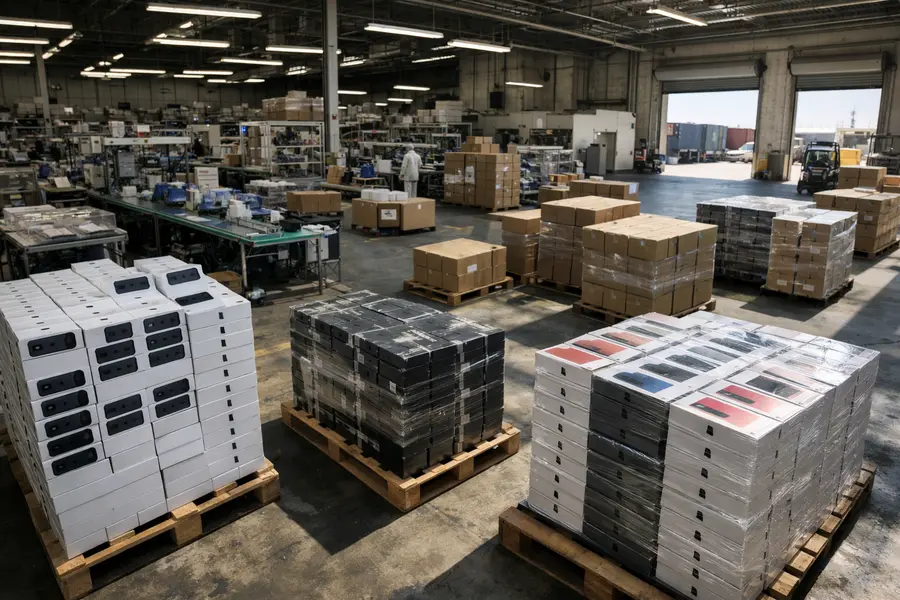
Apple's $1,999 foldable iPhone Duo faces a supply crunch, with two-per-customer limits and delivery dates now stretching beyond three months to January.
- Apple caps iPhone Duo purchases at two per customer; walk-in stock at stores will be "limited" on launch day.
- Online delivery estimates reach January 29, more than three months after the October 23 release.
- AAPL shares rose about 1% as the delivery slippage was read as a sign of demand.
Lead
Apple (AAPL) enters Friday's launch of its first foldable phone with demand far ahead of supply. The company said on October 21 that stores will hold only a limited number of iPhone Duo units for walk-in customers when sales begin October 23. Online orders are capped at two units per customer, a measure meant to deter scalpers and resellers. Pre-orders sold out within minutes of opening on October 16, and U.S. delivery estimates for every storage tier now sit at January 29.What Is Happening With iPhone Duo Supply?
Supply is running well below demand, and the gap has pushed wait times past three months. Pre-orders opened at 5 a.m. Pacific on October 16. Delivery estimates slid beyond the official launch date within hours and into late January by that afternoon.
The device is Apple's first book-style foldable, with a 5.4-inch outer display and a 7.6-inch inner display. U.S. pricing runs from $1,999 for 256GB to $2,199 for 512GB, $2,599 for 1TB and $3,199 for 2TB. It comes in Star White and Night Sky.
The first wave covers the U.S. and more than 70 other countries on October 23. A second wave reaches 28 additional countries and regions on October 30.
Why Is the iPhone Duo So Hard to Get?
Constrained production of a new, complex form factor meets strong early demand. Foldable assemblies are harder to manufacture at scale than conventional slab phones, and the ramp for a first-generation product is typically gradual. Apple has not published unit volumes, but the same January date applying to all four storage tiers shows that no configuration is available in meaningful quantity.
The two-unit limit also addresses resale risk. A $1,999-plus device with a three-month queue invites arbitrage, and the cap keeps stock in the hands of end users rather than intermediaries.
How Did Apple Shares React?
AAPL shares gained about 1% on the morning of October 16 as delivery dates slipped. Investors treated the extended queue as evidence of demand rather than a failure of execution. The prevailing view on the Street is that wait times beyond three months reflect both strong appetite and a supply ramp that was already understood to be tight.The foldable carries weight beyond its own sales. At prices starting near $2,000, the Duo lifts average selling prices at a company whose iPhone line accounts for the largest share of revenue. Even modest volumes can influence Apple's mix and margins in the holiday quarter.
What Comes Next for Apple's Foldable Rollout?
The next test is how quickly output rises and how long the shortage lasts. Apple's holiday-quarter results, due after the launch, will show how many units reached customers before year-end. The company's own supply language, "limited" stock at launch, points to a gradual easing rather than a sharp one.
A delivery queue that runs to late January also shapes the competitive picture. Buyers who cannot get a Duo may wait rather than switch brands, which holds demand in reserve for early 2027. Rivals with established foldables have a window to press their own offers, though the premium price point narrows the pool of shoppers who compare across brands.
Outlook
The iPhone Duo launches Friday with scarce walk-in inventory, a two-per-customer cap and January delivery dates. Investor response has been positive so far, with AAPL higher on the news. The key variables ahead are the pace of production, the October 30 international rollout and whether sustained scarcity builds demand or tests buyers' patience.
Mentioned tickers: AAPL