Pomegra
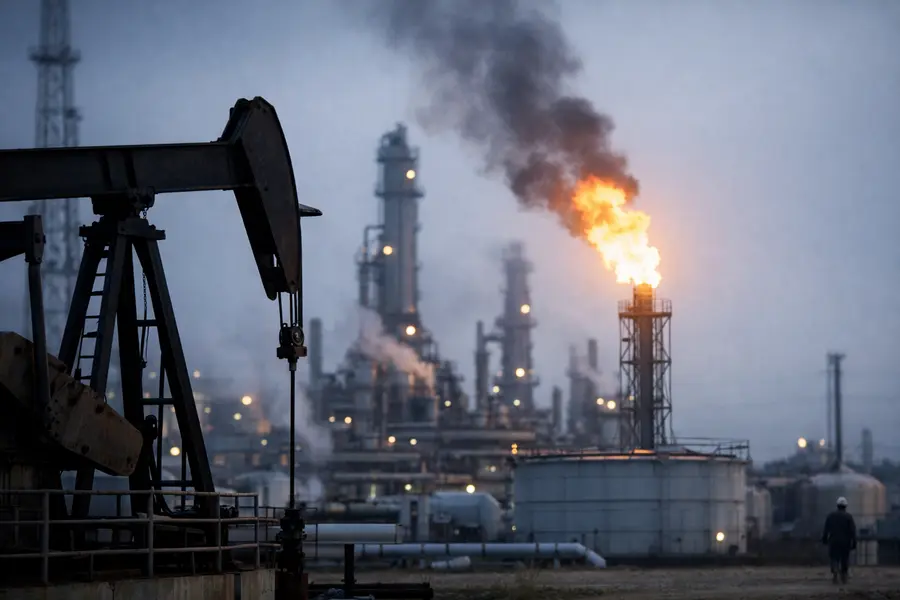
Brent crude near $110 after a drone strike at a Saudi Aramco field is pressuring India's Sensex, Nifty and rupee as import costs and inflation risks climb.
- Brent settled at $108.82 on Wednesday and touched $110.33 after the close, as Houthi strikes on Saudi targets continued.
- The Sensex fell 0.19% to 73,709.69 and the Nifty 50 lost 0.34% to 22,811.35, with mid and small caps hit harder.
- India imports about 85% of its oil, so higher prices raise the import bill, weaken the rupee and squeeze margins.
Lead
Brent crude climbed toward $110 a barrel on October 21 after another attack on a Saudi Aramco (2222.SR) oil field, and Indian equities ended lower on fears that costlier energy will deepen the market's weakness. A drone strike linked to the Shaybah field killed two people, the Saudi Press Agency reported. Brent settled at $108.82 and traded as high as $110.33 after the close. U.S. West Texas Intermediate settled at $97.15. Oil is up roughly 80% this year, and the crude oil price now sets the daily tone for Indian traders.
What Happened at the Saudi Oil Field?
The Houthi movement, an Iran-backed group in Yemen, claimed six operations against Saudi targets between October 19 and 20. They named Aramco's Yanbu facilities on the Red Sea coast, the Shaybah oil field and airports in Riyadh and Abha.
Saudi authorities confirmed that debris from an intercepted drone near Shaybah killed two foreign workers and injured two others. The Saudi Ministry of Energy said the incident did not affect operations at the field, which has capacity of about 1 million barrels a day. Riyadh has not confirmed the Houthi claims of successful strikes on the other sites.
The market is reacting to the pattern of attacks more than to any lost barrels. The U.S. State Department is preparing an ordered departure of some personnel and family members from embassies across the Gulf region.
Why Did Oil Prices Jump Despite Unchanged Output?
Oil rose because the strikes widen the set of facilities exposed to attack at a time when supply is already tight. Disruptions around the Strait of Hormuz and Ukrainian attacks on Russian refineries have pushed refined products such as diesel up even faster than crude. Shaybah and Yanbu sit on different parts of the kingdom's export system. An attack on either raises the risk premium on Saudi barrels that spare capacity would normally cover.
How Did Indian Markets React?
Indian equities finished lower on October 21 after giving up early gains. The Sensex closed at 73,709.69, down 143.21 points. The Nifty 50 ended at 22,811.35, down 77.60 points. The damage was deeper below the large caps: the Nifty Midcap 100 fell 1.58% and the Nifty Smallcap 100 dropped 2.37%.
Information technology was the only sector to finish higher. Infosys (INFY) and HCLTech (HCLTECH) gained about 3%, helped by their dollar earnings. Bajaj Finance (BAJFINANCE) fell about 3%. Metals, autos, energy and realty lagged. Persistent selling by foreign institutional investors added to the pressure. The rupee traded near 94.5 to the dollar.
Why Does Oil Matter So Much for India?
India imports about 85% of its crude, so each sustained rise in price widens the current account deficit and weakens the rupee. A weaker rupee raises the cost of imported fuel further. Higher fuel and transport costs feed through to consumer prices, which limits the Reserve Bank of India's room to support growth with lower rates.
The pressure also reaches corporate earnings. Aviation, paints, chemicals and tyre makers depend on crude derivatives and face margin compression. Refiners and oil marketing companies must either absorb higher costs or pass them to consumers, a politically sensitive choice. Exporters with dollar revenue, such as IT services firms, benefit from the currency.
What Comes Next for Oil Prices and Indian Stocks?
The near-term path depends on whether Houthi strikes reach export infrastructure and on whether the conflict between Washington and Tehran escalates further. Oil is likely to stay volatile near $110 while attacks continue and shipping risk in the Red Sea and the Gulf stays elevated.
For the Nifty, chart watchers focus on support at 22,500 to 22,400 and again near 22,180. Resistance sits at 23,175, Monday's high. The Bank Nifty has support near 54,700, with 54,000 to 53,500 as the next downside zone. A move in Brent back below $100 would ease pressure on the rupee and inflation. A sustained break above $110 would sharpen it, especially if foreign outflows continue.
Outlook
A drone strike that left Saudi output intact still pushed Brent to the edge of $110, because the market is pricing the risk of further attacks on Gulf energy assets. India is among the most exposed large economies, given its import dependence, a rupee near 94.5 and steady foreign selling. The coming weeks will turn on the security of Saudi facilities, the Hormuz and Red Sea corridors, and the direction of U.S.-Iran tensions.