Pomegra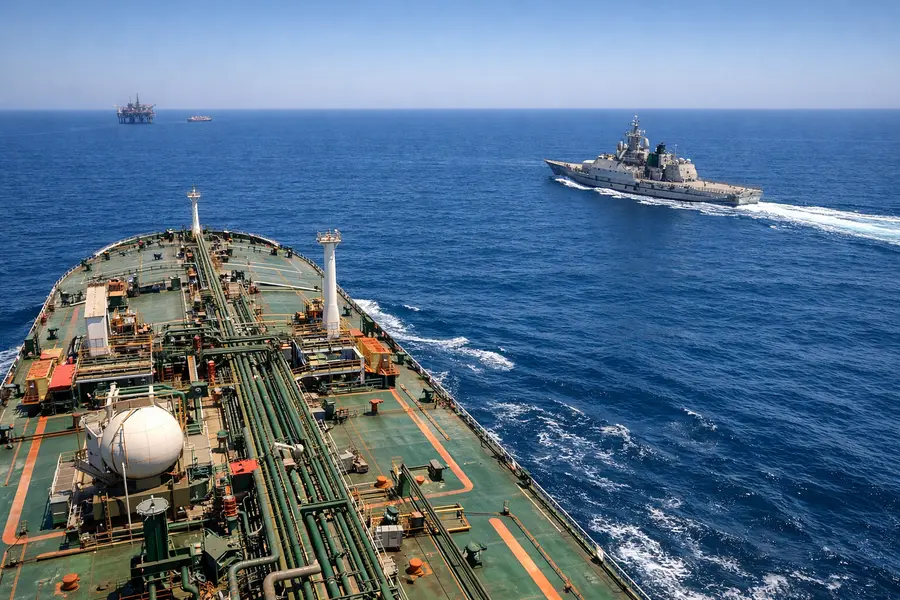
Brent crude surged past $105 a barrel after a senior Iranian military official threatened to expand the conflict to the Indian Ocean, crushing near-term hopes for a Strait of Hormuz deal and reigniting inflation fears across bond and equity markets.
- Brent futures jumped more than 3% to above $106 after Iran's military threatened to widen hostilities to the Indian Ocean if attacked
- The threat extinguished expectations for a Hormuz reopening deal -- a senior Iranian official had previously said navigation could resume within seven days under eased conditions
- The 10-year U.S. Treasury yield climbed to 5.12%, its highest level since 2007, as markets repriced rate-hike probabilities above 70%
Iranian Threat Sends Brent Above $105
Global energy markets surged on Wednesday after a top Iranian military official publicly warned that Tehran could extend combat operations into the Indian Ocean should the country face renewed assault -- a statement that arrived just days after diplomatic back-channels had signaled a possible path to reopening the Strait of Hormuz. Brent crude futures rose more than 3% to trade above $106 a barrel, reaching levels not seen since May, as traders rapidly unwound positions that had been building on ceasefire optimism. A senior Iranian official had indicated as recently as this month that the strait could be reopened within seven days if military pressure eased and port blockades were lifted; the military commander's remarks erased that calculus in a single session.
Why Did the Indian Ocean Threat Drive Such a Sharp Market Move?
The statement signaled a potential expansion of the conflict zone from the confined chokepoint of the Strait of Hormuz to one of the world's most critical maritime corridors. The strait, which runs between Iranian and Omani territorial waters, carries more than 20% of global seaborne crude -- but the tanker routes threading south through the Arabian Sea and across the Indian Ocean connect that supply to buyers in Asia, Europe, and beyond. Any credible threat to those lanes amplifies supply-chain exposure far beyond the Hormuz passage itself, removing one of the key geographic constraints that had previously limited the war's disruption to a single bottleneck.
The crude oil price marketwatch environment has already been extreme. The International Energy Agency has characterized the combined effect of Hormuz restrictions, shipping attacks, and infrastructure damage as the largest supply disruption in the history of the global oil market. Iran has pursued a strategy of maritime coercion since the onset of U.S. and Israeli operations in late February 2026, attacking commercial vessels and seeking to impose navigation protocols that would require ships to follow Iranian-controlled routes and pay transit fees. Two tankers were struck in the strait as recently as September 21, with one hit by an unknown projectile that injured crew members. Against that backdrop, the energy market treats any headline pointing to physical escalation as a catalyst for outsized price moves.
What Does This Mean for Inflation and Interest Rates?
The direct pass-through is through energy: Brent has now advanced more than 18% through September alone and is up more than 44% year-over-year. That kind of move prints rapidly in diesel, jet fuel, and industrial feedstocks, and from there into broader consumer prices.
Central banks are already responding. The European Central Bank raised its deposit rate to 2.50% from 2.25% on September 10 -- its second increase of 2026 -- as energy inflation in the eurozone reached 14.3%. Policymakers stated the conflict "continues to generate inflation pressures" and that price growth will remain "well above target for an extended period." A third consecutive move is now priced into European rates markets. In the United States, the Federal Reserve has pivoted sharply away from the easing posture that defined the start of the year. Markets assign approximately 70% odds to a rate hike at the next Federal Open Market Committee meeting, compared with 55% a day earlier. The 10-year Treasury yield surged to 5.12%, its highest since 2007, while the 2-year yield reached 4.40% -- a bond market signal that interest rates may need to climb further before energy-driven price pressures recede.
Market Reaction
U.S. equity futures fell roughly 1% on the session as the higher oil and bond-yield combination compressed multiples across growth-sensitive sectors. The SPDR S&P 500 ETF Trust (SPY) declined in after-hours trading, reflecting the broader risk-off shift. The SPDR Gold Shares ETF (GLD) gave back gains as the hawkish rate repricing continued to weigh on non-yielding assets, with spot gold trading at approximately $4,251 per troy ounce, down from recent highs. Energy sector equities provided a counterweight, benefiting from the crude price surge, but the net effect on diversified portfolios was negative as rising borrowing costs eroded valuations more broadly.
The spike in refined product prices -- diesel and jet fuel in particular -- drew attention from analysts focused on industrial cost exposure. Businesses and consumers directly absorb changes in refined product prices; headline Brent movements matter for financial markets, but diesel prices determine freight costs, agricultural inputs, and manufacturing margins.
Strategic Context
Iran's conduct since the June 2026 memorandum of understanding -- which sought to end hostilities -- has centered on leveraging Hormuz as a permanent instrument of economic coercion rather than as a temporary battlefield measure. Tehran has repeatedly attacked ships and threatened to enforce transit protocols that would grant Iran effective control over one of the world's most vital waterways. The Indian Ocean statement raises the strategic stakes further, suggesting Iran may be willing to shift from a localized maritime strategy to one that directly menaces the blue-water routes used by India, China, Japan, and South Korea to receive Gulf energy.
Talks between U.S. and Iranian envoys, described by President Donald Trump as "very productive," have so far produced no binding agreement on navigation rights or sanctions relief.
Outlook
Brent is unlikely to find durable relief absent a concrete, verified Hormuz reopening deal. Goldman Sachs has warned that Brent could exceed $120 per barrel in 2027 if Gulf production remains approximately 4 million barrels per day below pre-war levels. Central banks in the United States and Europe now face a forced choice: tolerate persistent energy-driven inflation or tighten further into slowing growth. The Iranian military's Indian Ocean threat, if it hardens into doctrine, marks a structural escalation -- one that extends the duration of the supply shock, complicates diplomatic resolution, and deepens the inflation-versus-growth dilemma confronting policymakers worldwide.
Mentioned tickers: SPY, GLD, USO, XLE