Pomegra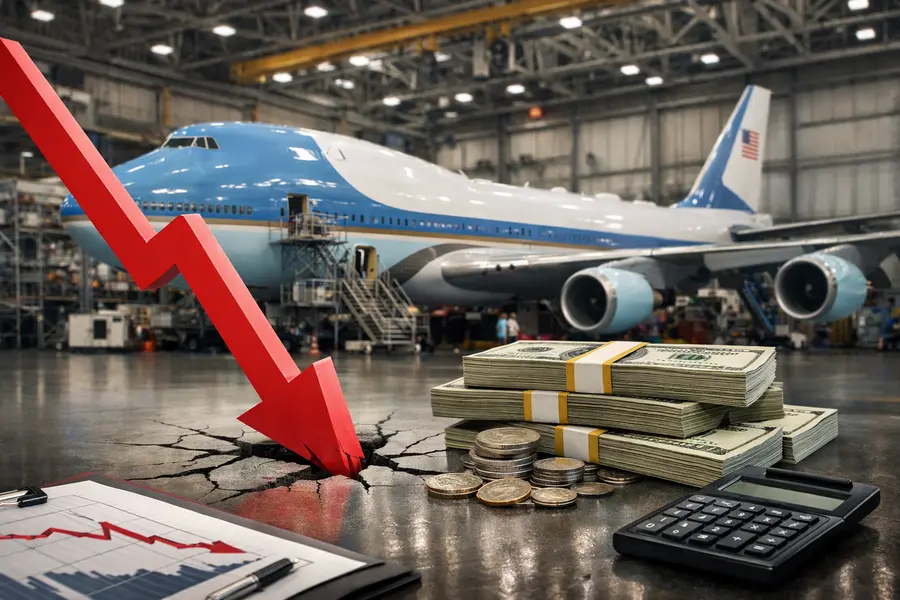
I have all the data needed. Writing the article now.
- Boeing posted a Q2 2026 core loss of 76 cents per share, more than double the 30-cent analyst consensus, driven by a fresh $280 million Air Force One write-down.
- Commercial deliveries climbed 14% year-over-year to 171 aircraft, lifting revenue 8% to $24.56 billion and topping the $24.25 billion consensus estimate.
- Free cash flow turned positive to $631 million from a $200 million outflow a year earlier; BA shares edged roughly 1% higher despite the earnings miss.
Boeing's second-quarter loss tripled analyst estimates as a $280 million Air Force One charge erased the benefit of stronger commercial deliveries and a swing to positive free cash flow.
Lead
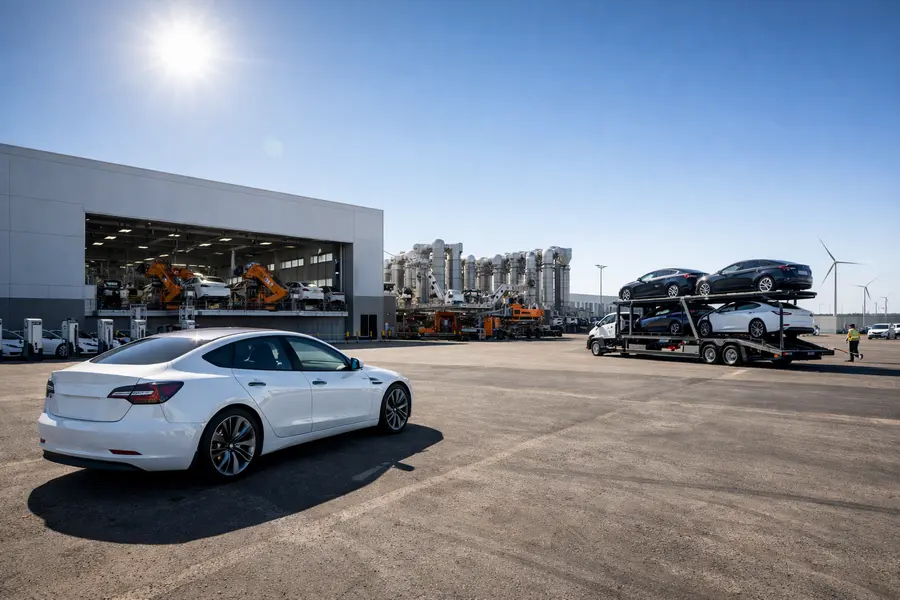
Boeing (BA) reported a second-quarter net loss of $428 million, or 67 cents a share, on July 28, 2026, as a $280 million charge on the long-delayed VC-25B program — the next-generation Air Force One — pushed results well beyond what Wall Street had anticipated. Stripping out one-time items, the company's core loss reached 76 cents per share, more than double the 30-cent shortfall analysts had forecast. Revenue of $24.56 billion, up 8% from a year earlier, beat estimates and reflected meaningfully higher output from the boeing factory network during the period.What Happened
The quarter's headline miss traces almost entirely to Boeing's defense segment, where the VC-25B program absorbed another $280 million charge as the company accelerated production ramp-up and expanded certification resources aimed at meeting a 2028 first-delivery target. The VC-25B contract — a $3.9 billion fixed-price agreement signed in 2018 to deliver two specially configured 747-8 jets to serve as Air Force One — is now roughly four years behind its original schedule. Cumulative cost overruns on the program have surpassed $3.1 billion, meaning Boeing has recorded losses exceeding $1 billion on each of the two aircraft.
Fixed-price defense development contracts have repeatedly pressured Boeing's balance sheet over the past several years, and the VC-25B remains the most visible and politically charged example. The company has stated that production and certification work is advancing and that the 2028 delivery window remains its operative plan.
Market Reaction
Despite reporting a loss more than double the Street's estimate, BA shares gained roughly 1% in early trading on July 28. The muted but positive reaction reflected a broader recognition that the Air Force One charge, while large, is a known and bounded liability rather than a sign of broader operational deterioration. Investors appeared to focus instead on the improvement in commercial aviation output and the return to positive free cash flow, both of which signal that Boeing's core recovery trajectory remains intact.
Commercial Recovery Takes Shape
The Commercial Airplanes segment delivered 171 jets in the second quarter, a 14% increase from the 150 deliveries recorded in the same period a year earlier. Segment revenue climbed to $11.8 billion from $10.9 billion, reflecting higher volume across the 737 MAX and 787 Dreamliner families. The delivery improvement is a direct output of steady production rate increases at Boeing's manufacturing facilities over the past four quarters, as the company works to rebuild throughput following a prolonged period of quality-control scrutiny and supply-chain disruption.
Total quarterly revenue reached $24.56 billion against a consensus estimate of $24.25 billion, a beat that underscored the commercial unit's improving cadence.
Cash Flow Milestone
Free cash flow of $631 million marked a significant inflection. In the second quarter of 2025, Boeing consumed $200 million in cash, making the year-over-year swing of more than $830 million one of the more closely watched metrics in the report. Positive free cash flow gives Boeing financial flexibility to service its substantial debt load, which accumulated during the pandemic-era production halt and subsequent recovery period.Strategic Context
The VC-25B situation illustrates a tension that has defined Boeing's defense portfolio for years: fixed-price development programs signed during a period of low inflation and optimistic schedules have repeatedly generated losses as costs escalated and timelines extended. The Air Force One program, given its direct association with the U.S. presidency, carries outsized political visibility alongside its financial weight. Progress toward the 2028 delivery date will be monitored closely by both investors and Washington.
On the commercial side, the central question is whether Boeing can sustain and accelerate the delivery rate improvements seen in the first half of 2026 without triggering new quality issues — the concern that led regulators to impose production caps in prior years.
Outlook
Boeing enters the second half of 2026 with its commercial trajectory pointing in the right direction: deliveries are rising, revenue is beating estimates, and free cash flow has turned positive. The Air Force One program remains a material drag, with total overruns already exceeding $3.1 billion on a contract originally valued at $3.9 billion, and further charges cannot be ruled out before the aircraft reach delivery. The market's willingness to look past a wider-than-expected loss and reward the stock modestly reflects confidence that the defense headwind is finite while the commercial recovery story is durable.