Pomegra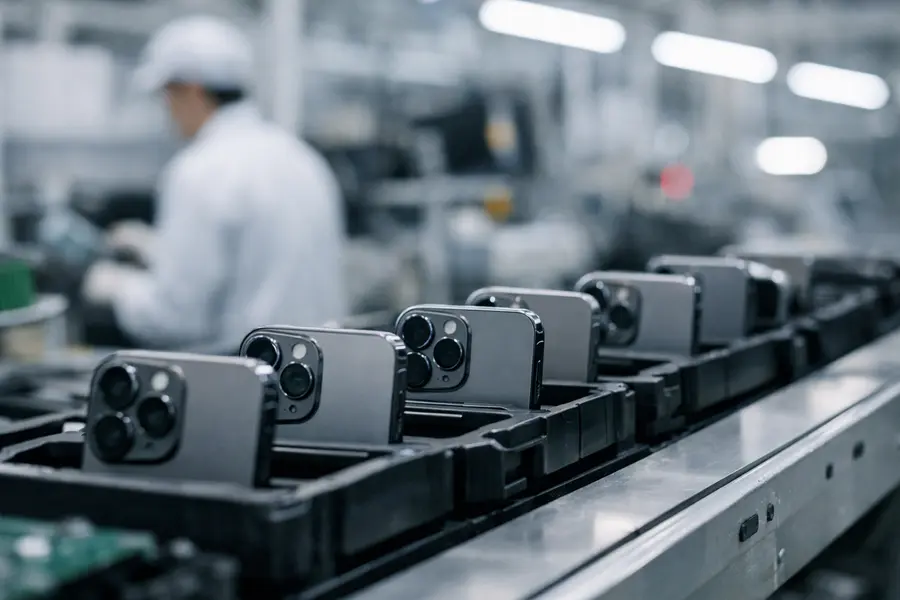
Apple (AAPL) told suppliers to trim iPhone 18 Pro component orders by at least 15% for October as a $100 price rise and costly memory chips weigh on demand.
- Apple has cut October iPhone 18 Pro and Pro Max component orders by 15% to 20% from earlier plans.
- The Pro models start at $1,199 and $1,299, each $100 above their predecessors.
- Apple shares fell about 3% to $331.22 while the Nasdaq-100 tracker QQQ rose 0.7%.
Lead
Apple has instructed suppliers to reduce component orders for the iPhone 18 Pro and iPhone 18 Pro Max by at least 15% for October, a cut first reported by Nikkei Asia on October 9. The reduction follows weaker-than-expected sales since the phones launched in September at higher prices. Apple (AAPL) shares fell about 3% to $331.22 in U.S. trading, trimming the stock's gain for the year to roughly 22%.What Happened to iPhone 18 Pro Orders?
Apple lowered its October production plans for the Pro line by 15% to 20% from original expectations. The company has also taken a more cautious approach to shipments since early September, when the devices went on sale.
The iPhone 18 Pro now starts at $1,199 and the Pro Max at $1,299. Apple has not publicly commented on the order changes.
Why Are Memory Chip Costs Driving Up iPhone Prices?
Memory costs have risen because AI data centers are absorbing a growing share of DRAM and NAND output, leaving less capacity for consumer electronics. Apple Chief Executive Tim Cook flagged the issue on the July earnings call, saying the company saw "the market pricing for memory continuing to increase, which could drive an increasing impact on our business."
The squeeze links the AI infrastructure build-out directly to consumer hardware. Memory makers have gained pricing power from AI demand, a dynamic that has supported many AI stocks. Device makers have to either absorb those costs or pass them on. Apple chose the second route with the $100 increase, and early demand suggests buyers have resisted.
How Did Markets React?
The sell-off was concentrated in Apple and its handset supply chain. Apple (AAPL) opened down about 2.3% and extended losses to roughly 3% during the session.
Among suppliers, Skyworks Solutions (SWKS) slipped about 2% to $78.95, though it remains up around 27% for the year. Qualcomm (QCOM) edged up 0.4% to $176.64. Broader markets held firm. The iShares Semiconductor ETF (SOXX) gained about 2% and the Invesco QQQ Trust (QQQ) rose 0.7%, a sign that investors treated the news as specific to the iPhone cycle rather than a signal on technology spending.
Market consensus has been measured. Earlier order trims during past iPhone cycles were often followed by share recoveries, and a cut to one month's component orders does not by itself indicate full-quarter results.
What Does This Mean for Apple's Holiday Quarter?
The cut matters most for the quarter ending in December, when the iPhone typically generates the largest share of Apple's annual revenue. Lower component orders point to lower assembly volumes in October, which can be recovered if sales improve. The risk is that a higher entry price for the Pro line shifts buyers toward older or cheaper models, lowering the average selling price Apple has relied on to offset slower unit growth.
Margins face a separate test. Higher memory prices raise Apple's bill of materials, and the $100 price increase was designed to offset that. If volumes fall short, the company absorbs the cost without the full revenue benefit. Apple is expected to give a fuller picture of demand and memory costs when it reports fiscal fourth-quarter results.
Outlook
Apple's order cut shows the limits of passing AI-driven component inflation on to consumers. Investors will watch for confirmation of demand trends in the holiday quarter, any further supplier adjustments, and the trajectory of DRAM and NAND contract prices. A stabilization in memory costs or stronger sales of the Pro models would ease concern. Continued softness would raise pressure on both unit volumes and margins into 2027.