Pomegra
Alphabet, Amazon, and Meta raised their 2026 capex targets last week to a combined $570 billion, while Microsoft held its AI spending plan steady and was rewarded with a 14% single-day stock surge.
- Alphabet raised 2026 capex to $195–$205B (from $180–$190B) after Q2 spending doubled year over year to a record $44.9 billion.
- Amazon lifted its 2026 capex target to $220 billion as AWS grew 37% to $42.2 billion, its fastest pace in 18 quarters.
- Meta raised the lower bound of its 2026 capex range to $130–$145 billion; Microsoft left its calendar-year 2026 spending target unchanged.
Three of the four dominant U.S. cloud platforms lifted their 2026 capital expenditure targets in a single week of earnings reports, collectively committing more than half a trillion dollars to AI data centers and high-performance computing as demand for cloud capacity continues to outstrip supply. Alphabet reported first on July 22, followed by Meta and Microsoft on July 29, and Amazon on July 30. The companies' divergent market reactions—two punished, two rewarded—drew a clear line between AI spending tied to demonstrable demand and spending that outpaced near-term revenue visibility.
What Happened
Alphabet beat Q2 2026 revenue estimates with $119.8 billion in sales, up 24% year over year, and earnings per share of $9.11. Google Cloud revenue surged 82% to $24.8 billion, and its contracted backlog expanded $50 billion in the quarter to $514 billion. Quarterly capex spending hit a record $44.9 billion—double the year-prior level—with approximately 60% directed toward servers and 40% toward data centers and networking. The company raised full-year 2026 guidance to $195–$205 billion from $180–$190 billion. Chief Financial Officer Anat Ashkenazi attributed the revision to "an acceleration in the delivery of capacity to meet growing demand." Shares fell roughly 4% in after-hours trading despite the earnings beat. Amazon reported total Q2 revenue of $200.6 billion, up 20% year over year, with operating income of $27.5 billion, a 43% increase. AWS generated $42.2 billion in revenue, growing 37%—its fastest rate in 18 quarters—while operating margin expanded 650 basis points to 39.4%. The AWS contracted backlog reached $496 billion, up $132 billion in a single quarter. Amazon lifted its 2026 capex target to $220 billion from approximately $200 billion, and management acknowledged that even at that level the company will be unable to satisfy all customer demand in 2026 or 2027. Shares rallied roughly 10% following the report. Meta narrowed its 2026 capex range to $130–$145 billion from a prior $125–$145 billion, raising the lower bound as tech campus construction and chip procurement accelerated. Second-quarter revenue rose 28% year over year, but free cash flow collapsed from $8.5 billion to $784 million, and research and development spending jumped 68%. The stock fell approximately 10% as investors weighed the gap between current cash generation and the scale of future infrastructure commitments. Microsoft reported Azure cloud growth of 43% in its fiscal fourth quarter and guided for approximately 45% constant-currency growth in the current period. The company left its calendar-year 2026 AI infrastructure budget essentially unchanged, citing the completion of a lease-accounting reclassification that had already adjusted reported spending levels. Shares rose 14% to approximately $422.30, crossing the 200-day moving average for the first time since May.Market Reaction
Investors drew a sharp distinction between companies that paired large capex spending increases with clear demand signals and those that did not. Microsoft and Amazon—both presenting strong cloud growth and expanding margins alongside their spending plans—were rewarded. Alphabet and Meta, where the gap between current cash generation and projected outlays was more pronounced, faced sell-offs. The divergence signals that institutional capital is scrutinizing not the absolute size of AI infrastructure investment but its evidential link to revenue growth and margin expansion.
Strategic Context
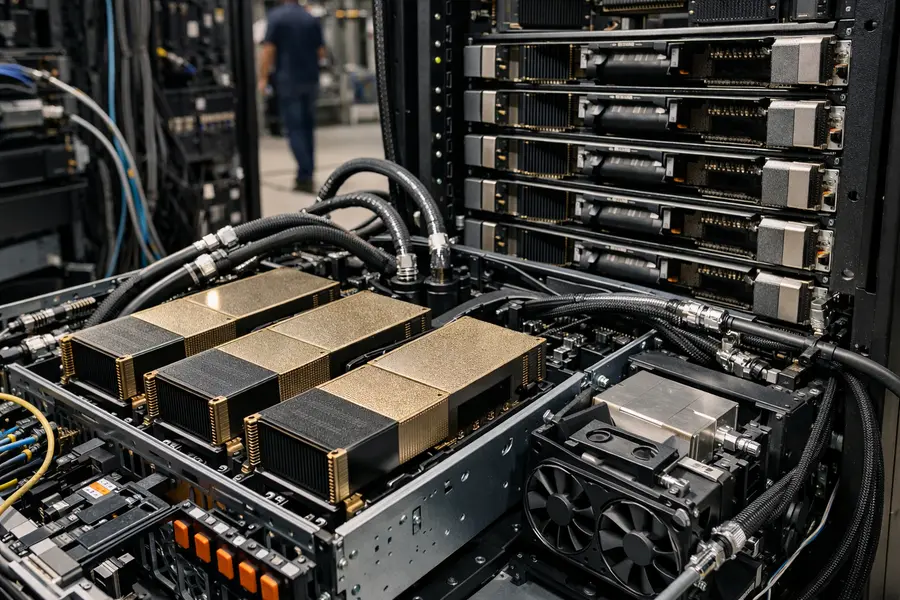
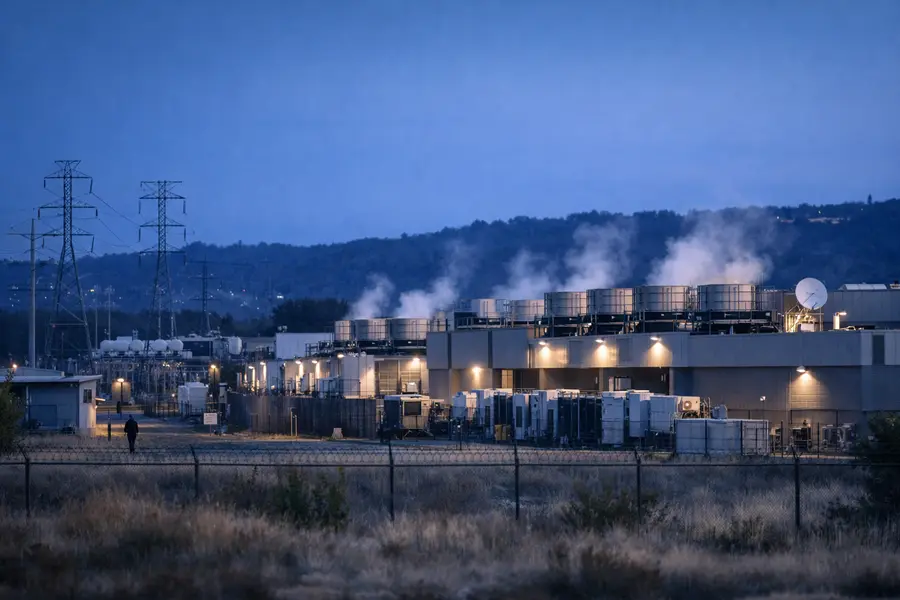
The simultaneous escalation reflects a structural inflection in the AI buildout cycle. Each company is racing to pre-position tech campus capacity—server farms, networking equipment, and specialized AI accelerators—before supply chains tighten further. GPU and advanced-memory constraints have already forced Amazon to acknowledge unfulfilled orders. Alphabet has segmented its deployment to maximize throughput: servers first, data center shell construction behind. Microsoft's relative restraint signals confidence that its existing commitments are sufficient to capture near-term demand, reinforcing a narrative of disciplined AI monetization over speculative land-grabs.
The combined 2026 capex from Alphabet, Amazon, and Meta alone surpasses $570 billion at the upper end of their guidance ranges, a figure that underscores how thoroughly AI infrastructure has become the primary capital allocation priority for the industry's largest players.
Outlook
All four companies face the same fundamental pressure: AI demand is compounding faster than physical infrastructure can be built. Those that move early to secure power, land, and silicon supply chains gain structural advantages in cloud pricing and service availability for enterprise customers. Microsoft's decision to hold capex spending steady will be tested in coming quarters if Azure growth accelerates further and capacity becomes a binding constraint. For Alphabet, Amazon, and Meta, the near-term challenge is demonstrating that their record outlays translate into accelerating revenue and recovering margins before investor patience thins.