Pomegra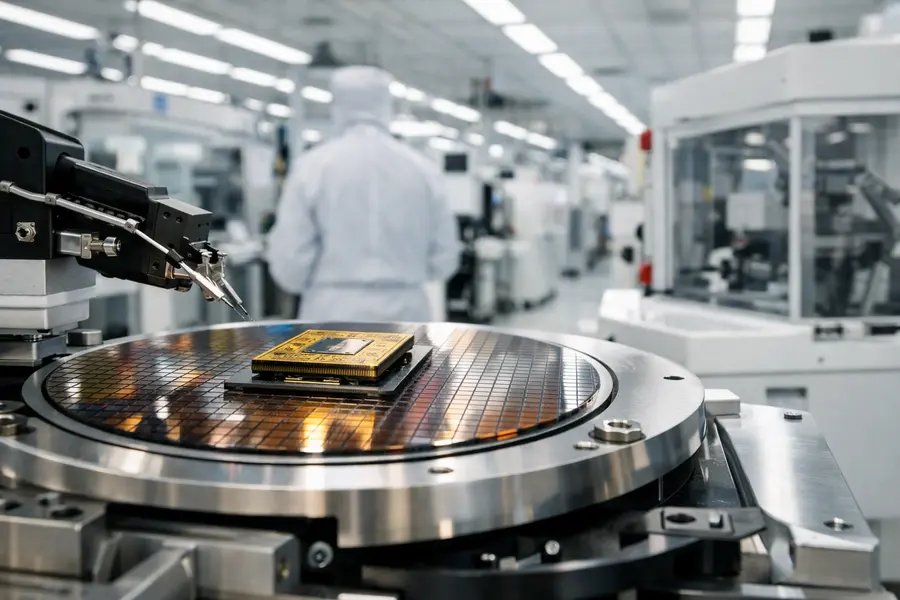
Antwerp semiconductor spin-out TUSK IC closes €15M Series A to move its standard-CMOS beamformer chips for LEO satellite antennas into volume production.
Key Takeaways
- TUSK IC closed a €15M Series A on September 17, 2026, led by Matterwave Ventures alongside FORWARD.one and the Flanders Future Tech Fund.
- The company's beamformer ICs use a standard CMOS process, a cheaper alternative to the compound semiconductors typical in Ka-band RF design.
- Proceeds fund the transition from chip prototypes to production volumes that could reach millions of units annually.
Lead
TUSK IC, the Antwerp-based semiconductor spin-out of KU Leuven, closed a €15 million Series A on September 17, 2026. Munich-based Matterwave Ventures led the round alongside FORWARD.one and the Flanders Future Tech Fund, managed by regional investment firm PMV. The Schaubroeck family and existing investors also participated. Valuation was not disclosed. The capital is earmarked to move the company's Ka-band beamformer integrated circuits from prototype stage into volume manufacturing.
What Does TUSK IC Actually Make?
The company builds beamformer chips - the active components that sit inside flat-panel satellite terminals and steer signals electronically toward orbiting satellites. Unlike traditional dish antennas, which track a satellite by physically rotating, electronically steered antennas shift a signal beam by adjusting the phase across hundreds or thousands of antenna elements simultaneously. That architecture is central to terminals designed for LEO and MEO constellations, where the satellite is always moving relative to the ground.
The Ka-band frequency range (26.5 to 40 GHz) is where most next-generation LEO broadband constellations operate - including Starlink's higher-frequency tiers and programs such as Telesat Lightspeed. For antenna makers targeting those networks, TUSK IC's chips are a candidate component for the core beamforming function.
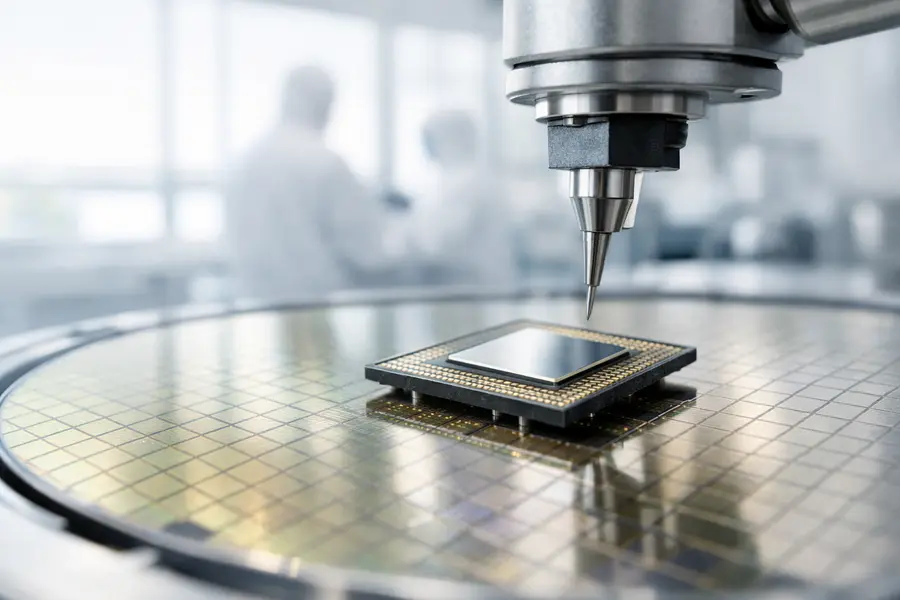
The differentiation claim rests on manufacturing process. Most Ka-band RF chips use compound semiconductors - materials like gallium arsenide or silicon germanium - which deliver strong high-frequency performance but are expensive to fabricate and difficult to scale. TUSK IC builds its beamformers on a standard CMOS process, the same technology base that underpins smartphone processors and memory chips. Standard CMOS fabrication is cheaper per die, available at a wider range of contract foundries, and designed for high-volume throughput.
Why Did It Take Eight Years to Get Here?
TUSK IC was founded in January 2018 as a spin-out from KU Leuven's ESAT-MICAS research group, which specializes in millimeter-wave integrated circuits. The founding team - four electrical engineers who completed their PhDs in the same group - spent the first several years proving the technology worked and iterating on chip design.
The company raised approximately $1.59 million in total prior to this Series A. That figure, spread across eight years, signals a deliberate pace: TUSK IC was an extended development project before it became a scaling story. The Series A, by contrast, targets production - a qualitatively different challenge involving process qualification, testing programs, packaging, and quality systems capable of maintaining performance across normal manufacturing variation.
CEO Kathleen Philips, who joined TUSK IC from Imec Netherlands where she grew the organization's Dutch R&D office to 250 people, is steering the commercialization phase. She succeeded founder Wouter Steyaert at the helm.
In July 2026, the European Space Agency awarded TUSK IC an industrial commercialization contract, funded by the Belgian Federal Science Policy Office (BELSPO), to transition its Ka-band beamforming architectures into market-ready components. That institutional validation likely accelerated the Series A timeline.
Competitive Landscape
TUSK IC is not alone in targeting Ka-band beamformer silicon. Canadian company C-COM demonstrated an 8-channel Ka-band analog beamformer IC at Mobile World Congress 2026. The flat-panel satellite antenna market sits at roughly $600 million to $900 million in 2026 and is on a steep growth trajectory as LEO constellations build out ground terminal demand. The electronically steered segment already accounts for approximately 67 percent of flat-panel antenna volume globally.
The critical variable for TUSK IC is whether its CMOS cost structure translates into terminal price points that compete with established compound-semiconductor designs. Antenna system integrators will run comparative evaluations against alternatives that carry longer production track records. Matterwave Ventures Partner Silviu Apostu described the chip as "addressing a critical bottleneck in satellite communications" - though supply-chain bottlenecks are precisely the sort of problem that attracts multiple well-funded teams simultaneously.
Outlook
TUSK IC's Series A positions the company to test whether academic-derived CMOS beamformer research can survive contact with volume manufacturing. The round is modest by global semiconductor standards but appropriately sized for a component supplier targeting a growing, still-forming market. The next meaningful data points will be production yields, design-win announcements with antenna system integrators, and whether the ESA contract creates a path to deployment agreements with constellation operators.