Pomegra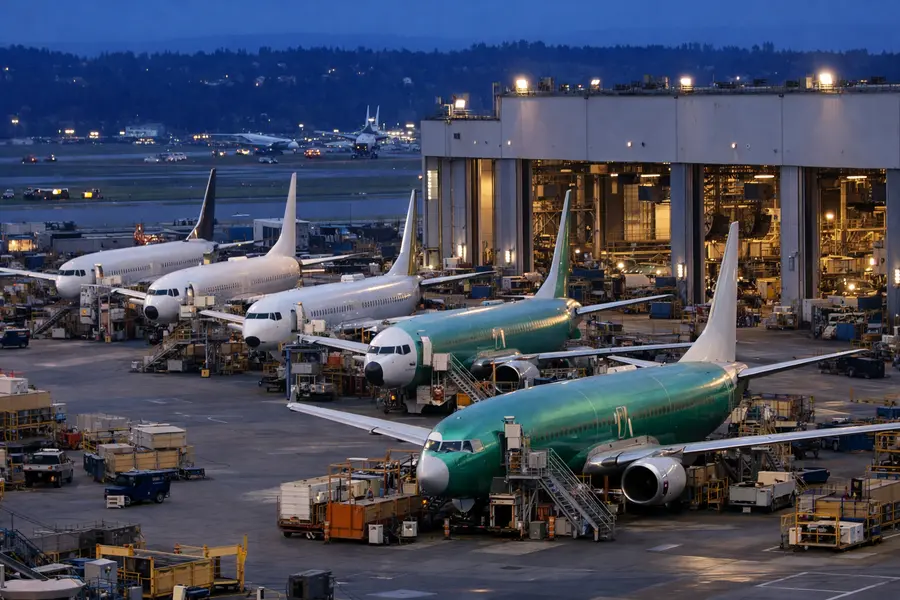
Boeing CEO Kelly Ortberg warned the 737 MAX program remains short of its 47-plane monthly target, flagged potential defense charges, and sent shares nearly 6% lower in a single session.
- Boeing's 737 MAX line has not reached its 47-aircraft monthly target due to wing supply constraints
- Ortberg flagged residual charge risk on fixed-price defense programs still carried as reach-forward losses
- Shares slid 5.7% to $197.77; free cash flow above $2 billion is now seen as less likely this year
Lead
Boeing (BA) Chief Executive Kelly Ortberg delivered a candid investor update at Morgan Stanley's 14th Annual Laguna Conference on September 16, admitting that stabilizing 737 MAX production at 47 aircraft per month is taking "longer than expected," flagging the possibility of new charges on defense programs, and warning that a pending engineering union vote could shut down 777X certification testing entirely. Shares fell 5.7% to $197.77, reversing an opening near $211 and erasing roughly six weeks of recovery.Why Is Boeing's 737 MAX Output Still Below Target?
Wing supply remains the binding constraint preventing Boeing from reaching its 47-unit monthly goal on the 737 MAX. Ortberg confirmed the program has not yet stabilized at that rate and said a meaningful ramp is expected to begin in 2027. On the 737 MAX 10 - a variant representing approximately 30% of Boeing's entire 737 backlog - all flight testing is complete and certification is described as coming "very soon," removing at least one regulatory overhang from the program.
What Charges Could Boeing's Defense Portfolio Still Produce?
Boeing has substantially reduced the frequency of incremental write-downs on its defense contracts, but programs still classified as reach-forward losses carry residual exposure if costs rise further. Ortberg cited Air Force One as one such program, calling a recent charge "disappointing" while reaffirming a commitment to deliver in 2028. Fixed-price defense contracts have generated multi-billion-dollar losses over the past three years; the Laguna disclosure signals that full de-risking of the portfolio remains a work in progress rather than a completed exercise.
What Would a SPEEA Strike Do to the 777X Program?
A walkout by the Society of Professional Engineering Employees in Aerospace would halt 777X certification testing for the duration of any work stoppage. The union represents approximately 17,000 engineers and technical workers, including personnel who conduct certification functions on behalf of the Federal Aviation Administration - labor that is indispensable to regulatory approval across the 737 MAX, 777X, KC-46, and P-8 programs.
Members rejected Boeing's contract offer on August 21 by decisive margins: the Professional Unit voted 64.25% against and the Technical Unit voted 71.87% against. Boeing reached a tentative agreement on September 11, but the pact must be ratified before the current contract expires on October 6. The 777X faces an additional technical hurdle independent of labor: the program is still awaiting an engine seal fix from GE Aerospace before completing final certification, with some testing potentially extending into 2027, though first deliveries remain targeted for that year.
Cash Flow Outlook
Boeing maintained its full-year free cash flow guidance range of $1 billion to $3 billion but signaled that achieving $2 billion or above is increasingly unlikely given delivery timing pressures on both the 737 and 787 programs. Ortberg also flagged engine delivery delays affecting the 787, adding a further drag on shipment cadence. The unchanged headline range provided only limited reassurance; the implied softening of the guidance floor drove much of the afternoon selloff in BA shares.
Market Reaction
BA shares closed down approximately 6% on Wednesday's session, with volume elevated above the 30-day average. The move unwound a rally that had carried the stock toward $211 on investor optimism about the recovery trajectory. The session's decline reflects a broader recalibration: production normalization, defense write-down risk, and labor uncertainty have not resolved on the timeline the market had priced in.
Outlook
Boeing's financial recovery thesis remains structurally intact but faces three near-term execution tests simultaneously: restoring the 737 MAX to a stable 47-per-month rate, preventing fresh defense charges from eroding annual cash flow, and ratifying the SPEEA contract before October 6. A successful labor vote would lift the most immediate threat to 777X certification progress. Steady wing deliveries are the key variable determining whether the 737 rate target is achievable in early 2027. Any further defense charges would represent the largest single risk to the $1 billion to $3 billion free cash flow range for the full year.