 Pomegra

Eurozone Business Growth Slows to 51.9 on Rising Energy Costs
Why did eurozone business growth slow in October?
Eurozone business growth slowed on Friday as the composite PMI fell to 51.9 from 53.1, a four-month low, driven by higher energy costs and a contraction in France, which complicates the ECB's rate decision.
Key numbers
| Eurozone composite PMI | 51.9-1.2 pts vs Sept; forecast 52.7 |
|---|---|
| France composite PMI | 48.4forecast 50.3 |
| Germany composite PMI | 52.8forecast 53.4 |
| Eurozone inflation (Sept) | 3.7%vs 2% ECB target |
| ECB deposit rate | 2.50%hold expected Oct 29 |
| EUR/USD | <1.12fell after French data |
What happened
Eurozone business growth slowed on Friday as the composite PMI fell to 51.9 from 53.1, a four-month low, driven by higher energy costs and a contraction in France, which complicates the ECB's rate decision. The PMI is a monthly survey of company managers, where a score above 50 means growth. Economists had expected 52.7. France's score came in at 48.4, below 50, meaning shrinking activity, while Germany still grew at 52.8. Companies' costs also rose for a second month, linked to energy, fuel and transport prices tied to the Middle East war.
Why it matters
The eurozone slowdown matters because the European Central Bank (ECB) has been raising interest rates to fight rising prices, with inflation at 3.7% in September (per). Slower growth argues for waiting, but higher energy costs keep price pressure alive. Markets expect the ECB to hold its rate at 2.50% next week, but see about a 68% chance of a hike in December. For households, that means loans stay costly while the economy cools.
Who this affects
- MarketbearishLow impact
- Euro slipped below 1.12; European markets face rate uncertainty.
- CompanybearishMedium impact
- Eurozone businesses see slower demand and rising energy costs.
- CompetitorsmixedMedium impact
- Germany still grows while France shrinks, widening the gap.
- IndustrybearishMedium impact
- Manufacturers and service firms both face squeezed profit margins.
Eurozone vs Germany, France
| Eurozone | 51.9 | 53.1 | 52.7 |
|---|---|---|---|
| Germany | 52.8 | 53.8 | 53.4 |
| France | 48.4 | — | 50.3 |
As of 2026-10-23
How we got here
Analysts preview an ECB hold at 2.50% after September inflation reached 3.7%.
Flash composite PMI falls to 51.9 versus 52.7 expected; France slips into contraction.
EUR/USD drops below 1.12 after the weak French data.
What to watch
- ECB rate decision; markets expect rates held at 2.50%.2026-10-29
- ECB December meeting, where markets price a 25-basis-point hike at about 68% odds.Q4 2026
- Whether France's contraction and rising government borrowing costs spread to the wider eurozone.Q4 2026
Educational content only. Not investment advice.
More briefsAll briefs →
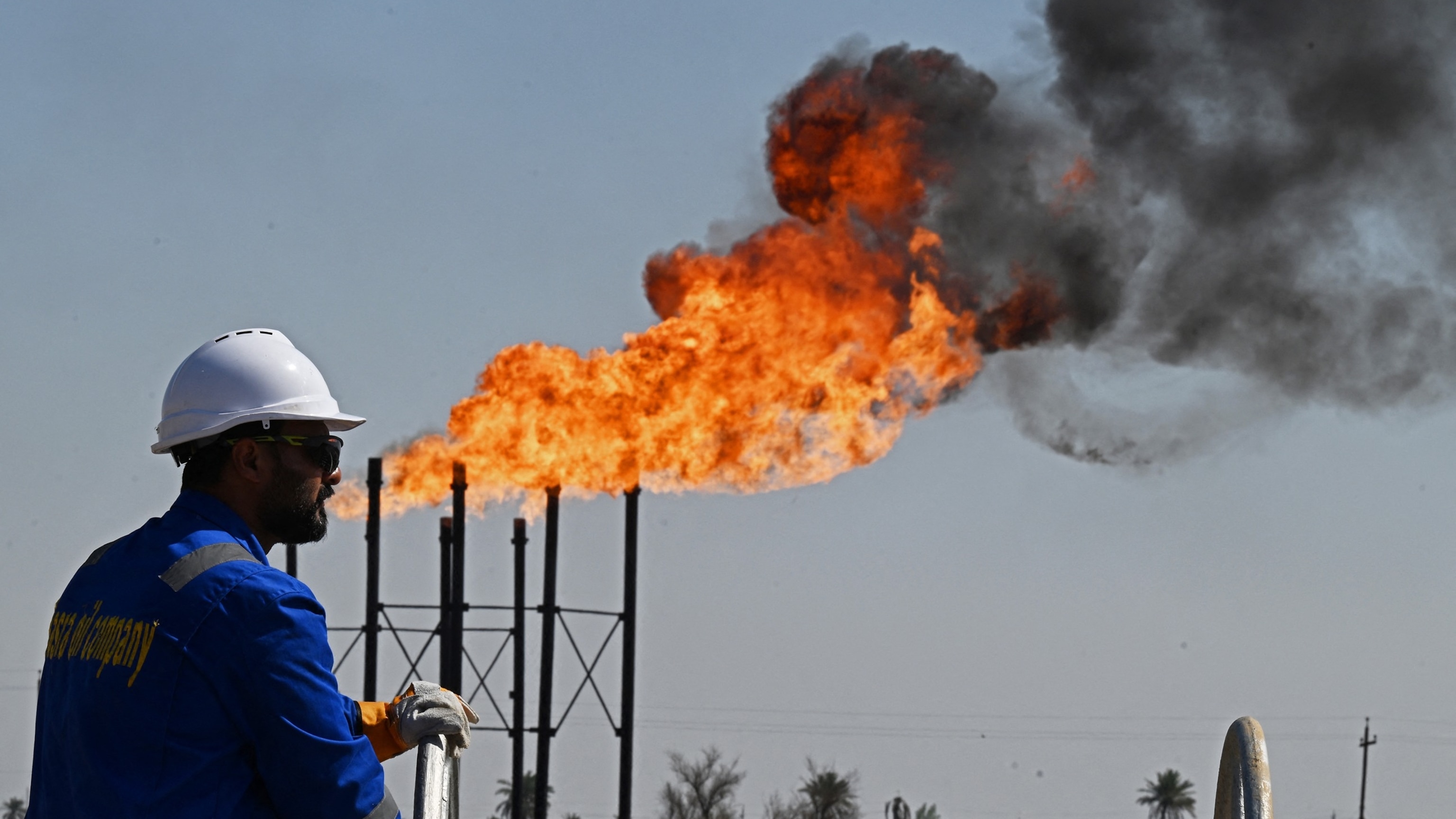
Oil Rises to $114 After Houthi Attacks on Saudi Arabia
Brent crude (BZ=F) hit a five-month high as Aramco evacuated its Dhahran office and US crude traded near $101

France 10-Year Bond Yield Hits 5% on Budget Doubts
France's 10-year yield (FR10Y) touched 5.14% as Moody's reviews its rating, with the Bund gap at a 2011 high.
Las Vegas Sands Stock Falls 2.6% After Earnings Miss
Las Vegas Sands (LVS) missed Q3 revenue by $110M on soft high-end gaming, yet lifted its 2027 dividend 20%.