Pomegra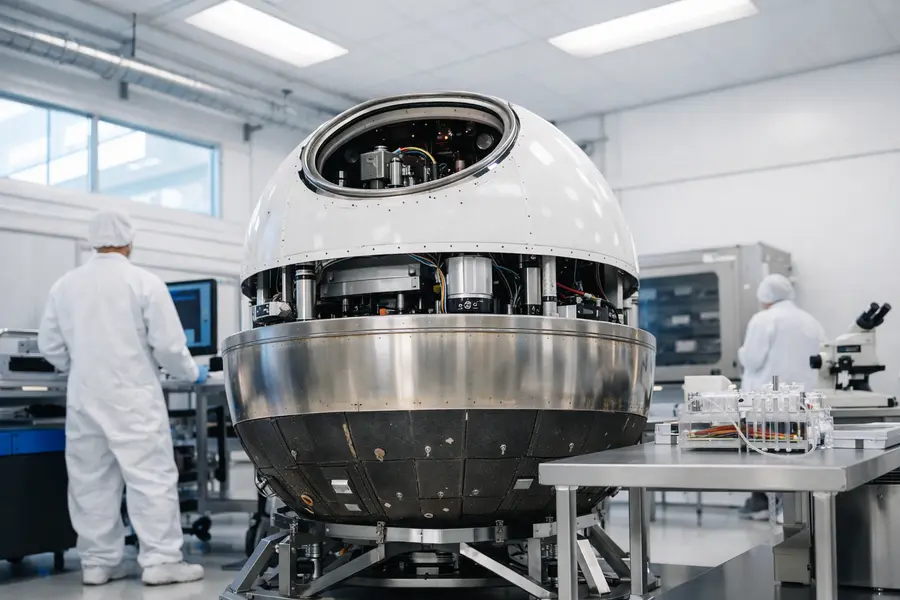
Varda Space closed a $250M Series D at a $1.6B valuation, led by Lux Capital and Natural Capital, to build more orbital capsules for drug manufacturing.
Key Takeaways
- Varda raised $251M in a Series D led by Lux Capital and Natural Capital at a $1.6B valuation.
- The valuation is about 3.2 times the reported $500M of its July 2025 Series C.
- About 70% of Varda's payload customers next year are government-based.
Lead
Varda Space Industries announced on September 30, 2026 that it raised a $251 million Series D at a $1.6 billion valuation. The El Segundo, California company builds uncrewed capsules that process materials in microgravity and return them through hypersonic reentry. Lux Capital and Natural Capital led the round. Founders Fund, Khosla Ventures, Caffeinated Capital, General Catalyst, 8090 Industries, Giant Step and Also Capital participated. Varda says it has raised $598 million since its 2021 founding by CEO Will Bruey and Delian Asparouhov, a Founders Fund partner.
What Is Varda Spending the Money On?
Varda will use the capital to build more vehicles, expand pharmaceutical partnerships and move toward its first commercial medicine made in orbit. The company has flown six reentry missions since its first launch in 2023 and plans more than a dozen additional launches and reentries through 2028.
Two more capsules are due to fly on SpaceX's Transporter-18 rideshare mission as early as October 1. W-8 carries reentry thermal and environmental sensors for a U.S. military study. W-9 carries a Department of Defense payload testing hypersonic navigation, plus heat shield tiles from Syensqo.
Asparouhov framed the pharmaceutical thesis in the announcement: the first product manufactured in space and consumed on Earth would be a drug.
How Does This Round Compare With the Last One?
The Series D values Varda at roughly three times its Series C. That earlier round, in July 2025, raised $187 million at a reported $500 million valuation and was led by Natural Capital and Shrug Capital. At that point Varda had completed three missions. It has now flown six.
Natural Capital leads both rounds, which signals continuity rather than a new investor repricing the company. Lux Capital moved from participant to co-lead. The step-up arrives 14 months after the Series C and before any pharmaceutical product has reached the market.
Who Is Actually Paying Varda?
Government customers account for most of the near-term revenue. About 70% of Varda's payload customer base for next year is government-based, with the rest commercial pharmaceutical work. The company expects that mix to flip gradually by 2032.
That split matters for how the valuation reads. Hypersonic test flights for the Department of Defense are a paying business today, and the capsule reentry data has defense value regardless of drug results. The pharmaceutical case is the larger and less certain bet. Varda announced a collaboration with United Therapeutics in May 2026 on microgravity formulations for rare pulmonary disease treatments. Revenue figures were not disclosed.
Why Is Orbital Drug Manufacturing Still Unproven?
No medicine made in orbit has yet reached patients, and the economics depend on whether microgravity produces a crystal form or formulation that Earth-based processing cannot match. Each capsule flight costs a launch slot and a recovery operation, so a drug needs to justify that expense per batch. Varda's pitch is that some formulations are impossible on the ground, which would command pricing that covers the cost.
The company also faces a small but growing field. UK-based Space Forge raised £22.6 million in a Series A in May 2025 for in-space semiconductor materials. London-based BioOrbit raised a £9.8 million seed round in April 2026 for protein drugs. Both are far smaller than Varda, which leads on flight heritage.
What Comes Next for Varda?
The near-term test is the W-8 and W-9 flights, followed by whether Varda can fly capsules at a faster cadence. More than a dozen missions in two years would roughly double its flight history on a shorter clock. A faster cadence also lowers per-flight cost, which the pharmaceutical economics require.
Two scenarios stand out. If a partner such as United Therapeutics confirms a formulation that clears regulatory review, the valuation would rest on a commercial product. If drug results lag, defense contracts would carry the business, and a $1.6 billion price would look rich for a hypersonic testing provider.
Outlook
Varda has tripled its valuation in 14 months on the strength of six completed missions, a defense revenue base and a pharmaceutical thesis that remains untested at commercial scale. The next 12 months of flights and partner announcements will show whether orbital drug manufacturing becomes a product or stays a research service.