Pomegra
UFORCE raised a $700M Series A at a $6B valuation, co-led by Valor Equity Partners and the UK National Wealth Fund, to scale drone production in 2026.
Key Takeaways
- UFORCE raised $700M at a $6B post-money valuation on November 12, 2026, the largest round for a Ukrainian-rooted startup.
- Valor Equity Partners and the UK National Wealth Fund co-led; the fund put in $150M (£113M).
- The valuation is roughly six times the ~$1B set in a $50M round in March 2026.
Lead
UFORCE, a defence-tech company founded in Ukraine and headquartered in London, announced a $700M Series A on November 12, 2026. The round values the company at $6B post-money. It is the largest venture financing yet for a startup with Ukrainian roots.
Valor Equity Partners and the UK National Wealth Fund (NWF) co-led. The NWF contributed $150M, its largest defence-technology investment to date. The US-Ukraine Reconstruction Investment Fund (URIF) also joined, and its capital is earmarked for production and research in Ukraine.
Who Else Invested?
New investors in the round are Menlo Ventures, Xantium and Hiro Capital. Existing backers Shield Capital, Ballistic Ventures, Lakestar and Squadra increased their stakes.
Retired US General Christopher Cavoli, a former NATO Supreme Allied Commander Europe, joins the board through Valor. The board already includes Ben Wallace, the former UK Defence Secretary. Oleksii Honcharuk, a former Ukrainian Prime Minister, serves as chairman, and Oleg Rogynskyy, previously the founder of People.ai, is CEO.
What Does UFORCE Actually Build?
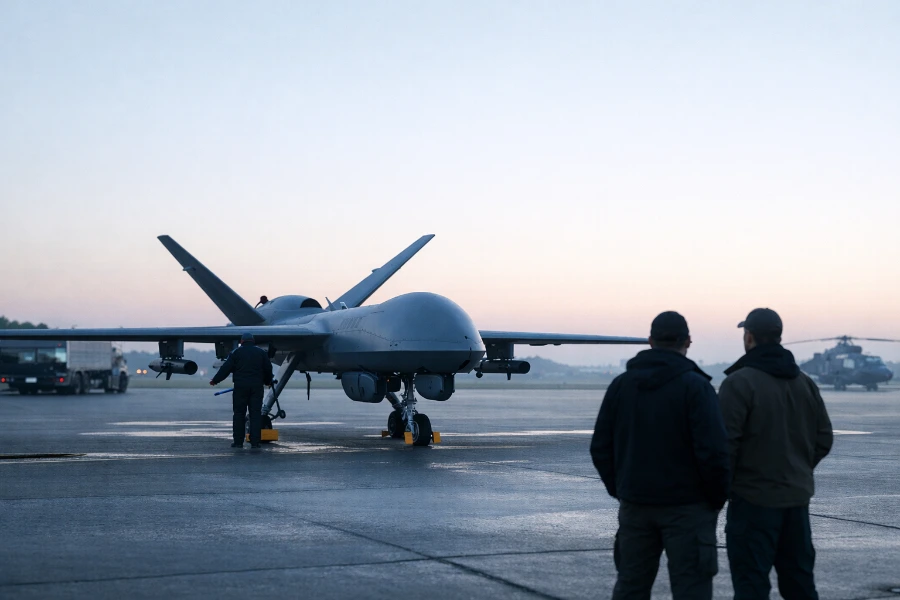
UFORCE makes autonomous systems for sea, land and air, plus the AI and command-and-control software that runs them. The range includes MAGURA uncrewed surface vessels, NEMESIS strike aircraft, LIUT ground robots and PREDATOR counter-drone turrets.
The company cites combat use as its credential. It says MAGURA vessels contributed to the destruction of more than a dozen Russian warships. It also says NEMESIS drones have flown more than 300,000 combat flights across more than 100 units. Those figures come from the company and have not been independently audited.
How Does the $6B Valuation Stack Up?
The valuation is steep against the last mark. In March 2026 UFORCE raised $50M at a valuation above $1B, led by Lakestar and Shield Capital. Eight months later, the price of the company has risen roughly sixfold, and the new round is 14 times the size of the previous one.
The company points to bookings to justify it. UFORCE says bookings more than doubled year over year from a base of "several hundred million dollars," and Rogynskyy has called the valuation-to-bookings ratio "not an aggressive valuation." Bookings are not revenue, and the company has not disclosed recognised revenue, margins or delivery volumes. Investors are therefore pricing contracted demand and battlefield validation rather than a track record of profitable deliveries.
For scale, the valuation is about a third of the one assigned to German defence-AI group Helsing. Both sit in a European defence sector where valuations have run well ahead of reported revenue.
Why Did a Sovereign-Backed Fund Co-Lead?
The NWF's presence signals that the UK government treats drone manufacturing as industrial policy, not just a venture opportunity. Its $150M cheque is its biggest in defence technology, and it anchors the company's London base. That base matters for allied procurement, since a UK-headquartered supplier can sell into NATO markets with fewer export complications than a company based in Kyiv.
URIF's participation adds a second public-sector thread. Its capital is directed toward Ukrainian production, which keeps manufacturing close to the front line even as the corporate centre sits in London.
Where Will the Money Go?
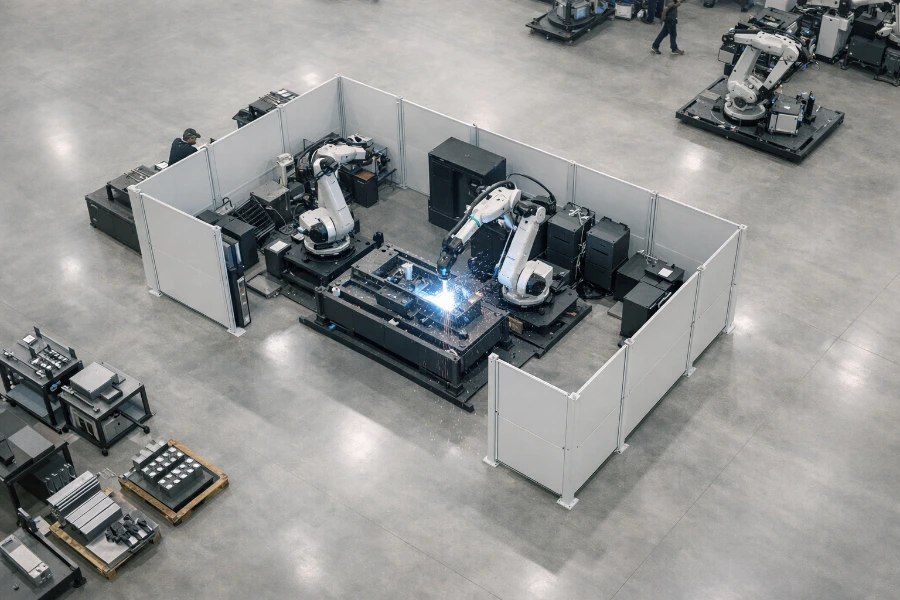
UFORCE says the funds will support continuous manufacturing in Ukraine and allied countries, with expanded capacity across the US, Europe, Asia-Pacific and the Middle East. The company also lists research and development and acquisitions as uses. Rogynskyy has said the investment will help build protected production facilities and supply chains and recruit engineers.
Hubs in Kyiv and Washington, DC support the split between wartime production for Ukraine and export-ready systems for allied armies. The latter is where the larger revenue pool lies, and it is also where competition is heaviest.
What Comes Next for UFORCE?
The test is conversion. Bookings must turn into delivered systems at a pace that justifies a $6B price, and allied governments must buy systems battle-tested in Ukraine through formal procurement programmes that move slowly. Established primes and well-funded European rivals are courting the same budgets.
Two scenarios stand out. If allied orders firm up, the company could use its capital for acquisitions and local factories and raise again at a higher mark. If procurement stalls or the Ukraine conflict de-escalates, the demand that underpins the valuation could soften, leaving a heavily capitalised manufacturer with high fixed costs.
Outlook
UFORCE has moved from a $1B company to a $6B company in eight months on the strength of wartime bookings and state-backed capital. The round puts Ukrainian defence technology in the same funding bracket as Europe's best-funded defence startups. The next proof points are disclosed revenue, delivery volumes and signed allied contracts.