Pomegra
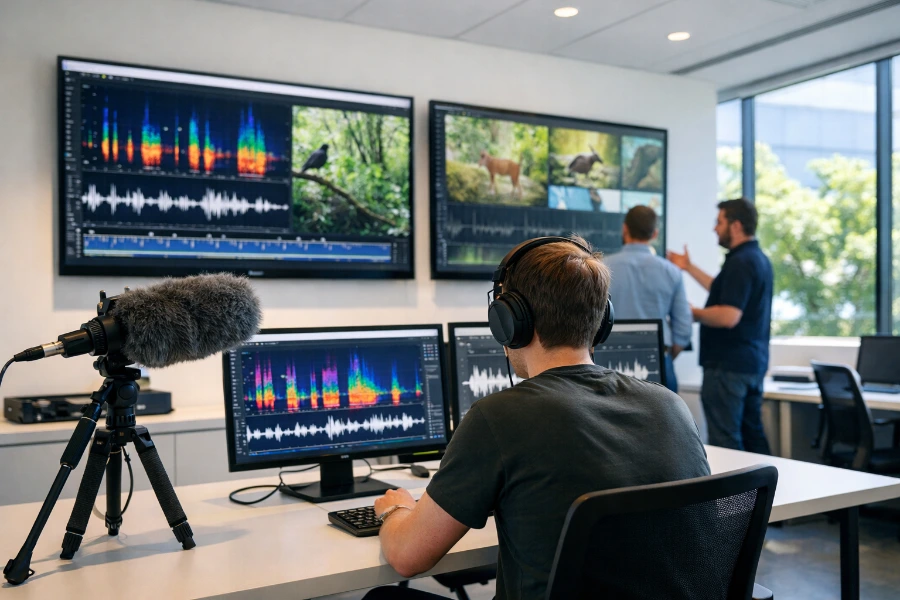
Swiss EPFL spin-off Synature has closed the first tranche of a €5.48M seed round led by Anaïs Ventures to scale AI-driven wildlife monitoring from sound recordings.
Key Takeaways
- Synature closed a €5.48M (CHF 5M) first-close seed round on November 25, 2026, led by Geneva-based Anaïs Ventures.
- The Bloom Foundation and angels, including Neuralink co-founder Tim Gardner, also joined. Valuation is undisclosed.
- Funds go to cheaper Smart Mic production, an acoustic foundation model and commercial hiring.
Lead
Synature, a Lausanne-based spin-off of EPFL, announced on November 25, 2026 that it had closed the first tranche of a €5.48M (CHF 5M) seed round. Anaïs Ventures of Geneva led the round. The Bloom Foundation and a group of angel investors joined, among them Tim Gardner, co-founder of Neuralink. The company did not disclose valuation, the target size of the full seed round or any earlier funding.
Synature sells autonomous microphones and software that convert field recordings into species detections. The company says the money will move it from proving the technology to deploying it across thousands of hectares.
What Does Synature Actually Sell?
Synature sells a three-part system: hardware, models and software. Its Swiss-made Smart Mic records audio in the field. Proprietary AI models then classify the sounds. A browser-based platform, SynApp, turns hours of audio into verified species detections, biodiversity trends and exports ready for reporting. A companion tool, SynStudio, extends the analysis layer.
The models can identify more than 15,000 species, including birds, bats, mammals, insects and amphibians. In deployments so far, the company reports more than 1,500 species detected. That gap is worth keeping in mind: the first figure is model coverage, the second is what has been found in the field.
Synature was founded by Olivier Stähli, who studied at EPFL and is now CEO, and Noah Schmid, who studied at ETH Zurich. "Nature is constantly communicating, and for the first time AI lets us listen at scale," Stähli said in the announcement.
How Much Traction Does the Company Have?
Synature reports more than 60 projects across 17 countries. Its customers include two Fortune Global 500 companies, public authorities and conservation organizations. It did not name the corporate clients or give revenue figures.
Those numbers describe pilots and early deployments rather than a mature business. Sixty projects over 17 countries averages under four per country. The seed round is meant to test whether those engagements can become recurring contracts.
Where Will the Money Go?
The funding covers four areas, according to the company:
- Hardware: industrial-scale Smart Mic production with Swiss manufacturing partners, targeting a cost reduction of more than 50%.
- AI: training an acoustic foundation model.
- Software: expanding SynApp and SynStudio.
- People: hiring in business development and scientific roles.
The hardware cost target matters most. Passive acoustic monitoring only becomes a network when devices are cheap enough to leave in forests, fields and fisheries in large numbers. A halved unit price directly widens the number of sites a client can afford to cover.
Why Is Biodiversity Data Attracting Investors?
Biodiversity data is attracting investors because companies and governments face growing demands to measure nature-related risk, and manual surveys are slow and costly. Reporting frameworks tied to nature are pushing agriculture, forestry and financial firms to quantify what lives on their land. Acoustic sensing offers continuous coverage where a human ecologist can visit a site only a few times a year.
The market is also crowded with hardware alternatives. Camera traps, satellite imagery and environmental DNA sampling compete for the same budgets. Synature's argument is that sound captures hard-to-see species such as bats, insects and nocturnal animals, and that software can scale the analysis.
A €5.48M first close is modest next to the capital raised by climate-tech peers. It is large for a Swiss deep-tech seed, and the "first close" label suggests more investors may follow.
What Comes Next for Synature?
The next test is commercial rather than technical. Synature has to show that clients will pay for continuous monitoring after pilots end, and that its cost reduction holds at production volumes. A foundation model trained on a growing recording archive could also improve detection of rare species, which would strengthen its position against open-source classifiers.
The company has not said when the seed round will fully close or when it plans to raise a Series A.
Outlook
Synature enters 2027 with fresh capital, a Swiss manufacturing plan and early corporate clients. The unknowns are valuation, final round size and revenue. Progress on unit cost and on converting pilots into contracts will show whether acoustic monitoring can become routine infrastructure for land managers.