Pomegra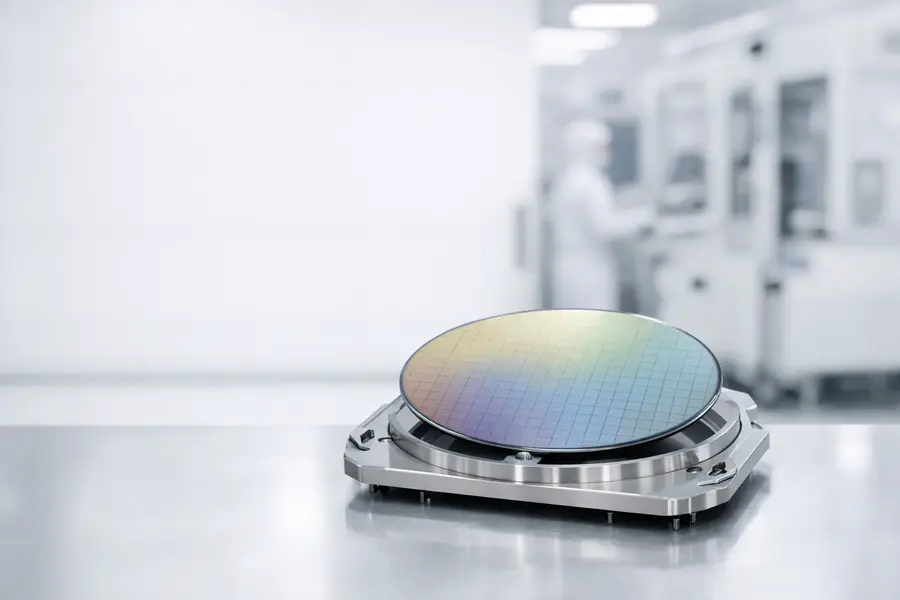
Swedish deeptech SweGaN secures $14M Series B co-led by Thisbe AB and North Ventures to scale GaN-on-SiC epiwafer production for 5G, defense radar, and EV power conversion.
Key Takeaways
- Thisbe AB (Sweden) and North Ventures (Denmark) co-led the $14M round; existing shareholders also participated.
- Total capital raised reaches $41 million; the company confirmed an up-round but did not disclose post-money valuation.
- SweGaN coordinates a Vinnova-funded 6G project with Ericsson, Saab, and Chalmers University, running through August 2027.
Lead
SweGaN AB of Linköping, Sweden closed a $14 million Series B on August 17, 2026, co-led by Swedish investor Thisbe AB and Copenhagen-based venture firm North Ventures. Existing shareholders joined the round. That brings total funding to $41 million since the company's founding, and the company says the round priced at a higher valuation than its predecessor - though the specific figure is undisclosed. SweGaN designs and manufactures gallium nitride on silicon carbide epitaxial wafers, the crystalline substrate material that device makers use to build RF power amplifiers and power transistors for 5G base stations, defense radar systems, satellite communications, and electric vehicle on-board chargers.
What Is GaN-on-SiC and Why Is It Hard to Make?
The material is not a chip - it is the starting wafer on which transistors are grown. Gallium nitride's wide bandgap allows operation at higher voltages, frequencies, and temperatures than silicon, and silicon carbide's thermal conductivity keeps those devices from overheating under sustained load. Together, they produce amplifiers that can transmit at the power levels 5G macro cells require, survive the temperature cycles of military radar enclosures, and handle the 400-to-800-volt conversion ranges inside EV chargers.
SweGaN's patented QuanFINE process eliminates the conventional buffer layer placed between the GaN and SiC crystals during growth. Conventional approaches insert that buffer to manage crystal lattice mismatch, but it introduces defects that limit electron mobility and create heat traps. Removing it entirely is the company's core technical claim. Commercial deliveries from SweGaN's Linköping facility - built with engineering support from AFRY and described as one of the first dedicated GaN-on-SiC production sites in Europe - began in 2024. In the first half of that year, the company reported orders worth SEK 17 million, with year-on-year order volume up 100%, backed by three large frame agreements with named telecom and defense customers.
What Does the $14M Buy?
The capital will fund expanded equipment capacity at the Linköping site, deeper commercial operations in key export markets, and continued materials R&D. GaN epitaxial reactors - the machines that deposit crystalline layers atom by atom - are expensive, slow, and require extensive process qualification before a new customer accepts the output. Scaling supply to meet frame agreement commitments requires adding reactor capacity in advance of demand.
The round is modest for a hardware deeptech company with ambitions in three distinct end markets. Wolfspeed, the publicly traded US benchmark in compound semiconductor materials, has spent billions on its own SiC and GaN expansion and is operating at a scale that SweGaN will not approach in this cycle. The comparison is unflattering on capacity but less so on specialization: SweGaN's buffer-free process occupies a different part of the performance envelope, and its European provenance matters to defense customers navigating export control frameworks that restrict sourcing from non-allied suppliers.
The September 2024 equity raise, totaling nearly €12 million and joined by investors from Taiwan, South Korea, and the United States, suggested strategic interest from Asian device makers dependent on the wafer supply chain. The current Series B, with Scandinavian-led investors, reads differently - more domestic consolidation than global strategic hedging.
Research Pipeline and 6G
SweGaN is coordinating a Vinnova-funded project partnering with Ericsson, Saab, and Chalmers University of Technology to advance GaN-based power amplifier technology for 6G networks. The project runs from September 2025 through August 2027. Ericsson's participation is notable - the company is the largest 5G radio vendor outside China and competes with Huawei in base station supply globally. Qualifying domestically sourced GaN materials now gives Ericsson optionality in a supply environment that remains sensitive to geopolitical disruption.
Saab's involvement extends the defense dimension. Swedish defense spending has increased substantially since NATO accession, and the radar and electronic warfare segments represent a consistent long-cycle demand base for high-power RF materials.
Outlook
SweGaN closes August 2026 with its production facility active, frame agreements in hand, and a research pipeline extending into 6G. The up-round designation sets a higher bar for its next financing event, and the undisclosed valuation prevents outside scrutiny of that pricing. The structural tailwinds are real: European defense budgets are expanding, 5G infrastructure densification continues, and EV adoption sustains demand for wide-bandgap power devices. What remains unresolved is whether a company of SweGaN's current scale can qualify its materials fast enough across three distinct application markets - each with its own customer qualification cycles and reliability standards - before better-capitalized rivals narrow the QuanFINE performance advantage.