Pomegra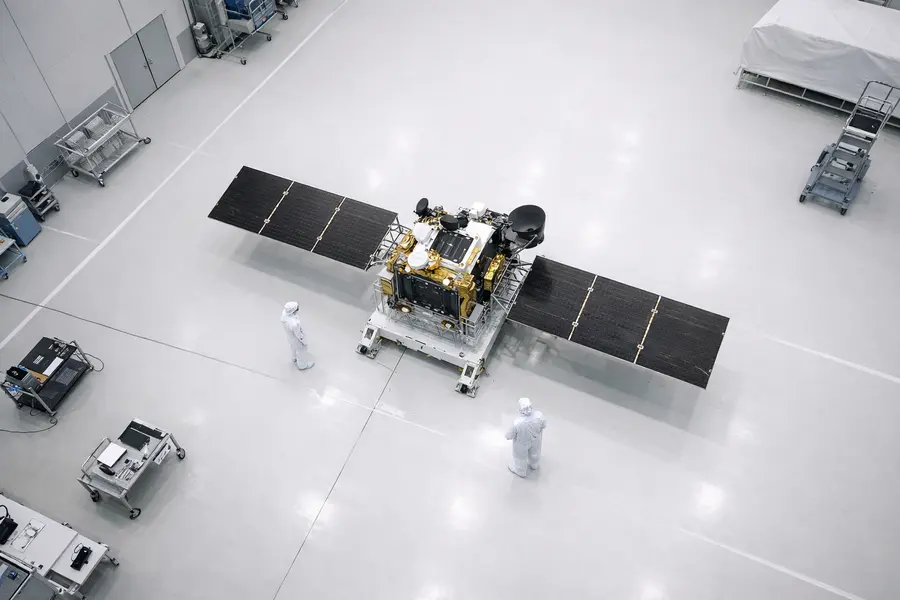
Satlyt, a Sunnyvale and Nairobi startup, raised an $8M seed led by Non Sibi Ventures to run AI models on third-party satellites instead of on the ground.
Key Takeaways
- Satlyt closed an $8M seed round announced October 1, 2026, led by Houston-based Non Sibi Ventures.
- Its software runs AI models onboard satellites and cut error telemetry by more than 60% in a Momentus test.
- Valuation, prior funding and revenue were not disclosed.
Lead
Satlyt, a two-year-old software company building an orbital AI cloud, announced an $8M seed round on October 1, 2026. Non Sibi Ventures led the round. The money goes toward product development, hiring and wider deployment on satellites that Satlyt does not build or operate. Founder and CEO Rama Afullo, a former Google cloud architect and SpaceX Starlink product manager, started the company in 2024.
Who Else Backed the Round?
TLCOM, Antler, Slauson & Co., Launch Africa Ventures, Enza Capital, Askya Investment Partners, Demos, BAG Collective, Gaingels and Axian Investment joined Non Sibi. Existing investors also participated. Satlyt did not disclose a valuation or the size of any earlier funding, so the round's step-up from prior capital cannot be read from the announcement. The investor list leans toward early-stage and Africa-focused funds, which fits a company with a Nairobi base.
What Does Satlyt Actually Sell?
Satlyt sells software that lets satellites fitted with GPUs process imagery, measurements and system logs in orbit rather than sending raw data to ground stations. The constraint is bandwidth. The average satellite passes within range of its operator's ground antenna for only a few minutes a day, so much of what it collects waits in a queue.
Afullo describes the platform as horizontally integrated, comparable to Android, meaning it runs across operators' hardware instead of inside a closed stack. Satlyt pitches this as a managed service that turns a satellite into a revenue-generating asset. Its pitch displaces operators who write onboard software themselves and vertically integrated rivals such as SpaceX and Google, along with orbital-compute startups like Starcloud and Cowboy Space Company.
Does the Technology Work in Orbit?
It has worked in at least one test. The first satellite running Satlyt's platform, launched by Momentus in March 2026, ran Google's Gemma 3 1B model. It cut the telemetry sent to Earth for error analysis by more than 60%, a figure reported at 64% in one account. Afullo estimates the savings at hundreds of thousands of dollars per satellite each year, a claim the company has not backed with published customer contracts.
The roadmap is specific. Satlyt is moving to Gemma 4 E2B with a stated goal of cutting memory use by more than 90%. It also plans a tool to spread workloads across several satellites, due next year. A first shared computing system spanning two satellites is targeted for 2027.
Who Is Testing It?
Beyond Momentus, the named users are small. NASA is testing cloud computing protocols in space with the software. Space surveillance startup Stellerian is trialing image processing. Indian hardware builder TakeMe2Space has a satellite launching this week with Satlyt aboard. The software is also set to fly on a SpaceX rocket carrying Google's Project Suncatcher, a research effort on space-based compute.
These are pilots and demonstrations, not disclosed commercial contracts. Revenue and headcount were not shared. The core team named so far is CTO Nelson Psenjen and engineers Leina Moli and Junn Wangari.
What Comes Next for Orbital AI?
The next test is multi-satellite computing, where Satlyt must show that distributing a workload across two spacecraft beats processing on one. Afullo's stated target is software on 20% of satellites by the end of the decade. That figure assumes operators accept a third-party layer on hardware they own, while larger players build their own orbital compute.
An $8M seed buys perhaps two launches' worth of testing and a small engineering team. Whether Satlyt turns pilot data into paid contracts before bigger rivals close the gap will decide whether the Android comparison holds.
Outlook
Satlyt has money, a named lead investor and one measured result: telemetry cut by more than 60% on a Momentus satellite. Valuation, revenue and prior funding remain undisclosed. The 2027 two-satellite milestone and any commercial customers beyond the current pilots are the markers to watch.