Pomegra
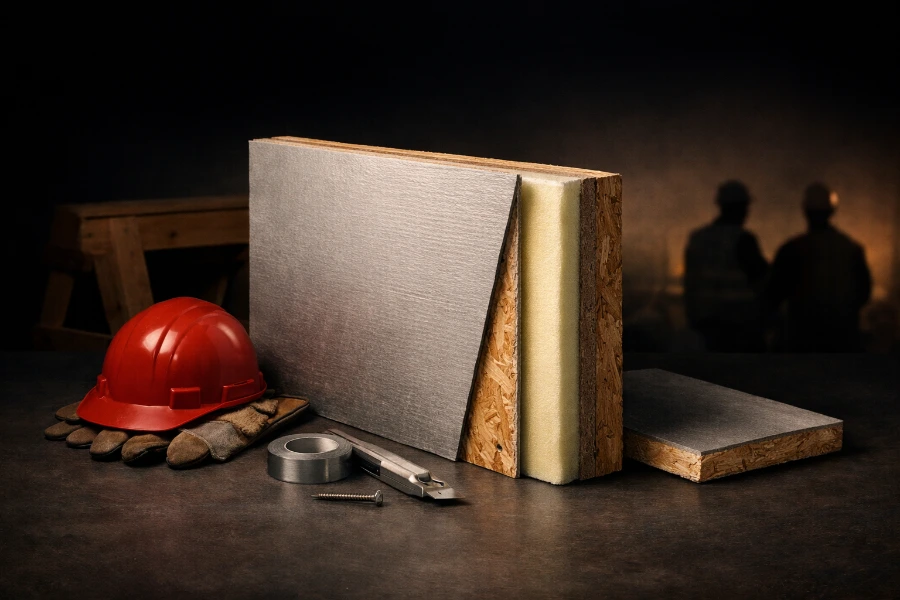
Supersede closed a $13M Series A led by AP Ventures to move its recycled-plastic sheathing from boats and RVs into houses and commercial buildings.
Key Takeaways
- Supersede raised a $13M Series A led by AP Ventures in November 2026; valuation was not disclosed.
- The Phoenix company makes polypropylene panels meant to replace plywood and OSB, and now plans to enter construction.
- The round follows a $10M seed in July 2025 and a $5M Closed Loop Partners loan in May 2026.
Lead
Supersede, a Phoenix-based engineered materials maker, raised $13M in Series A funding led by AP Ventures, the company announced in November 2026. The money will pay for more U.S. production capacity and for the company's first push into residential construction, commercial construction and modular housing. Valuation and the full list of participating investors were not disclosed.
Supersede has sold into boatbuilding and RV manufacturing since launching its Marine Board in October 2024. Building sheathing is a much larger and more price-sensitive market. The round is a bet that a plastic panel can follow plywood and OSB out of a niche where moisture is the main problem and into one where cost per sheet decides the sale.
What Does Supersede Actually Make?
Supersede makes structural panels from recycled polypropylene, designed as a one-to-one replacement for plywood and oriented strand board. The company says the panels resist moisture and warping, contain no CCA preservatives or formaldehyde, and install with the same methods as wood sheathing. That last point matters for adoption, because framers will not retrain crews or buy new fasteners for a new substrate.
Its products have already reached named manufacturers. Thunder Jet uses the board in structural components of its marine builds, and Coachmen RV uses it in the floor structures of its Catalina travel trailer. Those are two customers in a segment where water damage is a well-known failure mode, which makes them a friendlier proving ground than a tract-housing builder.
How Has the Funding Stacked Up So Far?
The Series A is the third capital event in about 16 months. Supersede raised a $10M seed in July 2025, with participation from a major U.S. building products distributor, Closed Loop Partners and several angel groups. In May 2026 Closed Loop added a $5M catalytic loan.
The sequence tells its own story. A debt facility arriving between a seed and an A usually means equipment, not experiments: the company needed capital for production lines that equity alone was not funding fast enough. In October, Supersede opened a 100,000-square-foot plant in Bristol, Indiana, its second site after Phoenix, to meet RV demand. The Series A therefore funds a company that already has manufacturing in place, not a prototype.
AP Ventures is a materials and deep-tech investor, a profile that fits a manufacturing-heavy company better than a software-style growth fund would. The firm's lead role suggests the thesis rests on production economics rather than a distribution play.
Can a Plastic Panel Win in Construction?
It can win only if it matches wood on installed cost and code acceptance, and neither is established yet. Plywood and OSB are cheap, familiar and covered by decades of building-code history. Supersede has not published pricing for its construction products, and the company has not said when its sheathing will carry the code evaluations that large builders typically require before specifying a new material.
The company's pitch is durability over a building's life: fewer moisture failures, less rot, consistent performance panel to panel. That argument has more force in humid markets, modular factories that expose panels to weather during staging, and specialty vehicles. Those segments are the likelier first targets, and the company's own list of modular housing and specialty vehicles points the same way.
Recycled feedstock adds a second variable. Polypropylene supply and price swing with the plastics market, and a manufacturer that wants to sell against a commodity wood product has limited room to pass those swings on.
What Comes Next for Supersede?
The next milestones are measurable. Expect added capacity at the Midwest plant, first construction pilots with modular builders, and any code listings that open the residential market. A Series B would depend on whether sheathing sales outside RVs and boats show up in revenue, which the company has not disclosed.
Competition from incumbent wood-panel producers is likely to come on price rather than product, since a plastic panel has to undercut or justify a premium. Other composite and plastic-lumber suppliers also sell into moisture-prone applications, so Supersede's lead in sheathing specifically will depend on how quickly it ships volume.
Outlook
Supersede enters 2027 with $13M in fresh equity, two factories and customers in marine and RV manufacturing. The test is whether those references carry over to a building industry that buys on price and code approval. Pricing, third-party certifications and the first named builder customers will show whether the Series A funds a new category or a well-made niche product.