Pomegra
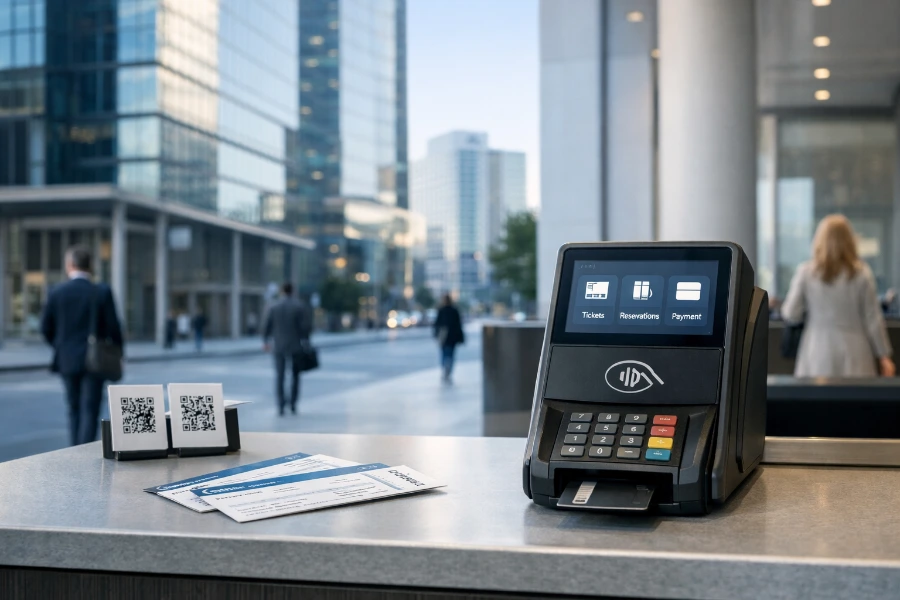
Speakeasy, the New York startup that merges ticketing, reservations and payments for nightlife and live events, raised an $18.8M Series A led by VMG Technology on November 18, 2026.
Key Takeaways
- Speakeasy closed an oversubscribed $18.8M Series A led by VMG Technology on November 18, 2026.
- The round comes about four months after an $8.8M first institutional raise, and total funding is roughly $27M.
- The company works with operators in 45+ US cities. Valuation was not disclosed.
Lead
Speakeasy, a New York software company founded in 2023, announced an oversubscribed $18.8M Series A on November 18, 2026. VMG Technology led the round. Capital One Ventures, Positive Sum and the Yamaha Music Innovations Fund also participated. The company did not disclose its valuation.
The platform combines ticketing, payments, reservations, guest management and direct marketing in one system. Its customers include TAO Group Hospitality, Fontainebleau Development, E11EVEN, Barstool, Cipriani and Breakaway Music Festival, across more than 45 US cities. Total funding now stands at roughly $27M.
What Does Speakeasy Actually Sell?
Speakeasy sells one operating system to venues and event operators that currently stitch together separate vendors for ticketing, table reservations, payment processing and email marketing. The pitch is that a single system captures the full relationship between a guest and the operator, rather than leaving that data scattered across tools.
CEO and co-founder Alex Manavi framed it that way in the announcement. "Live experiences have run on fragmented tools that never captured the full relationship between a guest and the event operator," he said. Speakeasy was co-founded with Tamas An and Paul Stacek.
The product competes with point solutions on each side. Posh, which raised a $37M Series B in 2026, covers event ticketing and community tools. SevenRooms, acquired by DoorDash in 2025, covers reservations and guest data for restaurants. Speakeasy is betting that operators prefer one vendor to several.
Why Did Speakeasy Raise Twice in Four Months?
Speakeasy raised again quickly because its first institutional round, an $8.8M raise announced on July 15, 2026, was followed by demand from investors that exceeded the target. The company described the Series A as oversubscribed, which means more money was offered than it chose to take.
The speed deserves scrutiny. A Series A arriving four months after a first institutional round more than doubles the capital on hand, from $8.8M to about $27.6M in total raised. Rapid follow-ons often reflect real traction, but they also pull forward the pressure to show revenue. Speakeasy has not published revenue, bookings volume or retention figures, so outsiders cannot yet test that traction. The implied valuation step-up is equally opaque.
Who Is Backing the Round, and What Does the Mix Signal?
The investor list points to payments and music as the two strategic angles. Capital One Ventures brings a card-issuer relationship to a product that processes guest payments. The Yamaha Music Innovations Fund signals interest in the music and live-performance side of the business. VMG Technology, the lead, is a growth-oriented technology investor.
Strategic investors can open distribution and processing partnerships, but they can also complicate exits, since a corporate backer may deter rival acquirers. The company has not said whether any commercial agreements accompany the investments.
How Will the Money Be Used?
Speakeasy plans to spend the new capital on four areas: deeper AI tools inside operator workflows, a larger partnerships division, enterprise system integrations, and consumer discovery and booking across its partner network.
The last item is the most consequential. A consumer-facing discovery layer would move Speakeasy from back-office software toward a marketplace, where guests find and book experiences across venues. That is a different business from selling software subscriptions, with different margins and a harder customer-acquisition problem. The company has not detailed a timeline for it.
What Comes Next for Live Experience Software?
Consolidation is the likely direction. DoorDash's 2025 purchase of SevenRooms showed that large consumer platforms will pay for hospitality data, and Posh's 2026 Series B showed investors still fund event-focused tools. Speakeasy sits between the two categories.
Two scenarios follow. If Speakeasy converts its early enterprise logos into expansion revenue, it could become a default stack for nightlife and hospitality groups. If operators resist replacing entrenched ticketing and reservation vendors, the integrations work that the company plans to fund will determine whether it can coexist with them instead.
Outlook
Speakeasy has $18.8M, a lead investor in VMG Technology, and a customer list that includes several recognizable hospitality groups. What it lacks publicly is a valuation and operating metrics. The next test is whether the AI tooling and consumer discovery plans turn a unified back office into a growing network, and whether another financing follows as quickly as this one did.