Pomegra
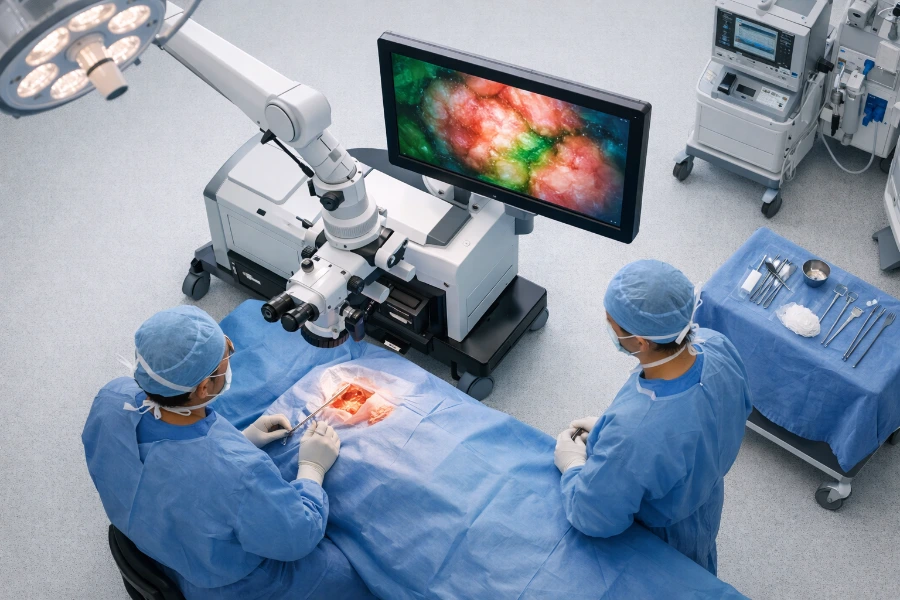
Dutch medtech startup SPCTR has closed a €2.8 million round to put AI-guided optical imaging into breast cancer operating rooms and move its SPCTRone device toward CE marking.
Key Takeaways
- SPCTR raised €2.8M on November 26, 2026, from VGZ Voorop in Zorg, Future Tech Ventures, NOM, angels and the EU Just Transition Fund.
- SPCTRone pairs optical imaging with AI to show surgeons whether tumour tissue remains at the margin during surgery.
- Valuation is undisclosed. A multi-hospital Dutch study is due to start in late 2026.
Lead
SPCTR, a medtech company based in Utrecht and Groningen, announced a €2.8 million funding round on November 26, 2026. The money will pay for a multi-hospital clinical evaluation, first-series device production, progress toward CE marking and team growth. The company was founded in 2025 and has 8 employees.
Its product, SPCTRone, combines optical imaging with artificial intelligence to assess the margins of removed tissue while the patient is still on the table. The device is available only within clinical research. Breast cancer is the first target, with other tumour types in view.
Who Is Backing SPCTR?
The round combines a healthcare insurer's innovation fund, a university-linked venture investor and regional and EU public money. The VGZ Voorop in Zorg fund, backed by the insurance cooperative Coöperatie VGZ, and Future Tech Ventures are the named institutional investors. The Investment and Development Agency for the Northern Netherlands (NV NOM), a group of business angels and the European Just Transition Fund also participated. RUG Ventures, the University of Groningen's investment company, takes part through Future Tech Ventures.
No single lead has been publicly named, and the valuation is undisclosed. The investor mix is typical of Dutch medtech seed financing: patient capital with a regional development mandate, rather than a priced round led by a specialist fund. That fits a company that has yet to sell a device and still depends on ethics approvals and hospital sign-offs.
The VGZ stake carries a payer's logic. Martijn Kers, director of innovation and healthcare policy at Coöperatie VGZ, said that if SPCTRone leads to fewer re-operations and follow-up treatments, it is "not only better for the patient" but also supports the accessibility, affordability and sustainability of care.
What Problem Does SPCTRone Address?
SPCTRone targets the delay between surgery and pathology results. Surgeons currently estimate during a lumpectomy whether they have removed enough tissue, and a pathologist confirms it days later. In 10.8% of breast-conserving operations in the Netherlands, tumour cells are found at the surgical margin, which can mean a second operation.
Breast cancer affects roughly 1 in 7 women in the Netherlands, so even a modest reduction in positive margins would spare a meaningful number of patients repeat surgery. CEO and co-founder Wido Heeman framed the gap directly: surgeons must judge during the operation whether they have removed enough tissue and learn days later whether they were right. "With SPCTRone, we want to bring that answer to the operating room," he said.
If the device flags residual tumour, the surgeon can remove more tissue in the same procedure. That is the clinical case for the product: one operation instead of two.
What Has the Technology Shown So Far?
SPCTR has tested the approach in an initial study of more than 200 patients at UMC Utrecht and the Academic Breast Center Groningen, a collaboration between Martini Hospital and UMCG. The company has not published accuracy figures such as sensitivity or specificity in the announcement. Those numbers will decide whether the device earns a place in surgical workflow.
A follow-up study is expected to start in late 2026, pending approval from medical ethics committees and the hospitals involved. Sites include the Academic Breast Center Groningen, St. Antonius Hospital and Isala. The study will test how the system performs outside the two original centres, which is where many early imaging tools lose their edge.
How Crowded Is Intraoperative Margin Assessment?
Intraoperative margin assessment is an established problem with a thin set of adopted solutions. Specimen radiography, frozen-section analysis and handheld probes exist, but none has become standard in Dutch breast surgery, which is why second operations persist at the rate cited. SPCTR competes against that status quo as much as against rival devices.
The skeptical reading is straightforward. A €2.8 million round is enough to run clinical studies and build a first device series, but it will not carry a company through the full cost of a regulated device launch. A larger Series A will likely depend on the follow-up study results and on whether CE marking proceeds on schedule.
What Comes Next for SPCTR?
SPCTR's next milestones are the late-2026 multi-centre study, completion of the first device series and the CE marking process. Positive multi-site data would strengthen its case with hospitals and with payers such as VGZ, whose involvement points to an early reimbursement conversation. Weak or inconsistent results would leave the company with a technically interesting device and no commercial route.
Outlook
SPCTR enters 2027 with funding, two Dutch academic clinical partners and a defined problem: a 10.8% positive-margin rate in breast-conserving surgery. The round is small by medtech standards, and the decisive evidence has yet to arrive. The follow-up study and the CE marking decision will show whether SPCTRone can move from clinical research to routine operating-room use.