Pomegra
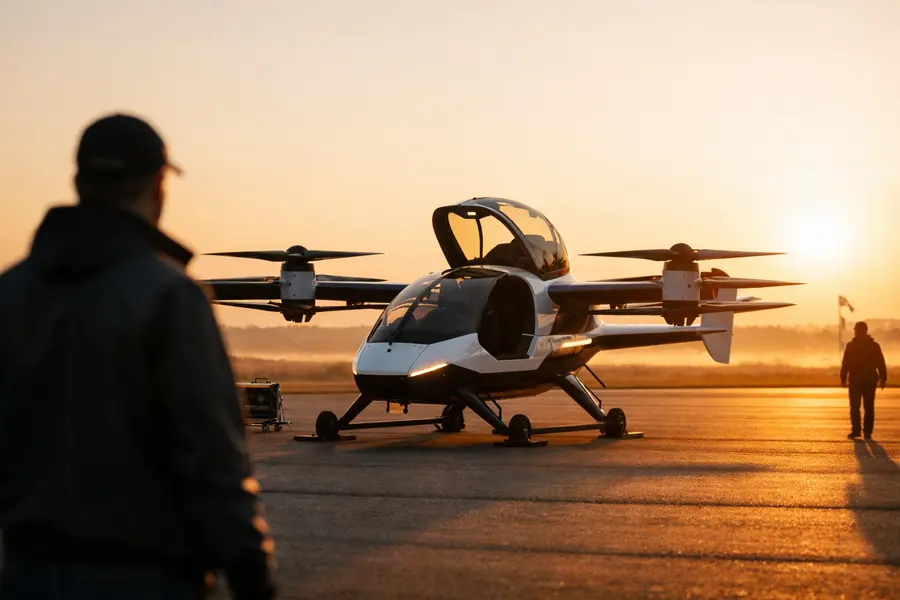
Britain's Skyfly Technologies has closed a roughly €8.9M seed round to certify its two-seat Axe under new FAA rules and deliver the first aircraft in 2027.
Key Takeaways
- Skyfly raised about €8.91M ($10M, £7.5M) in a seed round led by HICO Investment Group.
- Defence fund Archangel joined; valuation and aircraft price were not disclosed.
- First customer deliveries are planned for 2027, with 61 private customers on the order book.
Lead
Skyfly Technologies, a Northamptonshire-based developer of electric vertical take-off aircraft, announced on 20 October 2026 that it had closed a seed round of about €8.91M ($10M). HICO Investment Group, a growth equity investor, led the round. Archangel, a €50M early-stage fund focused on defence technology, also took part.
The money will pay for certification of the Axe, a two-seat electric aircraft, under the US Federal Aviation Administration's updated MOSAIC rules. It will also expand production in the UK and the US, and fund a hybrid-electric unmanned derivative called Longbow. The company has not disclosed a valuation, the size of the stakes taken or the Axe's price.
What Is the Axe, and How Far Along Is It?
The Axe is a two-seat aircraft that takes off vertically using eight fixed-angle electric motors, then transitions to wing-borne flight for cruise. Skyfly gives it a range above 100 miles, a cruise speed of 100 mph, a payload of 200 kg and a flight time of 60 to 90 minutes. It can also operate from conventional runways.
The prototype has completed more than 100 piloted flights, including what Skyfly describes as Europe's first airfield-to-airfield eVTOL flight. It holds experimental flight permits in both the UK and the US, and a dedicated US flight test team has operated since 2025. The company builds in a 10,000 square foot facility in the UK.
Skyfly estimates running costs at about £70 per flying hour. That figure is the manufacturer's own projection and has not been independently verified.
Why Does MOSAIC Matter for Skyfly's Timeline?
The MOSAIC rules matter because they offer a lighter certification route than the full type certification that has delayed larger air-taxi programmes. The FAA's Modernization of Special Airworthiness Certification framework came into force in July 2026 and widens the range of light-sport aircraft that can be certified, with less paperwork than conventional airworthiness approval.
Skyfly is betting that a small, simple, two-seat aircraft for private owners fits that pathway. Larger piloted eVTOL makers such as Joby and Archer target commercial passenger service, which requires heavier certification and far more capital. HICO's Chris Hartnoll pointed to the Axe's simpler electric drivetrain, with fewer moving parts, and to the new certification route as reasons for backing the team.
What Does a €8.9M Seed Round Imply?
A €8.9M seed round is small by eVTOL standards, where the best-funded players have raised hundreds of millions of dollars. It implies Skyfly's plan rests on a cheaper aircraft and a lighter regulatory burden, not on a capital-intensive race to carry paying passengers. It also leaves little room for slippage: building a production line in two countries and completing certification on roughly €9M is a narrow budget.
Demand is the other test. The order book stands at 61 private customers worldwide, but the company has not said how many have paid deposits or at what price. Without a disclosed price, the order count says little about revenue. The 2027 delivery target will be the first real check on both the engineering and the commercial case.
Why Is a Defence Fund in the Round?
Archangel's presence points to the Longbow, the hybrid-electric uncrewed version of the airframe. Skyfly says it offers a range above 400 miles with the same 200 kg payload, aimed at cargo, intelligence, surveillance, medical evacuation and logistics roles. The company is enrolled in the UK Ministry of Defence's heavy-lift challenge.
Archangel's Nicholas Nelson described Longbow as addressing a clear requirement for unmanned systems that can move cargo. For Skyfly, the defence track offers a second customer base that does not depend on private-owner certification timelines. The risk is dilution of focus, with a small team now running a civil certification programme and a military development effort at once.
What Comes Next for Skyfly?
The near-term milestones are MOSAIC certification, the first customer deliveries in 2027, and added production capacity in the US. A larger round is likely to follow once certification progress is visible, since scaling manufacturing will cost more than the seed funding supports.
Several outcomes are plausible. If MOSAIC approval arrives on schedule, Skyfly could become one of the first eVTOL makers delivering aircraft to paying customers. If certification slips, the order book and the cash runway will both come under pressure. Competitors in the personal flight segment will also watch whether the new FAA rules prove workable in practice.
Outlook
Skyfly has funded the next stage of the Axe's development with €8.9M from HICO and Archangel, and set a 2027 delivery target tied to MOSAIC certification. The round is modest, the valuation is undisclosed and the price is unknown. Delivery of a certified aircraft to the first of 61 waiting customers will show whether the lean approach works.