Pomegra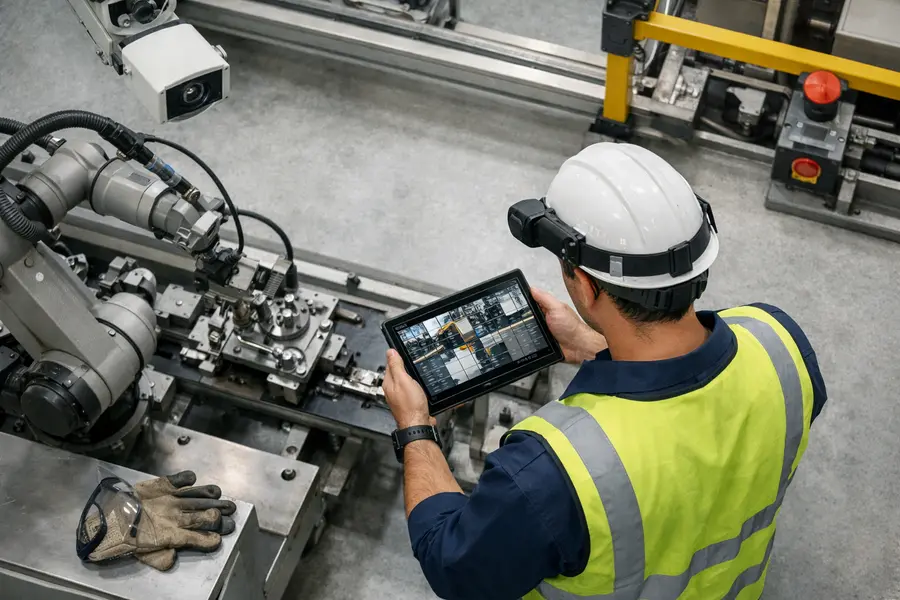
Nashville's SiteVue AI closed a $7.5M seed, co-led by Penny Jar Capital and Overture, funding AI cameras that flag defects, PPE violations, and safety hazards on factory floors.
Key Takeaways
- $7.5M seed round co-led by Penny Jar Capital and Overture, announced August 6, 2026, with six additional investors participating.
- Fixed and wearable AI cameras detect defects, PPE violations, near-misses, and cycle-time bottlenecks without infrastructure changes.
- Customers report 10-20% floor efficiency improvements and up to 90% reductions in safety incidents, per company disclosures.
Lead
SiteVue AI closed a $7.5 million seed round on August 6, 2026, with Penny Jar Capital and Overture sharing the lead. Six additional firms - Silence, Spring Bank, Mana Ventures, Outset Capital, WaterStone, and Untapped Ventures - filled out the syndicate. The Nashville, Tennessee company designs and manufactures its own AI-enabled cameras, trains the underlying models in-house, and targets the persistent gap between what happens on industrial floors and what plant managers can actually see in real time.
What Does SiteVue AI Actually Build?
The hardware ships in two forms: fixed cameras mounted at workstations and wearable units carried by line workers. Both feed into custom-trained computer vision models that run continuous analysis covering cycle times, product defects, machine health, labor movement, mispacks, mislabels, near-misses, and PPE compliance. The system runs on a subscription model and installs in days, requiring no changes to existing infrastructure or production workflows.
The distinction from generic video surveillance is in the model specificity. Standard cameras capture footage for later review; SiteVue's system flags anomalies and routes alerts in real time, making the output operational rather than archival. That shift - from recorded to actionable - is where the company's pricing case rests.
Why Is Factory Floor Vision Attracting Capital Now?
Labor costs and safety liability are converging across the industrial sector. Manufacturing employers face rising workers' compensation premiums, tighter regulatory scrutiny, and sustained customer pressure on quality metrics - particularly in automotive and food processing, where a mispack or mislabel carries both regulatory and reputational consequence.
Existing solutions typically require significant integration work: custom sensor networks, IT infrastructure upgrades, or consultants to interpret captured data. SiteVue's install-in-days claim targets a segment of smaller and mid-size manufacturers priced out of traditional quality-assurance automation. The company reports 10% to 20% improvements in floor efficiency, 5% to 10% increases in product quality, recovery of 5% to 10% of labor hours, and reductions of up to 90% in safety incidents among current customers. Those figures come from the company's own disclosures; independent verification is undisclosed.
Competitive Position
AI vision for manufacturing is not a thin field. Established players deploy computer vision for defect detection across automotive and electronics production. Well-funded startups have addressed specific niches - weld inspection, PCB defect analysis, logistics sorting. Broader competitive pressure comes from generalist machine vision integrators pairing off-the-shelf cameras with custom software.
SiteVue's positioning rests on three claims: the wearable camera format, the breadth of detection categories within a single system, and the no-infrastructure-change installation. The company launched in automotive manufacturing and food production. It is now moving into retail, construction, chemical, and oil and gas - a wider surface area that will test whether a single model library can serve meaningfully different production environments without deep customization for each.
At 37 employees, the company is early enough that these expansion moves are still largely aspirational. The $7.5 million extends the runway to find out.
Outlook
The round's broad syndicate - eight investors across the cap table - reflects genuine interest in the industrial vision category, not just in SiteVue specifically. The harder test comes when pilot programs need to convert to enterprise-wide subscriptions, where multi-year safety and efficiency data will either confirm or complicate the company's reported gains. For now, SiteVue has the capital and the investor coalition to build that track record. Whether the reported performance numbers survive at scale, across more industries and less controlled deployments, is the question the next round will have to answer.