Pomegra
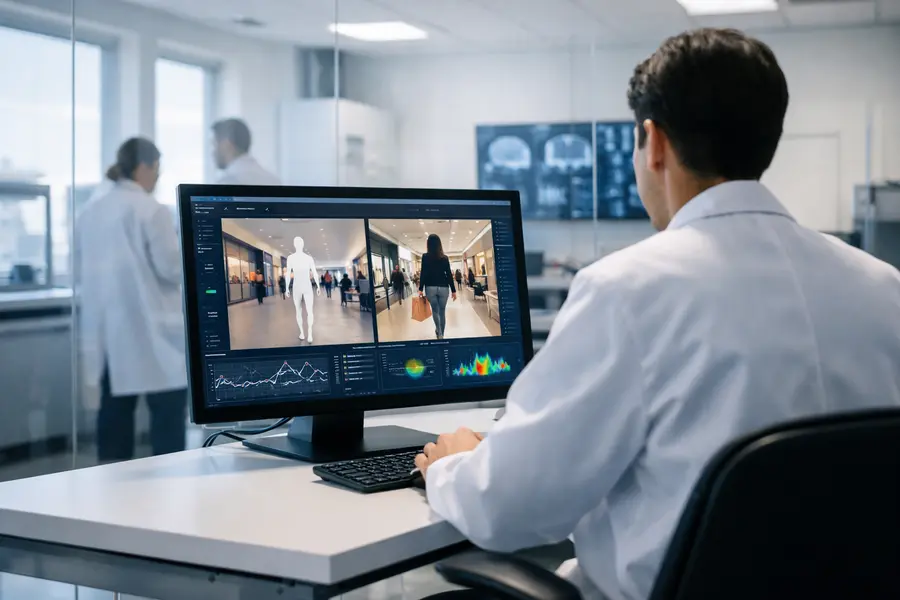
Simile has raised more than $300 million in under six months to build AI models that predict how people will respond to products, prices and messages.
- Simile's $200M Series B at a $2B valuation, led by Greenoaks, closed July 31, 2026.
- That round came five months after a $100M Series A led by Index Ventures in February 2026.
- Customers include CVS Health, Wealthfront, Deloitte and Gallup.
Lead
Simile, a Palo Alto startup founded on Stanford research into AI agents that mimic human behavior, has raised more than $300 million across two rounds since its public launch in February 2026. The latest was a $200 million Series B at a $2 billion valuation, announced July 31, 2026 and led by Greenoaks. It followed a $100 million Series A led by Index Ventures only five months earlier.
The company sells simulation software that lets a business define an audience, then pose questions or test changes against synthetic versions of that audience. The pitch is to replace some slow, costly human research with predictions generated before a product, policy or message goes live.
Who Backed the Series B?
Greenoaks led the Series B, with returning investor Index Ventures participating. Hanabi, Bain Capital Ventures, A*, Factory and CVS Health Ventures also took part. Definition joined as a new investor.
The Series A drew notable angels, including Andrej Karpathy, Fei-Fei Li and Adam D'Angelo. The presence of CVS Health Ventures on the cap table is unusual: one of the startup's customers is also a shareholder, which gives the company a credible reference account and a possible circularity question in the same stroke.
What Does Simile Actually Sell?
Simile sells foundation models trained to simulate human behavior, aimed at enterprises that want to forecast how customers, patients, employees or citizens will react to a change. Users build a synthetic population and run questions or interventions against it. A confidence model scores how reliable each prediction is.
The company says it has run tens of millions of simulations for Fortune 100 clients. Revenue has grown fivefold since the February launch, though Simile has not disclosed absolute revenue. Headcount stands at more than 50 people.
It displaces, at the margin, traditional survey panels and focus groups. Those methods are slower and more expensive, and they have long struggled with respondent fatigue.
Where Did the Technology Come From?
The research lineage runs through Stanford. CEO Joon Sung Park led the 2023 "Smallville" project, in which 25 AI agents with memory and relationships lived in a simulated town. He co-founded Simile with Stanford HCI professor Michael Bernstein, Percy Liang of the Stanford Center for Research on Foundation Models, and Lainie Yallen.
A 2025 study interviewed 1,052 Americans about their beliefs and life histories, then built agents from those interviews. Agents combining interviews and surveys reached 86% of the consistency with which the human participants reproduced their own answers two weeks later. A separate dataset, SocSci210, covers 2.9 million responses from 400,491 participants across 210 experiments. Fine-tuning on it improved agreement with human response distributions by 26% relative to the base model.
Does the Evidence Support the $2 Billion Price?
Partly. The accuracy figures are real but narrow: matching a person's own repeat answers on a survey is not the same as predicting how a market will behave. Simile's stated goal is to simulate all eight billion people, yet the public evidence is strongest for bounded simulations of individuals and defined populations.
A valuation of $2 billion, reached five months after the Series A, prices the company on trajectory rather than on disclosed revenue. Investors are betting that enterprise buyers will accept synthetic respondents as a screening layer, using them to decide which ideas deserve a live experiment. That is a more modest claim than replacing research outright, and it is the one the data currently supports.
Competitors in synthetic research and market-simulation tools are also pursuing the same budget lines, which limits how much pricing power any single vendor can claim.
What Will the Money Fund?
Simile plans to spend on three areas: training its foundation models, expanding the compute behind its simulations, and building commercial engineering teams in healthcare, financial services and media. Those verticals match the existing customer base, led by CVS Health in healthcare and Wealthfront in finance.
Compute is the larger variable. Running large populations of simulated agents multiplies inference costs, so margins will depend on how efficiently Simile can serve each simulation.
What Comes Next for Synthetic Consumer Research?
The next test is validation outside the lab. Enterprise buyers will want evidence that simulated outcomes track real campaign, pricing and policy results, not just survey benchmarks. If the confidence scores prove reliable, Simile could become a standard pre-launch check; if they do not, clients will fall back on human panels and the category will stall.
A third path is also plausible. Large survey and consulting incumbents, several already among Simile's customers, could build or buy comparable capabilities, narrowing the startup's window.
Outlook
Simile has turned a Stanford research program into a $2 billion company in under a year, backed by Greenoaks, Index Ventures and a customer-investor in CVS Health. Growth is fast and the client list is strong, but revenue is undisclosed and the headline accuracy results remain narrower than the market it intends to serve. The coming quarters will show whether simulated consumers can predict real-world outcomes well enough to justify the valuation.