Pomegra
FuriosaAI raised a $620M Series D at a $2.9B valuation, led by Korea's National Growth Fund, to scale RNGD inference chip output against Nvidia in 2026.
Key Takeaways
- FuriosaAI closed a $620M Series D on October 29, 2026, at a post-money valuation of about $2.9B.
- Korea's National Growth Fund put in $280M; foreign investors led by Infinitum added $110M.
- Valuation rose roughly fourfold from $735M in July 2025; 20,000 RNGD chips are planned for 2026.
Lead
FuriosaAI, a Seoul-based designer of energy-efficient AI inference chips, closed a $620M Series D on October 29, 2026. The round values the company at about $2.9B post-money, roughly four times the $735M valuation set in July 2025. In Korean currency, the raise equals 820 billion won at a 3.8 trillion won valuation.
The largest check came from the state: South Korea's National Growth Fund invested $280M, 45% of the round. The company says it will spend the money on three things: expanding production of its RNGD accelerator, strengthening its software ecosystem, and accelerating a third-generation processor developed with Broadcom.
Who Backed the Round?
Public money dominated, with private foreign capital in a supporting role. The National Growth Fund's $280M sits alongside $110M from international investors. U.S.-based Infinitum led that group, joined by QUDA Capital Partners of Singapore, Cisco Investments, Abu Dhabi's NeoFort Holding, Jericho Capital and Worldline Capital.
Existing shareholders returned with roughly $125M in follow-on money. They include Naver through its D2SF venture arm, DSC Investment, KDB Capital, Nextrans, Kakao Investment and Hanwha Asset Management. The Export-Import Bank of Korea also took part. Among domestic investors, Nextrans committed 48 billion won, UAMCO 40 billion won and Korea Development Bank 30 billion won.
The round took most of the year to assemble. It opened in January with a target range of 450 billion to 750 billion won, and it closed above the top of that range.
Why Did the Valuation Quadruple?
The jump reflects a shift from prototype to shipping product. RNGD, the company's second-generation accelerator, entered mass production in January 2026 and has paying users. LG Group runs its EXAONE language models on the chip, Upstage uses it for live search summarization, and Samsung SDS has offered it as an NPU-as-a-service since July 2026.
Production targets back the number. FuriosaAI plans 20,000 RNGD units in 2026 and more than 40,000 in 2027.
A skeptical reading is available. The July 2025 mark came from a bridge round, a smaller and lower-priced financing, so the fourfold figure flatters the progress. The comparison also leans on a state fund that is partly pursuing industrial policy rather than pure return. The company has not disclosed revenue, which leaves the $2.9B figure resting on unit plans rather than reported sales.
What Does RNGD Actually Offer?
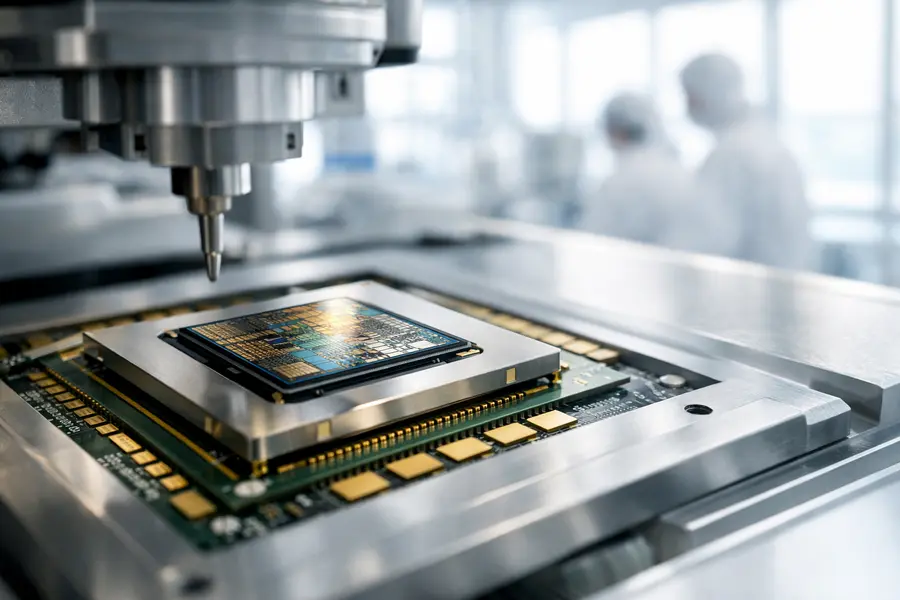
RNGD is built on the company's Tensor Contraction Processor architecture and draws 180W with air cooling. That lets operators install it in existing data centers without liquid-cooling retrofits. The company says the card matches the throughput of Nvidia's RTX Pro 6000 and serves twice as many users per kilowatt.
Those figures are the vendor's own, measured against a workstation-class Nvidia card rather than the data center parts that dominate large clusters. Nvidia remains the reference point for the whole inference market, and its software stack is the harder obstacle. Furiosa's pitch is power efficiency: electricity and cooling limit how many accelerators a facility can host, so a lower-wattage chip can fit more capacity inside the same power budget.
What Comes Next for FuriosaAI?
Execution on manufacturing and software comes first. Delivering 40,000 units in 2027 requires reliable foundry and packaging supply, and the third-generation chip with Broadcom must arrive on a schedule that keeps pace with Nvidia's annual product cadence. Software support for mainstream model frameworks will decide whether customers beyond Korea's large conglomerates adopt the chip.
An IPO is also on the table. Reports on the company's plans point to a listing announcement in 2027, most likely near the end of the second quarter. A public offering would test whether the $2.9B valuation holds once audited revenue is visible.
Outlook
FuriosaAI has become one of the better-funded non-U.S. challengers in inference silicon, backed by a national fund, a domestic customer base and a Broadcom design partnership. The valuation now depends on converting 2026 production plans into recurring orders outside its home market. The next signals are 2027 shipment volumes, the third-generation chip timeline and any IPO filing.