Pomegra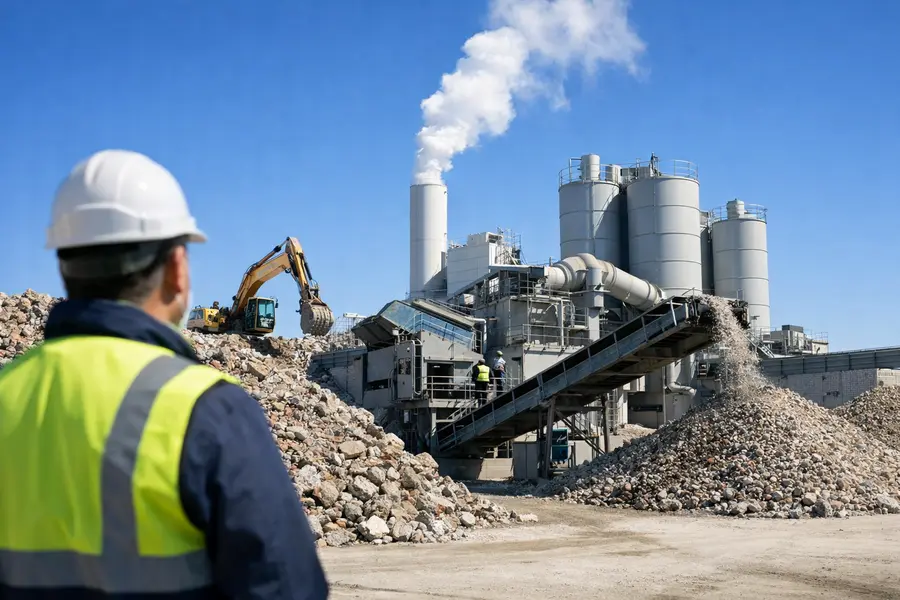
Cambridge startup Reclinker raised a £10M Series A led by Clean Growth Fund and AP Ventures to make half-emission cement from demolition waste in Cardiff.
Key Takeaways
- Reclinker raised £10M in a Series A co-led by Clean Growth Fund and AP Ventures; valuation was not disclosed.
- The process turns demolition cement paste into clinker inside steel-recycling electric arc furnaces, with no kiln.
- The company claims a 50% emissions cut at cost parity. Those figures have not been independently verified.
Lead
Reclinker, a Cambridge, UK startup spun out of University of Cambridge research, announced a £10M Series A on 5 October 2026. Clean Growth Fund and AP Ventures co-led the round. The Development Bank of Wales and Kibo Invest joined, alongside existing backers Zero Carbon Capital and Cambridge Enterprise. The company will use the money to move from trial output to full commercial production at a site in Cardiff.
Reclinker did not disclose a valuation, the size of its earlier funding, or the equity split in this round. Chief executive Bill Yost described the round as oversubscribed.
What Does Reclinker Actually Do?
Reclinker recovers old cement paste from demolished buildings and converts it back into clinker, the active ingredient in cement. It does this inside electric arc furnaces that already recycle scrap steel. The process needs no conventional kiln, no quarried limestone and no fossil-fuel heating.
The underlying research appeared in Nature in 2024. The company, founded in 2022, was previously known as Cambridge Electric Cement. Its team includes Yost, Poppy Brewer and Pippa Horton, with Cyrille Dunant also named in connection with the research.
The pitch matters because cement production accounts for roughly 7% of global CO2 emissions, around three times the share attributed to aviation. Most of that comes from heating limestone in kilns, which releases carbon both from fuel and from the rock itself. Reclinker sidesteps both by starting with material that has already been calcined once.
How Far Has the Technology Come?
Reclinker has already produced thousands of tonnes of material at the Cardiff facility of 7 Steel UK and has secured its first commercial sales. That places it beyond laboratory demonstration, though the gap between thousands of tonnes and the volumes a cement buyer expects remains wide.
The company says its process delivers an immediate 50% reduction in cement emissions at the same cost as conventional cement, with deeper cuts possible as it scales. Both claims come from Reclinker itself. Cost parity in particular is the figure to watch, since construction buyers rarely pay a premium for lower carbon without a mandate.
Why Did These Investors Back It?
The investor mix reflects a mix of climate capital and regional policy money. Clean Growth Fund and AP Ventures are both climate-focused investors, while the Development Bank of Wales adds public backing tied to the Cardiff site. Existing investors Zero Carbon Capital and Cambridge Enterprise returned, which signals continuity rather than a fresh bet.
Reclinker also benefits from policy pull. The company points to a five-year plan under Innovate UK's Advance Market Commitment, which is intended to encourage concrete makers to buy more low-carbon material. Guaranteed demand is a stronger signal than a cap table, because most cement start-ups stall on offtake rather than chemistry.
What Are the Risks?
The main risk is scale rather than science. Reclinker depends on host steel plants with spare furnace capacity and a reliable supply of sorted demolition paste. Both inputs vary by region, and the economics change with electricity prices.
A second constraint is that the model borrows capacity from the steel industry. Each new site needs an agreement with a furnace operator, so growth runs through partnerships rather than a single plant the company controls. The company says it intends to replicate the process across Europe and the US, but it has not named further sites or dates.
What Comes Next for Reclinker?
The near-term test is converting the Cardiff pilot output into repeat commercial contracts. If production holds at lower cost than traditional clinker, the next step is a second furnace partner, most likely abroad given the stated European and US ambitions. If cost parity slips, the product risks being sold as a premium green material in a market that has historically resisted premiums.
Larger cement producers have their own decarbonisation paths, including carbon capture and alternative fuels. Reclinker's argument is that recycling existing material in existing furnaces is cheaper and faster than building new plant.
Outlook
Reclinker's £10M Series A funds the shift from trials to commercial output in Cardiff, backed by climate investors and a Welsh development bank. The 50% emissions cut and cost parity remain company claims until larger volumes are tested by customers. Replication at further steel sites in Europe and the US will determine whether this is a regional pilot or a repeatable model.