Pomegra
Etched, the AI inference chip startup, is weighing investor offers at a $40-50 billion valuation, about double the $21 billion mark it set in August 2026.
Key Takeaways
- Etched is weighing offers at $40 billion from established investors and up to $50 billion from lesser-known backers.
- The prior round was $700 million at a $21 billion valuation, led by Jane Street in August 2026.
- Talks are early, and the terms could still change.
Lead
Etched, the four-year-old developer of inference hardware for AI models, is fielding funding offers that value it between $40 billion and $50 billion, TechCrunch reported on October 5, 2026. Established investors are offering a valuation near $40 billion, while less-known backers have indicated up to $50 billion. The talks are at an early stage. The offers arrive roughly seven weeks after Etched announced a $700 million round at a $21 billion valuation, led by Jane Street.
A small correction to the framing: $21 billion was the valuation, not the round size. The company has raised far less than that figure suggests.
What Did Etched Raise Before These Offers?
Etched has raised three priced rounds in about ten months, and each carried a steep markup. In December 2025, it raised $500 million at a $5 billion valuation. In July 2026, a $300 million Series C led by Sequoia Capital valued it at $10.3 billion. On August 18, 2026, a $700 million round, which appears to be a Series D, put the figure at $21 billion.
Jane Street led that August round. The quantitative trading firm is also a customer: it installed the first Etched cluster shipped to a client in its own data center. Other participants included Kleiner Perkins, Sequoia, Andreessen Horowitz, Peter Thiel, Tiger Global, Bain Capital Ventures, Stripes and Blackstone.
What Does Etched Actually Sell?
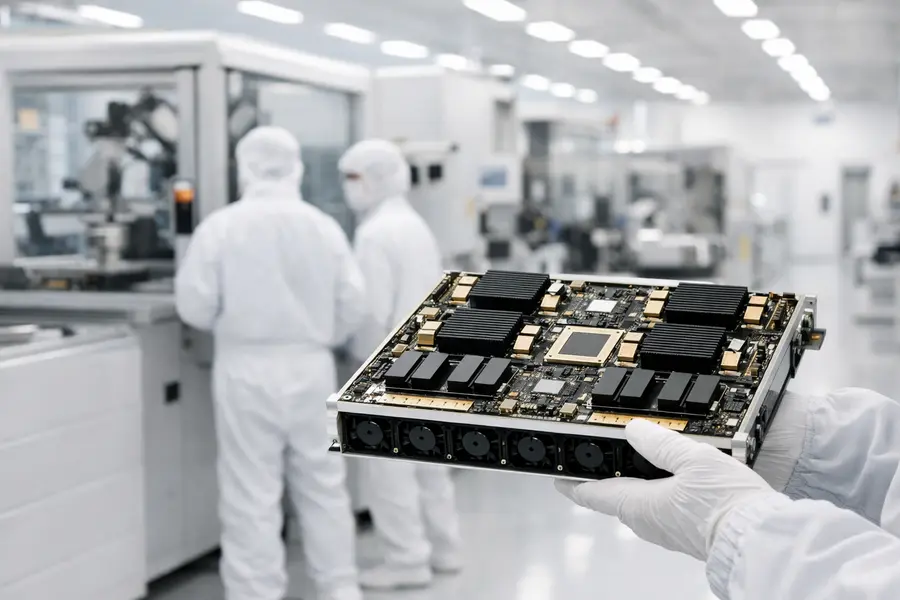
Etched sells full inference systems built around its own silicon, not only chips. Its earlier pitch centered on Sohu, a chip specialized for transformer models, which left buyers wondering what happens if model architectures shift. The company has since moved toward what it calls frontier inference clusters that support any frontier model.
Two custom components anchor the design. One is a prefill chip that runs at low voltage to speed up prompt processing. The other is a cluster-scale memory interconnect that lets multiple chips share memory pools, which cuts latency in token generation. Etched says the systems process more tokens, faster and more cheaply, than Nvidia hardware. That claim has yet to be verified at scale in public benchmarks.
The company reported $1 billion in secured customer orders in July 2026. It employs about 400 people, roughly 15% of whom previously worked at Nvidia. It runs a 10-megawatt data center in Silicon Valley and a production coordination facility in Taiwan, and manufactures its test chips at TSMC.
Why Is the Valuation Climbing So Fast?
The valuation is climbing because investors are paying for scarce inference capacity, and Etched is one of few startups with working hardware in a customer's data center. Etched's valuation would have risen roughly eightfold to tenfold since December 2025 if either offer closes. Revenue has not kept pace with that curve in any disclosed figure. The $1 billion in orders is a commitment number, not recognized revenue, and the company has not published shipment volumes.
The pattern also says something about the last round. A $21 billion price that is 2.1 times the July mark in about a month looked aggressive. Offers of nearly double that suggest the August price was set before competing investors finished their work, and that the round left demand unmet. Investors offering $50 billion are less established than those at $40 billion, which hints at a fear of missing out as much as conviction about unit economics.
What Are the Risks Behind These Numbers?
The main risk is execution against Nvidia, which can cut prices, bundle software and ship new generations on a fixed annual cadence. Etched must move from a handful of installed clusters to volume production through TSMC without yield or supply problems. Concentration is another concern: Jane Street is both lead investor and early customer, so some of the validation is circular.
On the other side, investors in AI infrastructure have rewarded companies that secure customers early. A $40 billion valuation would place Etched among the most highly valued private chip companies, ahead of what most public semiconductor peers command relative to revenue.
Outlook
Etched has no confirmed term sheet at $40 billion or $50 billion, and early-stage talks often shift or fall apart. If a round closes at either price, it would be the company's fourth in under a year and would likely fund more manufacturing capacity and additional customer deployments. The next signal will be shipment volumes beyond Jane Street, which will show whether the order book converts into revenue at the pace the valuation implies.