Pomegra
Ramon.Space closed a $124M Series B led by PSG to scale radiation-tolerant satellite computers, with Micron joining as a new investor.
Key Takeaways
- Ramon.Space raised $124M in a Series B led by growth equity firm PSG, announced November 17, 2026.
- Micron, Senvest and Phoenix Financial joined; total funding now stands at about $180M. Valuation was not disclosed.
- Proceeds target output growth from thousands of computing units a year to tens of thousands and beyond.
Lead
Israeli space computing company Ramon.Space announced a $124M Series B on November 17, 2026. Growth equity firm PSG led the round. New investors include Micron Technology, Senvest and Phoenix Financial. Existing backers StageOne, Deep Insight and Grove Ventures also took part.
The company builds computing, storage and networking systems that process data aboard satellites instead of sending raw data to the ground. It said it will spend the money on manufacturing capacity, faster customer deliveries and entry into additional international markets. Total funding raised to date reaches roughly $180M. The company did not disclose a valuation.
What Does Ramon.Space Actually Sell?
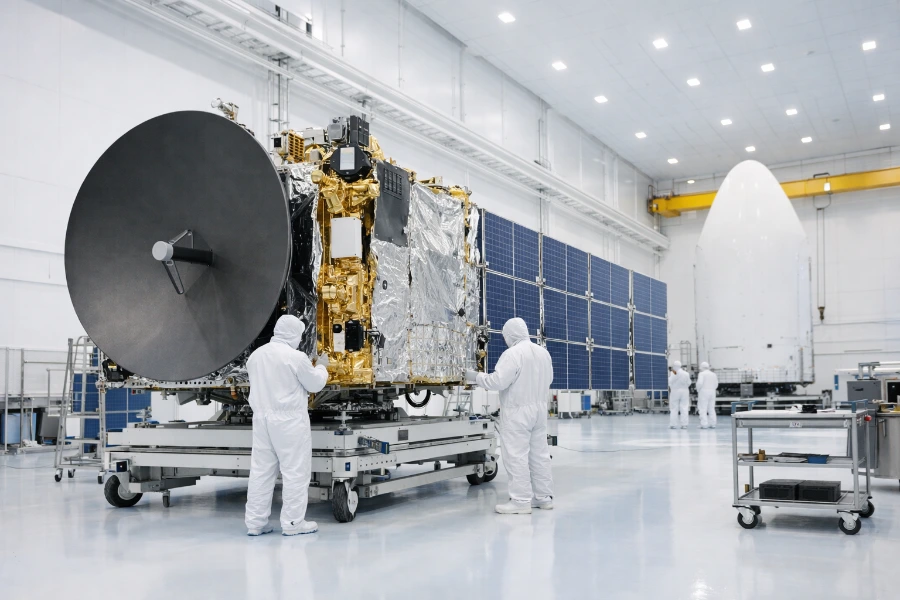
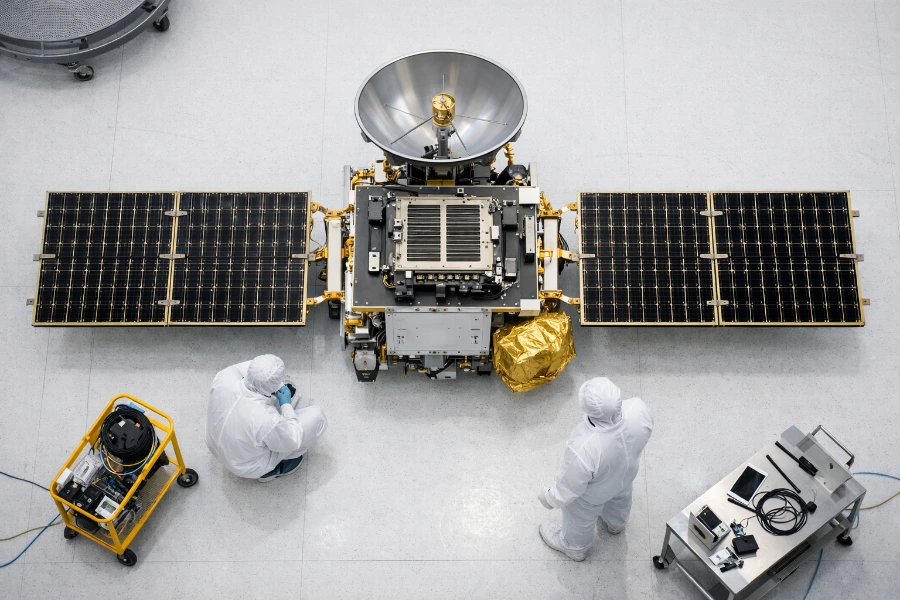
Ramon.Space sells onboard computing hardware and software that combine specialized AI and machine-learning processors, high-capacity storage and networking in radiation-hardened packages. The systems are designed to survive radiation, extreme temperature swings and tight power budgets.
Customers include operators of communications constellations and Earth observation systems, across commercial and government missions. The company has not named them. Ramon.Space says its technology has flown for about a decade on several hundred satellites.
The company traces its origins to 2004 and refocused on space computing in 2020. It employs about 130 people and plans to double headcount. Its base is in Israel, with a presence in the United States and the United Kingdom and a new center under development in Germany.
Why Did PSG and Micron Back a Space Hardware Maker?
The investor mix points to demand for volume production rather than one-off flight units. PSG typically backs software and technology-enabled services businesses, so a lead cheque for a hardware company suggests it sees recurring, scalable revenue in the product line. Revenue figures were not disclosed, which limits outside verification of that thesis.
Micron's participation is more specific. The two companies have worked together on space-qualified memory and storage, and a memory supplier taking equity ties its roadmap to Ramon.Space's orbital designs. Strategic investors often follow a supply relationship, and this one fits the pattern.
CEO Avi Shabtai pointed to SpaceX as a catalyst for the market. His reasoning is that more companies are entering the industry and space is becoming more central to the economy. Larger constellations mean more satellites that each need a processor, and more raw imagery and signal data that is expensive to downlink.
How Does the Round Compare With the Company's History?
The $124M Series B accounts for roughly two-thirds of the roughly $180M raised in total. That implies earlier rounds of about $56M, so this financing is more than double everything raised before it. The size alone marks a shift from qualifying hardware to building it at volume.
The stated manufacturing target shows the scale of that shift. Ramon.Space wants to move from thousands of computing units a year to tens of thousands and beyond. Its production partner Ingrasys has built its systems since 2023, and the two are working together on an orbital data center prototype scheduled for 2027.
What Are the Risks?
The main risk is that production targets depend on satellite demand that the company does not control. Constellation deployments slip, budgets change, and customers can design their own processors. Radiation-hardened computing is also a field with established incumbents, including defense primes and specialist chip vendors, which makes pricing pressure a standing concern.
The orbital data center concept adds technical and commercial uncertainty. The 2027 prototype is a test, not a revenue line. Cooling, power and launch costs in orbit remain unresolved at commercial scale, and no operator has shown the economics of running general-purpose computing outside Earth's atmosphere.
What Comes Next for Ramon.Space?
The next milestones are the expansion of production lines, the German center and the 2027 orbital data center prototype. Doubling the workforce from about 130 will test how fast the company can hire engineers in a tight market. Delivery volumes over the next four to six quarters will show whether the round bought real capacity or just a larger plan.
Outlook
Ramon.Space enters 2027 with fresh capital, a strategic memory partner and a manufacturing partner, but no disclosed valuation or revenue. The round is large relative to its history, and it is a bet that onboard processing becomes standard for large constellations. Execution on output volume and the orbital data center prototype will decide whether that bet holds.