Pomegra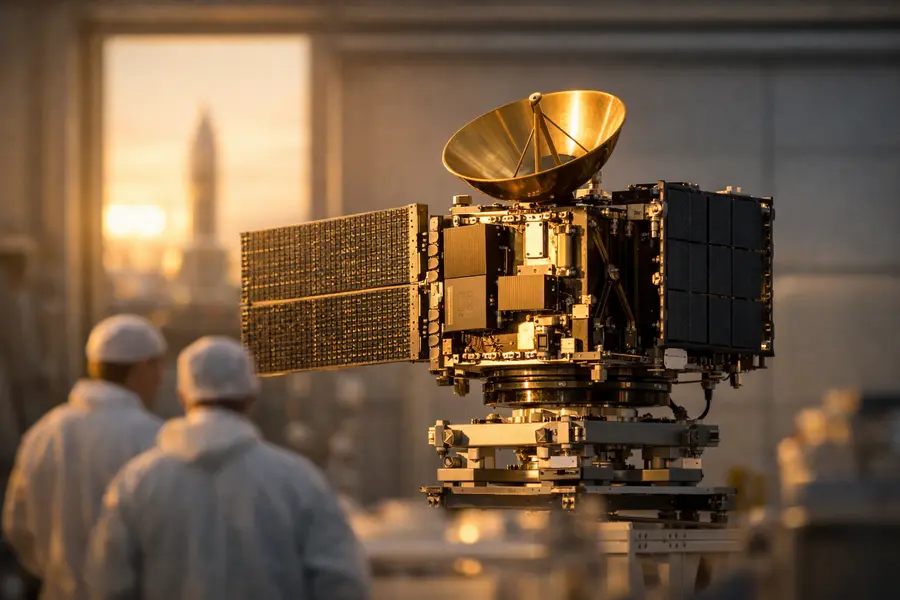
Munich's Project-S exits stealth with a multi-million-euro seed led by Uni.Fund II to deploy space-based radar and AI targeting sub-centimeter LEO debris.
- Project-S raised an undisclosed multi-million-euro seed led by Uni.Fund II, supplemented by ESA and German public grant co-funding.
- The startup targets debris fragments below one centimeter - a size class holding an estimated 130 million objects that current commercial radar cannot track.
- A first in-orbit radar demonstration is scheduled for a SpaceX Transporter rideshare in October 2026.
Lead
Munich-based orbital safety startup Project-S exited stealth on September 2, 2026, announcing a multi-million-euro seed round to build space-based radar payloads and AI software for detecting sub-centimeter debris in low Earth orbit. The round was led by Uni.Fund II, the €50-million European fund focused on university spinoffs and early-stage technology companies. Non-dilutive grants from German federal innovation programs, Bavarian state initiatives, and ESA BIC Bavaria - where Project-S incubated during its stealth phase - supplemented the equity raise. The exact amount and company valuation were not disclosed.
What Does Project-S Actually Build?
The product is a CubeSat-mounted active microwave radar payload combined with a ground-side AI processing layer. Onboard radar generates returns from debris fragments smaller than one centimeter in diameter. The ground layer runs machine learning algorithms against those returns to produce real-time orbital trajectory models, automated conjunction risk assessments, and ephemeris data that satellite operators can feed directly into flight operations centers. The design eliminates the manual analysis step that currently delays the gap between a detected threat and a decision to maneuver a spacecraft.
LeoLabs, the leading commercial space situational awareness provider, tracks objects down to roughly two centimeters using ground-based phased-array radar. Below one centimeter, no commercial catalog currently exists. That blind spot contains an estimated 130 million fragments - each carrying sufficient kinetic energy at orbital velocity to disable an operational satellite.
Why Can't Existing Radar Close This Gap?
Ground-based systems face a physics constraint. At LEO altitudes between roughly 200 and 2,000 kilometers, angular resolution limits the minimum detectable object size for radars operating from Earth's surface. Moving the radar into orbit and closer to the debris population changes the geometry entirely, enabling finer resolution at shorter range. The trade-off is deployment cost, power budget on a small satellite, and the challenge of processing radar returns in or near real time with onboard compute. Project-S is betting its architecture solves that trade-off at commercial scale.
The timing is not arbitrary. Megaconstellation growth has compressed LEO corridors significantly, with operators like SpaceX Starlink and Amazon Kuiper deploying thousands of spacecraft into altitudes that overlap with legacy debris populations. Operators currently fly their assets through probability envelopes derived from incomplete catalogs. Filling the sub-centimeter gap shifts that from probabilistic to deterministic avoidance.
Why Uni.Fund II?
Uni.Fund II's prior portfolio has leaned heavily on software-intensive sectors - fintech, health tech, productivity software. Project-S represents a hardware-intensive deep-tech bet that sits at the edge of the fund's stated thesis around European university spinoffs with differentiated technology. The ESA BIC Bavaria connection likely provided independent technical validation that reduced due diligence uncertainty. ESA incubator grants also compress the early capital requirement for equity investors, effectively de-risking the hardware development phase without diluting the cap table.
When Will the Radar Fly?
Project-S is targeting an October 2026 slot on a SpaceX Transporter rideshare mission for the first active radar demonstration in orbit. Transporter missions have become the standard validation mechanism for LEO hardware startups, offering dedicated deployment at controlled cost and predictable orbital insertion parameters. A successful demonstration would produce the flight-proven reference data needed for the next funding round and for closing pilot agreements with commercial fleet operators. No customer names or letters of intent were disclosed at announcement.
The company said it will use seed capital to expand its Munich engineering team and advance radar payloads toward formal flight qualification beyond prototype status.
Outlook
Project-S enters a market with a real, measurable gap - sub-centimeter debris tracking - and a credible plan to address it from orbit rather than the ground. The October rideshare demonstration is the pivotal event. Hardware that performs in orbit will anchor a Series A on defensible ground; hardware that underperforms will force a rethink before the grant runway runs dry. The ESA and German government co-funding signals institutional backing that also opens long-term procurement pathways. The equity round size staying undisclosed suggests the company is protecting valuation headroom for the next milestone.