Pomegra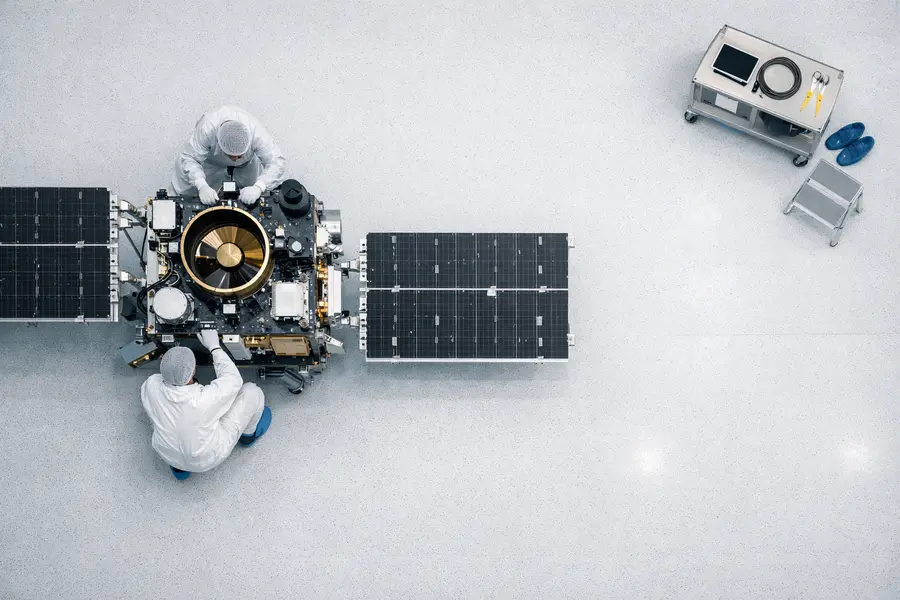
Munich startup Project-S raised a multi-million-euro seed round on Sept. 2 to deploy space-based radar and AI software tracking debris too small for ground sensors to catch.
Key Takeaways
- Project-S closed a multi-million-euro seed round led by Uni.Fund II, with additional non-dilutive support from ESA programs and Bavarian state funds.
- The company targets orbital debris down to millimeter scale - a category that escapes existing ground-based optical and radar networks.
- A first in-orbit radar demonstration is planned for an October 2026 SpaceX Transporter rideshare mission.
Lead
Project-S, a Munich-based startup developing orbital safety infrastructure, stepped out of stealth on September 2, 2026, announcing a multi-million-euro seed round. Uni.Fund II, a €50 million European fund oriented toward university spinoffs and early-stage deep tech, led the investment. Non-dilutive grants from European Space Agency incubation programs, German federal innovation agencies, and Bavarian state technology funds supplement the round. The exact figure remains undisclosed.
The company is building a vertically integrated system - space-based radar payloads, AI-driven analytics, and decision-support software - aimed at detecting and tracking debris objects that current terrestrial infrastructure misses entirely.
What Problem Does Project-S Actually Solve?
Ground-based optical telescopes and radar networks can reliably track objects above roughly 10 centimeters in low Earth orbit. Below that threshold, an estimated tens of millions of fragments orbit Earth at velocities above 7 kilometers per second. Each one carries enough kinetic energy to disable a satellite. Project-S claims its sensors can track objects down to the millimeter scale.
The business case is not hypothetical. The LEO satellite population has grown sharply since 2020, driven by broadband constellations and commercial remote sensing. Conjunction alerts - formal warnings that two objects may collide - now run in the thousands per day across the industry. Operators respond with propellant-burning avoidance maneuvers, some of them unnecessary because the underlying orbit data is too coarse. Better tracking data has a direct operational cost consequence.
The Technology
The core product is a space-based radar payload small enough for smallsat hosting. Traditional ground radar stations face a fundamental limitation: they look up through the atmosphere at a fixed geometry. A sensor already in orbit can observe the debris environment from alongside it, improving angular resolution and enabling persistent coverage of specific orbital shells.
Project-S pairs the sensor hardware with an automated ephemeris pipeline - software that ingests radar returns, refines orbital state vectors, and generates conjunction risk assessments with tighter uncertainty bounds than existing public catalogs. The output feeds into a command-and-control interface that recommends collision-avoidance maneuver parameters directly to satellite operators.
Why Is ESA Backing a Private Competitor to Its Own SST Programs?
ESA has invested in its own Space Surveillance and Tracking programs for years, most visibly through the EU SST consortium now rebranded as EUSST. Backing a private startup in the same domain signals that ESA views commercial actors as complementary rather than substitutes - a posture consistent with how it has approached launch (via ventures like Isar Aerospace and Rocket Factory Augsburg) and in-orbit services.
Uni.Fund II's involvement adds a second signal. The fund focuses specifically on university spinouts, and Munich's technical university ecosystem - TU Munich and the Ludwig Maximilian University - has produced several orbital mechanics and radar engineering groups. The implication is that Project-S has a direct academic lineage, though the company has not named its institutional origins publicly.
The combination of dilutive VC funding and non-dilutive public grants is increasingly standard for European space hardware startups. It lowers the per-dilution cost of capital during the pre-revenue hardware phase, which is typically where development risk is highest and commercial contracts are hardest to close.
The October Test
An in-orbit demonstration is scheduled for October 2026 on a SpaceX Transporter rideshare mission. The payload is expected to validate the radar sensor's tracking performance in LEO. Results will matter: the gap between claimed millimeter-scale detection and demonstrated real-world performance is where most space hardware startups encounter friction.
If the demonstration proceeds on schedule, Project-S would enter 2027 with flight heritage - a prerequisite that anchors commercial discussions with satellite operators who will not sign data contracts on pre-flight specifications alone.
Outlook
Project-S is entering a market that has clear structural demand and an established but incomplete public infrastructure backstop. The seed round buys the company its first flight test and a year of commercial development. The critical question is not whether the debris tracking problem is real - it is - but whether space-based radar at the claimed resolution scale can deliver tracking data at a cost structure that satellite operators will pay for as a subscription rather than build themselves. October will provide the first technical data point.