Pomegra
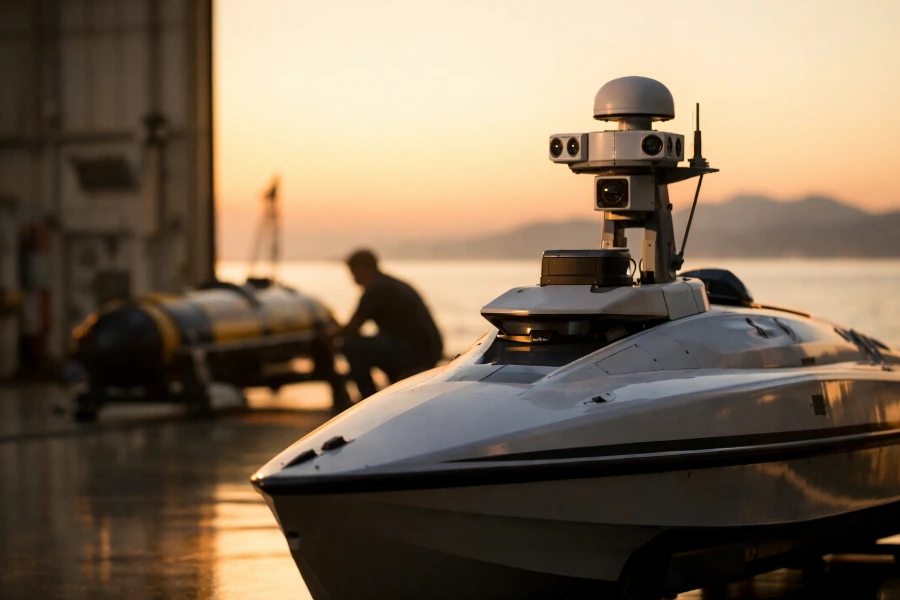
Odin Dynamics emerged from stealth with $17M led by Freestyle VC to build long-endurance autonomous subsea vehicles for the US Navy and defense buyers.
Key Takeaways
- Odin Dynamics disclosed $17M in total funding on November 18, 2026, including a $13.75M seed round led by Freestyle VC.
- BlueYard Capital and Sierra Ventures also invested; valuation was not disclosed.
- The company reports more than $20M in contracts, including a $14.56M Army prototype agreement for Navy use.
Lead
Odin Dynamics, a maritime autonomy startup, came out of stealth on November 18, 2026 with $17M in total funding. The sum combines a $13.75M seed round with a previously unannounced pre-seed investment, which implies roughly $3.25M in earlier capital. Freestyle VC led the seed round, with BlueYard Capital and Sierra Ventures participating. The company did not disclose a valuation.
The company is building autonomous underwater vehicles, with a surface vessel in the early stages of development. Co-founder and CEO Amir Hasan Khan previously worked on battery and powertrain development at Tesla and on electric boats at Arc.
What Does Odin Dynamics Build?
Odin builds autonomous underwater vehicles under the Dolphin name, designed in-house from hull to autonomy software. The company says both variants can run fully autonomously for more than three days.
Dolphin S is the smaller model. It measures 12.75 inches in diameter and 10 to 16 feet in length, with a payload of about 50 pounds. The company puts it at Technology Readiness Level 8, a stage at which a system is complete and qualified. Delivery to the Navy is scheduled for early 2027.
Dolphin M is larger: 21 inches in diameter, 20 feet long, with a 650-pound payload. Odin positions it as a replacement for the Mark 48 torpedo. That is a bold claim for a company in its first year, and it will depend on testing the Navy has not yet publicly described.
Odin has also spun out its custom battery and power systems as a separate product line. Battery endurance is the constraint that defines long-range unmanned undersea vehicles, so owning that layer is a deliberate choice.
How Much Business Does Odin Already Have?
Odin says it has gathered more than $20M in contracts within its first year of operation. The largest known piece is a $14.56M firm-fixed-price prototype Other Transaction Agreement from the Army Contracting Command, announced just over three months before the stealth exit. The Navy is the primary end user.
That ratio matters. The startup holds more contract value than the seed round it raised, which is unusual for a company at this stage. Prototype agreements are not production programs, however, and a fixed-price structure places cost overruns on the vendor. The seed money has to carry delivery risk as well as growth.
Why Are Investors Backing Maritime Autonomy Now?
Investors are backing maritime autonomy because defense buyers have moved from studying uncrewed vessels to paying for prototypes, and Odin already holds one. Funding for undersea and surface autonomy has followed that shift, with venture firms that once avoided hardware-heavy defense work now writing seed checks into it.
The investor mix is telling. Freestyle VC and Sierra Ventures are established early-stage firms, and BlueYard Capital is a European fund. The company is incorporating in the UK while basing operations in the US, a structure that may ease access to allied markets. Odin did not describe how it intends to use the funds.
What Are the Risks?
The main risk is the gap between a prototype award and a production contract. Undersea vehicles must prove reliability at depth, over days, without a human in the loop. Large incumbents and well-funded defense-tech rivals already compete for the same Navy budgets, and the Mark 48 replacement claim places Odin against one of the Navy's most entrenched weapons.
The surface vessel, which the company describes as early-stage, adds a second development track before the first has shipped. A seed-stage team running two vehicle classes plus a battery business is stretching a $17M balance sheet, even with contract revenue behind it.
Outlook
Odin Dynamics enters the market with $17M, a $14.56M Army prototype agreement, and a Dolphin S delivery to the Navy due in early 2027. That delivery is the near-term test: a successful handover would validate the TRL 8 claim and strengthen the case for a larger Series A. A slip would expose the thin margin of a fixed-price contract. The Dolphin M and the surface vessel remain unproven, and the company has yet to put a valuation on the round.