Pomegra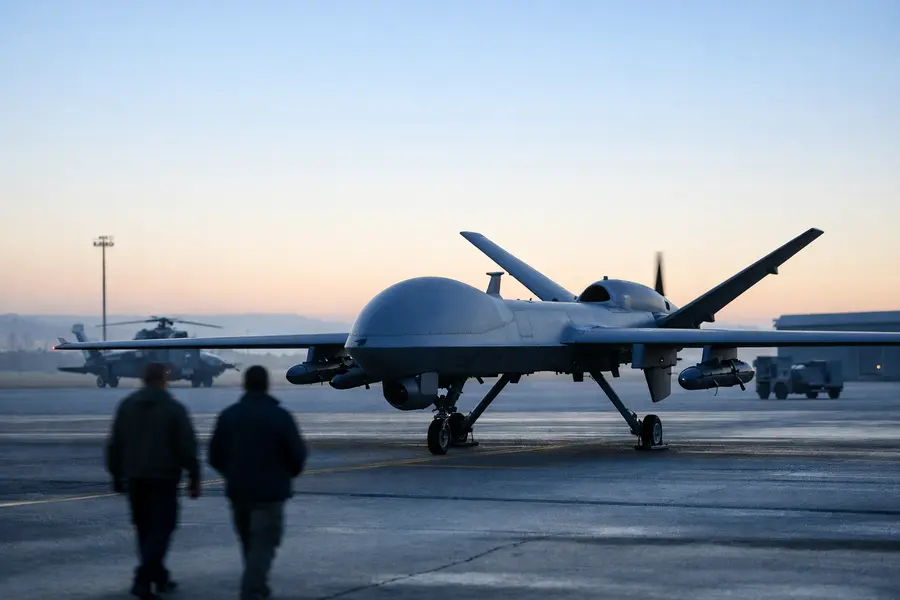
The defense drone maker's valuation nearly tripled in nine months as Sequoia and a new strategic fund co-lead the round to fund a push toward one million drones a year.
Key Takeaways
- Neros Technologies closed a $250 million Series C on August 11, 2026, at a $2.5 billion post-money valuation.
- The round was co-led by Sequoia Capital and the American Strategic Technology Fund, with Valor Equity Partners, Allen & Company, Thiel Capital, Spark Capital and Interlagos also participating.
- Valuation roughly tripled from the $839.5 million mark set in Neros's $75 million Series B just nine months earlier.
Lead
Neros Technologies, a Torrance, California-based maker of first-person-view and interceptor drones, raised $250 million in a Series C round announced August 11, 2026, at a $2.5 billion post-money valuation. Sequoia Capital and the American Strategic Technology Fund co-led the round, with Interlagos, Valor Equity Partners, Allen & Company, Thiel Capital and Spark Capital also writing checks. The company plans to use the capital to expand its Torrance production line, vertically integrate component manufacturing, and push toward a stated goal of producing one million drones annually by 2028.
What Does Neros Actually Build?
Neros makes small, low-cost unmanned aircraft designed for both strike and defense missions, not the large, exquisite systems associated with legacy defense primes. Its flagship line, Archer, ships in 5-, 8- and 10-inch FPV variants priced between $2,000 and $6,000, with an autonomy-enabled Archer AI version adding terminal guidance and GPS-denied position hold for contested electronic-warfare environments. Bandit, a counter-UAS interceptor capable of 233 mph, is built to knock down Class 2 and Class 3 drone threats, including Shahed-style loitering munitions. A ruggedized handset called Marksman rounds out the product line.
The company says it is the first American drone manufacturer to earn Blue UAS list designation while sourcing chips that have never touched Chinese supply chains, though founder and CEO Soren Monroe-Anderson has acknowledged that precursor chemicals and raw materials still carry deeper Chinese dependencies that no American board shop has fully escaped.
Why Did the Valuation Triple in Nine Months?
The jump from $839.5 million to $2.5 billion reflects execution more than narrative. Neros was founded in 2023 by Monroe-Anderson and Olaf Hichwa, both former professional FPV drone racers, and has grown from under 100 employees to more than 250 during 2026 alone. Production has scaled to roughly 1,250 drones a week, with a target of 100,000-plus units by year-end, on a path toward the million-a-year figure by 2028.
Revenue told a modest story as recently as 2025, when Neros generated $6.3 million. What changed the calculus for investors was a $500 million Army indefinite-delivery, indefinite-quantity contract for hundreds of thousands of drones over five years, plus a track record in Ukraine, where the company maintains a permanent office and says roughly half of the drones it has built have been deployed for combat or stockpile use. Ukraine is projected to consume 7 million FPV drones this year, and drones now account for more than 70% of battlefield casualties there, a demand signal investors are pricing directly into defense-tech valuations.
Strategic Context
The round fits a broader pattern of venture capital chasing defense manufacturing at valuations that would have been unusual for hardware startups five years ago. Sequoia Capital, which also led the Series B, is doubling down rather than diversifying, a signal that the firm views drone production capacity - not just software - as the scarce asset. The American Strategic Technology Fund's presence as co-lead points to a specific bet on domestic, China-free supply chains rather than generalized defense-tech enthusiasm.
Neros says it was the top performer at the Department of War's Drone Dominance Gauntlet 1 competition and the only entrant to fully deliver against initial contract orders, while unnamed competitors were still completing fulfillment months later. That claim, unverified independently, is central to the company's pitch that manufacturing speed - each Archer unit takes about 45 minutes to assemble, with a completed drone rolling off the line roughly every two minutes - is the differentiator in a category crowded with venture-backed entrants.
What Comes Next for Neros?
The immediate test is whether Neros can convert its Series C capital into delivered hardware at the pace it promises. Both Archer AI and Bandit are slated for battlefield deployment by the end of 2026, and the company has flagged a "Block 3" hardware redesign alongside international expansion with allied nations as near-term priorities. Scaling from roughly 1,250 units a week to the 100,000-a-year mark implied by year-end targets requires sustained yield improvement, not just headcount growth.
Longer term, the one-million-drone annual target by 2028 would place Neros among the highest-volume military drone producers in the world, a scale that still depends on Pentagon procurement cycles and continued conflict-driven demand from Ukraine and other partners. A pullback in either could compress the growth assumptions baked into the $2.5 billion price tag.
Outlook
Neros's Series C confirms that defense-drone manufacturers with demonstrated production volume, not just prototypes, are commanding premium valuations from mainstream venture investors. The $2.5 billion mark rests on a $500 million Army contract, real Ukraine deployment data and a stated Blue UAS supply chain, giving it more grounding than pure narrative. Whether that valuation holds depends on Neros hitting its own production targets over the next 18 months rather than simply raising the next round.