Pomegra
Myriota raised A$60M (US$40M) in the first close of its Series C, led by Main Sequence, Hostplus and the NRFC, to expand satellite IoT for remote assets.
Key Takeaways
- Myriota closed A$60M (US$40M) of its Series C on 24 November 2026. The full round is expected to close in early 2027.
- Main Sequence Ventures, Hostplus and the NRFC led the round. Funds SA joined as a new investor.
- Total funding now exceeds A$160M. The company has not disclosed a valuation.
Lead
Adelaide-based Myriota announced on 24 November 2026 that it has closed A$60M (about US$40M) in the first tranche of its Series C. The company says it raised the money in 100 days. Founded in 2015, it builds low-power satellite connectivity for devices such as tank sensors, asset trackers and environmental monitors in places where cellular coverage does not reach. The first close brings total funding to more than A$160M (about US$107.5M).
What Did Myriota Raise, and Who Backed It?
The tranche is A$60M, led by three existing investors: Main Sequence Ventures, Hostplus and the National Reconstruction Fund Corporation (NRFC). Funds SA is the only new name on the list.
The NRFC put A$20M into this tranche. That lifts its total commitment to Myriota to A$45M, after it put A$25M into a A$50M Series B-2 in December 2024, its first space-sector deal. Main Sequence co-led that round. Taken together, the insiders did most of the work here, which is a common pattern in the first close of a larger round. The remaining capital is due to come from the second close.
What Does Myriota Actually Sell?
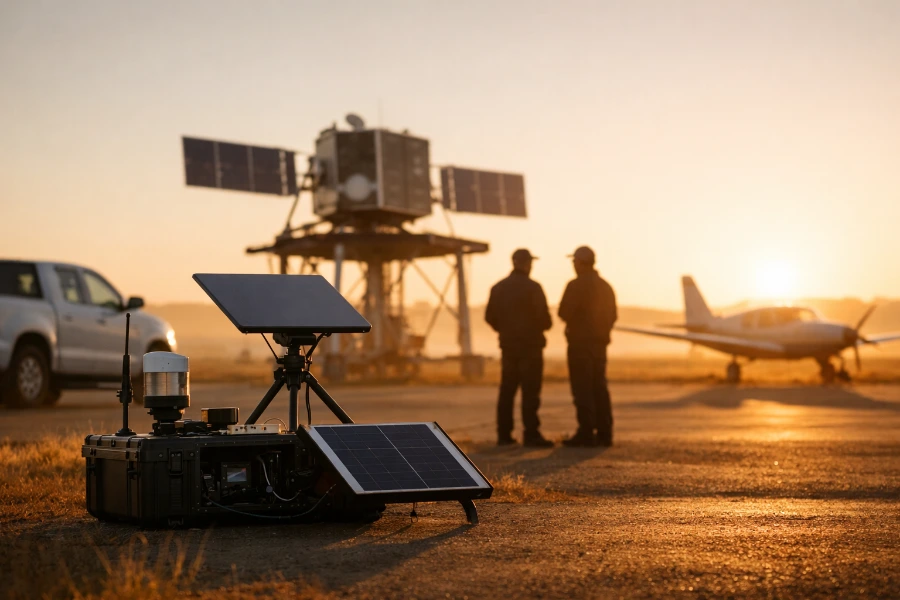
Myriota sells connectivity and hardware that let small, battery-powered devices send short messages over its satellites. Customers include operators in agriculture, utilities, logistics, mining, environmental monitoring and defence. Typical jobs are tracking mining equipment and trailers, watching fuel tanks, checking livestock water supplies and monitoring off-grid solar systems.
In the past 12 months the company launched two products. HyperPulse is a global 5G non-terrestrial network service. AssetHawk is a rugged, long-life asset tracker. Myriota launched 16 satellites in 2026 and has further launches booked for 2027 and 2028. It says it delivers service directly in 57 markets and has teams in 19 locations. It holds more than 170 patents.
The industrial fuels vertical is growing across North America and Latin America, according to the company.
Why Does the Missing Valuation Matter?
The valuation matters because it is the cleanest test of whether investors are paying up for growth, and Myriota has not published one. The company has also not disclosed revenue, customer counts or the size of the final round. Third-party estimates of the company's value vary widely and cannot be traced to a stated figure, so none is treated as reliable here.
What the numbers do show is a funding pace. Myriota took A$50M in December 2024 and A$60M less than two years later. Satellite constellations consume capital through launches and replacements, so a company on a multi-year launch schedule has to keep raising. Insider-led rounds with a government-backed fund in the lead suggest conviction among existing holders. They do not by themselves show how a new outside investor would price the business.
How Does the Round Fit the Satellite IoT Market?
The round fits a market where direct-to-device connectivity is drawing more money and more competitors. Myriota's pitch rests on ultra-low-power operation, which lets a sensor run for years on a small battery. That matters for assets spread across wide, empty areas, where servicing a device costs more than the device.
The NRFC's involvement adds a policy angle. The fund is a state-backed vehicle, and its repeated commitment points to Canberra's interest in sovereign space and industrial technology. Its CEO, David Gall, described the company's service as providing field-based intelligence for sectors operating in remote areas. Myriota's CEO, Ben Cade, called the round a sign of investor confidence and said the company is at the start of a shift in industrial IoT.
What Comes Next for Myriota?
The next milestone is the second close, expected in early 2027, when the final round size and any new investors become clear. The company says the money will go toward customer adoption in new industrial verticals, international expansion and next-generation satellites.
The test for Myriota is converting its 57-market reach into recurring revenue at a scale that justifies continued launches. Without disclosed revenue, that conversion is hard to judge from outside.
Outlook
Myriota has A$60M in hand, a stated 2027 close for the rest of the Series C, and launches booked through 2028. Insider backing and the NRFC's growing stake lend the round credibility. A valuation, revenue figures and the identity of any new lead investor would show how far that confidence extends beyond existing holders.