Pomegra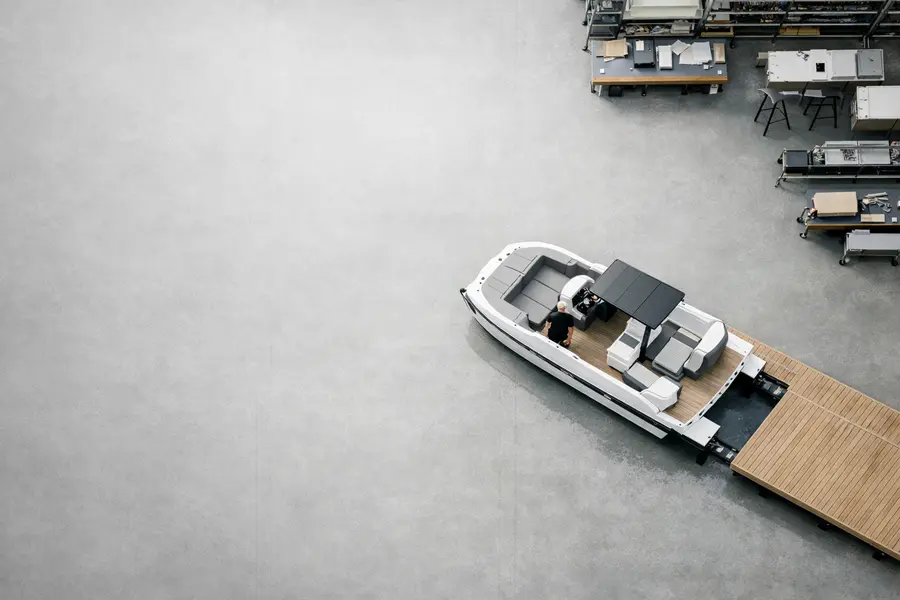
MIRAVA raises €4.2 million in angel funding to shift its modular smart boat after three years of R&D into small-batch production, debuting at Cannes Yachting Festival in September 2026.
- MIRAVA secured €4.2M ($5M) in angel funding after three years developing a 7.9-metre modular recreational boat with autonomous navigation
- The vessel's stern detaches to operate as an independent tender - a feature uncommon at this size and price class
- European debut is set for Cannes Yachting Festival 2026, with boot Düsseldorf to follow in January 2027
Lead
MIRAVA, a UK-based marine technology startup, closed a €4.2 million angel round in August 2026 and will use the capital to begin small-batch production of its first boat following three years of product development. The company makes its European public debut at the Cannes Yachting Festival this month, showing both electric and petrol variants of its 7.9-metre modular vessel. Lead investor identity and company valuation are undisclosed.
What Does MIRAVA Actually Build?
The product is a 7.9-metre day boat built around two ideas that rarely appear together in this segment: software-driven autonomy and physical reconfigurability. The stern section transforms to accommodate watersports, fishing, lounging or entertaining - and can be detached entirely to operate as an independent tender. That last feature sets the design apart from the standard open-platform cruiser in a way that a brochure description undersells.
The navigation automation goes well beyond a chart plotter. The system handles autonomous docking, departure and arrival, dynamic positioning and an intelligent following mode in which the boat tracks a swimmer using a proprietary wearable band. The underlying technology reportedly draws on more than 500,000 nautical miles of accumulated operational data and is deployed across 1,500-plus vessels. Those numbers suggest the platform predates the MIRAVA brand - a meaningful distinction, since it implies the core technology is proven rather than prototype.
Propulsion comes in two versions. The electric model carries a 100 kWh battery, delivers up to 150 hp and reaches 20 knots. The petrol variant produces 250 hp and 30 knots from a 380-litre tank. Both seat eight people in a beam of 2.44 metres.
Design was developed alongside Arman Fissette - whose background spans Feadship, Oceanco and Sinot Yacht Design - and Emanuele Bomboi, former senior design director at FCA Group and Maggiora-Viotti. That pedigree is credible without being decisive; well-designed products routinely stumble at the pricing and distribution stage.
Why Angel Capital at €4.2M?
Angel capital at this size lets founders fund tooling and initial production runs without surrendering the board control a Series A typically demands. The tradeoff is constrained runway for a hardware business where tooling, certification and delivery logistics compound costs quickly.
The sequencing - three years of R&D, then an angel close, then a Cannes debut - is deliberate. The Cannes Yachting Festival attracts qualified buyers rather than trade browsers, and showing a production-ready vessel there is a materially different proposition than a concept. MIRAVA has positioned this as a working product entering deliveries, not a prototype seeking more development money. Whether that framing holds will be tested publicly at the show.
What Does the Recreational Boat Market Look Like Now?
The mid-size recreational powerboat segment has been resilient relative to other discretionary categories. Post-pandemic demand for water-based leisure held up longer than most outdoor spending, though premium entry-level buyers are becoming more selective as financing costs stay elevated.
The smart and electric boat subsegment is fragmented and has seen several well-funded competitors stumble at the production scaling stage after strong concept reception. MIRAVA's modular approach - one hull, many configurations - addresses a genuine buyer complaint: that most boats are optimised for one activity and mediocre at others. The autonomous docking feature targets a separate pain point, specifically the anxiety that keeps first-time and infrequent buyers off the water.
Pricing remains undisclosed, which makes it impossible to assess competitive positioning against Axopar, Saxdor or any number of Scandinavian day-boat builders who occupy the aspirational mid-market. That gap will narrow at Cannes.
Outlook
MIRAVA enters small-batch production as one of the few companies that has tried to combine advanced autonomy with physical reconfigurability at the day-boat scale. The €4.2 million angel round is sized to prove the production model, not build a volume business. A follow-on raise is the logical next step if Cannes and boot Düsseldorf 2027 generate firm orders and deliver without the operational issues that typically surface at first delivery. Investors and valuation remain undisclosed; the company's implied worth will be clearer after the first production cycle closes.