Pomegra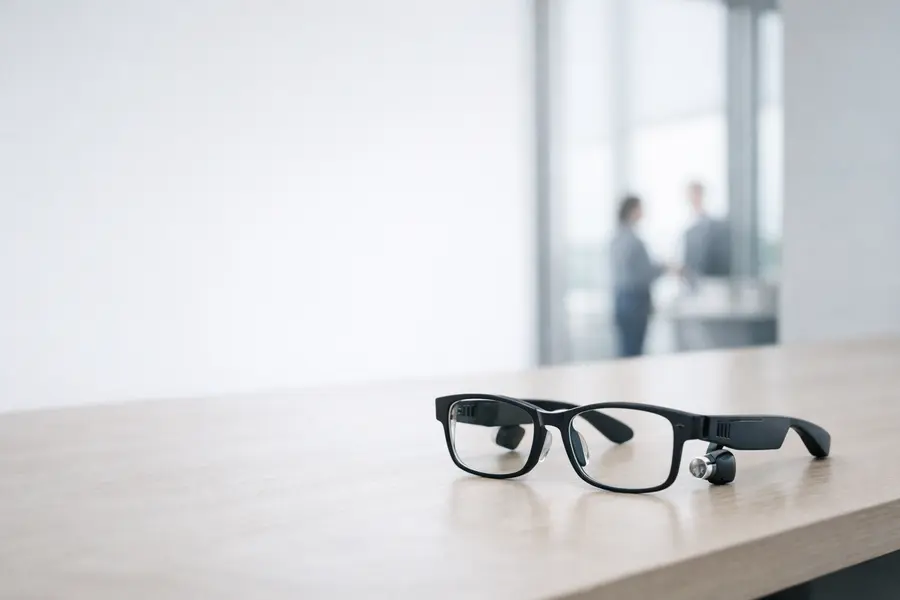
Boston startup Legato raised $12 million to embed AI hearing-aid technology into standard eyeglass frames, targeting the 80% of U.S. adults with hearing loss who never use a hearing aid.
Key Takeaways:
- Legato raised $12 million from Neotribe Ventures, Listen, and Village Global to commercialize its AI hearing glasses
- Co-founders previously built Bose Frames and led Meta Ray-Ban smart glasses development at EssilorLuxottica
- Legato Frames will launch as OTC hearing aids through select eye-care providers in fall 2026, priced well below traditional prescription devices
Lead
Legato, a Boston-based hearing technology startup founded in 2024, emerged from stealth on August 26 with $12 million in funding and a product that buries hearing-aid hardware inside standard eyeglass frames. Neotribe Ventures led the round, with Listen and Village Global participating. The company simultaneously unveiled Legato Frames, its debut product, and outlined a fall 2026 commercial launch through eye-care clinics.
What Does Legato's Product Actually Do?
Legato Frames integrate patented hearing-assistance technology into the temples - the arms - of conventional-looking eyeglasses. An onboard AI system distinguishes speech from ambient noise, amplifying voices while suppressing background sound. Noisy restaurants, where standard hearing aids notoriously struggle, are a primary target environment.
The device will be classified and sold as an over-the-counter hearing aid under the FDA's 2022 OTC pathway, which removed the requirement for audiologist involvement. Pricing has not been disclosed publicly, but the company has described it as a fraction of traditional prescription hearing aid costs, which typically run between $2,000 and $7,000 per pair. Buyers who purchase through an eye-care clinic may qualify to apply vision insurance.
Who Built This?
Co-founders Mehul Trivedi and Steve Romine each carry direct credentials for this specific product category. Trivedi led the creation of Bose Frames, the audio-enabled sunglasses line, before moving to EssilorLuxottica, where he ran smart eyewear development and contributed to the Meta Ray-Ban glasses. Romine ran Bose's hearing aids division and later served as COO of Audicus, a direct-to-consumer hearing care company.
That combination - one founder who built fashionable audio eyewear at scale, another who operated inside the hearing-care industry - is the clearest argument for why Legato might succeed where others have not. The hard part of this product is not the electronics; it is convincing consumers to wear hearing assistance without feeling like they are wearing hearing assistance.
Why Does Hearing Aid Adoption Stay So Low?
An estimated 50 million U.S. adults have some degree of hearing loss. Fewer than 20% of those with a diagnosis use a hearing aid. The gap reflects stigma, cost, and the requirement for clinical involvement that existed before the OTC pathway opened. Most people who need hearing assistance delay treatment by years, and many avoid it entirely.
OTC devices eliminated the audiologist visit, but most products to date still look like hearing aids. Legato's premise is simpler: put the technology in an object people already wear for a socially neutral reason. Someone who would not leave the house wearing a hearing aid might readily wear eyeglasses that do the same job.
Competitive Context
Smart eyewear has grown more populated. Meta's Ray-Ban glasses achieved meaningful consumer adoption by making audio and camera features secondary to design. Bose has sold audio-enabled frames for several years. Startups like Fauna Audio have pushed further into hearing wellness from within the glasses form factor. But the specific combination - FDA-classified hearing aids in off-the-shelf eyeglass frames - has no dominant player.
Traditional hearing aid manufacturers such as Sonova and Demant have explored alternative form factors but have not moved aggressively into eyewear. The OTC market that opened in 2022 remains fragmented, populated largely by in-ear devices that require users to still visibly insert something into their ear. A product requiring nothing beyond glasses a person already wears would be structurally different.
What Does the $12 Million Actually Buy?
At this funding level, Legato has enough runway to complete product development, build regulatory documentation for OTC classification, and establish its eye-care provider network ahead of a fall 2026 launch. The eye-care channel matters strategically: it creates a point-of-sale where vision insurance may apply, which could dramatically reduce the effective out-of-pocket cost for consumers.
The "Listen" fund's participation alongside Neotribe and Village Global signals backing from investors with specific interest in the audio-health intersection, a category that has attracted growing attention since the OTC hearing aid rule took effect.
Outlook
Legato's credibility rests on its founders having actually built the two products - audio eyewear and hearing aids - that this device combines. The founding team shortens the distance between concept and manufacturable product.
The real test will be audio performance in the field. Fitting meaningful hearing assistance into a thin eyeglass temple is a genuine engineering constraint, and the AI noise-processing has to work well enough to compete with dedicated devices. Clinical adoption and insurance integration will also take time to develop. If the product performs, the addressable market is enormous and largely untouched. If it does not, the form factor advantage means nothing.