Pomegra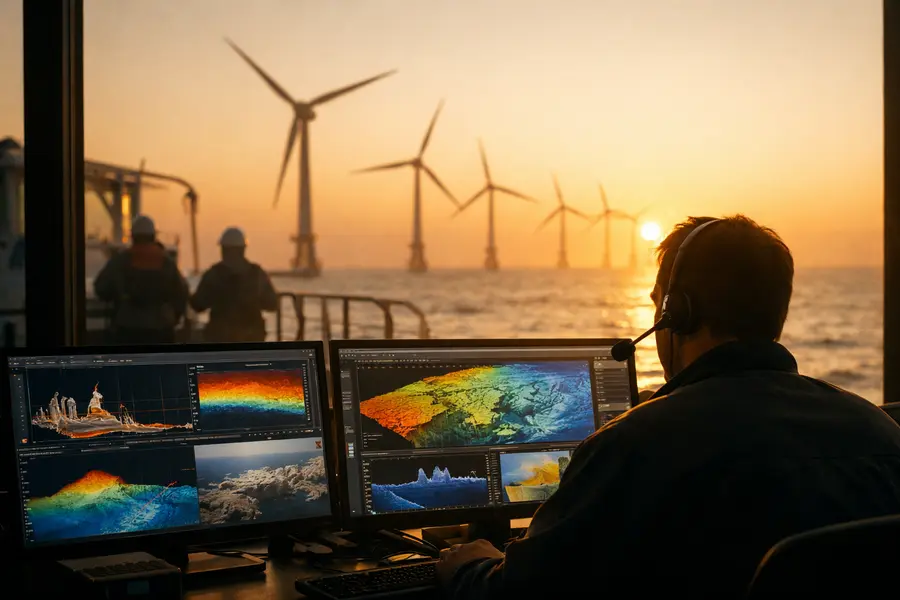
HydroSight, a Haifa startup founded in late 2025, has emerged from stealth with a $5M Seed round led by StageOne Ventures to build AI seabed maps for ports, energy firms and cable operators.
Key Takeaways
- HydroSight raised a $5M Seed round led by StageOne Ventures, with Vertex Ventures and a HiCenter Ventures-backed blue economy center joining.
- The Haifa company was founded in late 2025 and has five employees. Valuation was not disclosed.
- Its software merges marine survey data into continuously updated seabed maps that flag changes and anomalies.
Lead
HydroSight, an Israeli startup based in Haifa, came out of stealth in early September 2026 with a $5M Seed round. StageOne Ventures led the financing. Vertex Ventures and the National Center of Blue Economy, which operates under the HiCenter Ventures investment fund, also participated. The company did not disclose its valuation.
HydroSight is building an AI platform that analyzes marine survey data to track what is happening on the seabed. Its pitch targets owners of underwater infrastructure who currently rely on periodic, fragmented surveys. The company was founded in late 2025, so it has raised $5M within roughly a year of incorporation, and it has five employees.
What Does HydroSight Actually Build?
HydroSight builds a B2B software platform that integrates marine survey data from multiple sources and time periods into a single, continuously updated underwater map. Its models automatically detect changes and anomalies on the seabed, which helps customers plan and operate infrastructure below the surface.
The target customers are ports, energy companies, telecommunications cable operators and other marine infrastructure providers, in Israel and abroad. The business model is enterprise service rather than hardware. The company does not appear to operate its own survey vessels or sensors, and instead works with data that surveyors already collect.
That positioning places HydroSight alongside hydrographic survey contractors and the in-house analysis teams at large offshore operators. Both groups typically process sonar and imaging data through manual or semi-manual workflows. HydroSight is betting that automated change detection across repeated surveys is a gap worth a dedicated product.
Who Is Behind the Company?
Three co-founders run HydroSight: CEO Tomer Adler, CTO Haitham Ezzy and COO Chen Megera. The founders have hands-on maritime experience from vessel and operations work, which matters in a sector where buyers are conservative and field credibility counts.
The team is small. Five people is a seed-stage headcount, and most of the $5M is earmarked for growth: expanding the team, deepening AI and analytics capabilities, speeding up commercial activity and entering international markets.
Why Are Investors Backing Seabed Data?
Investors are backing seabed data because the assets sitting on it are large and hard to inspect. Adler has said that roughly 30% of the world's oil and gas is produced at sea, and that more than 99% of international data traffic runs through cables laid on the seabed. Those figures frame the exposure: a shifted cable route, an eroded pipeline bed or silting near a port can carry costs far beyond the price of a survey.
The round also reflects the pull of Israel's maritime and blue economy push, visible in the participation of the National Center of Blue Economy. A seed round of $5M is large for a five-person company, particularly one that had not publicly launched. It suggests investors are paying for the founding team and early commercial interest rather than a finished product line.
Skepticism is warranted on several fronts. Seabed data is expensive to collect and often held by contractors or governments, so access can limit what any analytics layer can do. Enterprise sales cycles in energy and ports run long. HydroSight has not named customers or disclosed revenue.
What Comes Next for HydroSight?
The near-term task is hiring and proving the platform on live customer data. With a runway built from a $5M round, the company can fund product development and early deployments, but it will need named reference customers to move beyond pilots.
Expansion outside Israel is the stated goal. Ports and cable operators are global buyers, and subsea infrastructure is growing as offshore energy projects and new data cable routes multiply. A credible path would involve partnerships with survey firms that already hold the raw data, which would address the access problem directly.
Outlook
HydroSight enters the market with a clear target, an experienced maritime founding team and $5M from StageOne Ventures, Vertex Ventures and HiCenter's blue economy center. Undisclosed valuation, no named customers and a five-person team mean the commercial case is still unproven. The next milestones to watch are first enterprise contracts, data partnerships and a move into international markets.