Pomegra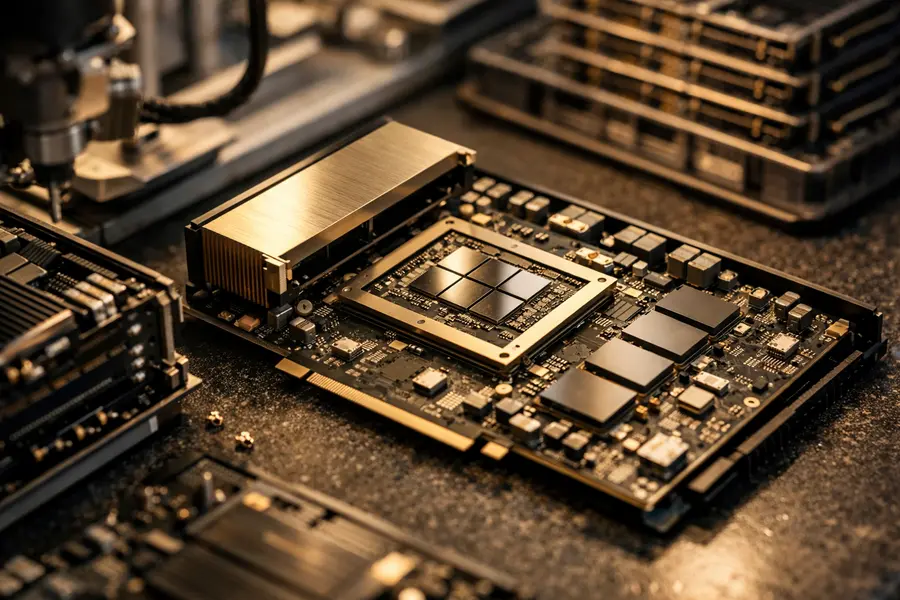
Nvidia shares hit a record $237.88 and a $5.7 trillion market value after a record $150 billion buyback, leaving the AI chipmaker near a $6 trillion first.
- Nvidia hit an intraday record of $237.88 on Friday, October 2, lifting its market value to about $5.7 trillion.
- The board added a record $150 billion to its repurchase program, taking total authorization to $235 billion through fiscal 2028.
- A further gain of roughly 5% would make Nvidia the first company worth $6 trillion.
Lead
Nvidia (NASDAQ: NVDA) reached an all-time high of $237.88 in morning trading on Friday, October 2, 2026, lifting its market value to about $5.7 trillion. The move followed a board decision to add $150 billion to the company's share repurchase authorization, the largest increase any company has approved. It was Nvidia's first record since May. The stock rose about 2.9% on the session, extending a rally of nearly 25% from its late-July low.Among ai stocks, Nvidia remains the largest by a wide margin. It is also the most valuable listed business in the world, and no company has yet closed with a market value of $6 trillion.
What Is Nvidia's $150 Billion Buyback?
Nvidia's buyback is a $150 billion increase to its repurchase authorization, announced on Monday, September 28, which brings the total available to $235 billion through fiscal 2028. Fiscal 2028 ends in January 2028. Spending the full amount over the roughly 16 months left would mean more than $40 billion of repurchases per quarter.
The increase exceeds the $110 billion authorization Apple (NASDAQ: AAPL) approved in 2024, previously the largest on record. It follows an $80 billion addition in May 2026. At $150 billion, the new tranche is larger than the market value of most S&P 500 constituents.
The scale is supported by cash generation. In the second quarter of fiscal 2027, which ended in July, Nvidia reported revenue of $96.2 billion, up 106% from a year earlier. Data center revenue reached $89.0 billion, up 117%. Gross margin was 75.0%. The company returned about $26.0 billion to shareholders through repurchases and dividends in the quarter, and about $99.0 billion remained under its previous authorization at quarter-end.
Why Did Nvidia Stock Rise to a Record?
Nvidia stock rose because the buyback arrived on top of a strong earnings and guidance backdrop, which restored momentum after a summer pullback. The shares gained more than 2% on the day of the announcement and extended gains into Friday, when they finished near the session high.
Several factors converged:
- Guidance. Nvidia forecast third-quarter revenue of $108 billion, plus or minus 2%, with gross margin of about 74.0%.
- Capital return. A repurchase program of this size reduces the share count over time and signals management's view of long-run demand.
- Product cycle. Supermicro began shipping racks built on Nvidia's Vera Rubin platform, with 72 GPUs per rack, on September 23.
- Valuation. The stock trades near 16.5 times forward earnings, the lowest multiple since early 2015 and well below its 15-year average of about 30 times.
Broader indexes also advanced on Friday. The Nasdaq Composite gained 1.19%, the S&P 500 rose 0.73% and the Dow Jones Industrial Average added 0.49%.
How Close Is Nvidia to a $6 Trillion Market Value?
Nvidia is about 5% from a $6 trillion market value, which would require a share price near $250 on its current share count. The company was the first to reach $5 trillion in October 2025, and it has now added roughly $700 billion of value since then.
The milestone is tied to the AI investment cycle. Nvidia has disclosed about $366 billion in multiyear AI infrastructure commitments, including roughly $279 billion tied to memory procurement. Those obligations secure supply of high-bandwidth memory and other components, which have constrained accelerator output, and they point to expected demand well beyond the current quarter.
Strategic Context: Capital Returns and the AI Build-Out
The buyback shows how far the economics of AI hardware have shifted. Nvidia is no longer only reinvesting in its own growth. It is returning cash at a pace comparable to the largest mature technology companies while revenue is still more than doubling.
Competitors have also rallied this year. AMD (NASDAQ: AMD) has more than doubled year to date and Intel (NASDAQ: INTC) has more than tripled. Nvidia's gain of roughly 20% to 27% in 2026 is broadly in line with the Nasdaq 100, a sign that the stock's recent record reflects a recovery as much as a breakout.
The repurchase signals confidence that demand has staying power, though the AI build-out will not run at its current pace indefinitely. Revenue growth is projected near 70% in fiscal 2028, a deceleration from the current rate of more than 100% but still large on a base of this size.
What Comes Next for Nvidia Shares?
The next catalyst is the third-quarter earnings report, expected in late November, which will test the $108 billion guidance. Repurchase execution, Vera Rubin shipment volumes and any change in hyperscaler capital spending plans will shape the path toward $6 trillion.
Risks include supply constraints in memory and advanced packaging, export restrictions on sales to China, and the possibility that customers slow data center spending. Rate expectations also matter for high-multiple technology stocks, and the Federal Reserve's next decisions will influence valuations across the sector.
Outlook
Nvidia ended the week at record levels, backed by $96.2 billion in quarterly revenue, $108 billion in guidance and the largest buyback increase on record. The company stands about 5% from a $6 trillion valuation that no business has reached. Whether it gets there will depend on earnings delivery, the pace of AI infrastructure spending and the broader market tone into the fourth quarter.
Mentioned tickers: NVDA, AAPL, AMD, INTC, SMCI