Pomegra
Harbinger, the California electric-truck maker, closed a $240M Series D on Nov. 5, 2026, to fund defence, energy storage and autonomy work beyond commercial trucks.
Key Takeaways
- Harbinger raised a $240M Series D co-led by Tiger Global, Capricorn's Technology Impact Fund and Ridgeline.
- Total funding passes $650M. The Series D follows a $160M Series C from about a year earlier.
- Valuation is undisclosed. The money funds medium-duty truck production plus defence, autonomy and power products.
Lead
Harbinger announced on Nov. 5, 2026, that it raised $240M in a Series D round. The California company makes electric and hybrid medium-duty commercial vehicles. Tiger Global, Capricorn's Technology Impact Fund and defence-focused Ridgeline co-led the round. The company has now raised more than $650M since it was founded. Harbinger did not disclose its valuation.
Who Else Invested in the Series D?
The round drew a broad syndicate of crossover and strategic backers beyond the three co-leads. Participants include Fidelity Management & Research Company, Squarepoint Capital, Xantium, Maniv, Greycroft, Australian Gulf Capital, PanaceaVC, ArcTern Ventures, Leitmotif and BuildGroup. FedEx, which led the prior round, and THOR Industries, via TechNexus, also took part. Goldman Sachs and Morgan Stanley acted as placement agents.
FedEx's presence matters because it is also a customer. In September 2026 the logistics group placed an order for 2,000 all-electric Harbinger trucks valued at more than $300M. Paul Melander, FedEx's senior vice president of safety and transportation, has joined Harbinger's board.
What Will Harbinger Spend the Money On?
Harbinger says the capital will expand manufacturing of its medium-duty vehicle platform and extend into energy storage, power generation, autonomy software and defence applications. The company has spent 2026 assembling those pieces. It began selling its batteries for stationary storage, acquired autonomous-driving company Phantom AI in February, and announced hybrid emergency vehicles in March.
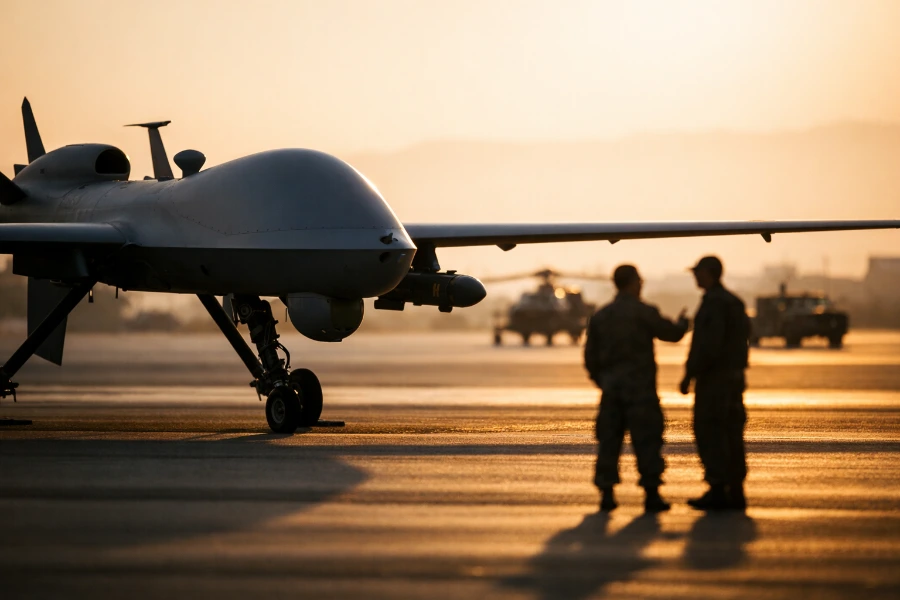
The defence track is the newest. In May, American Rheinmetall and Harbinger announced a partnership to develop robotic and unmanned ground vehicles for the US Army, combining Harbinger's autonomy-capable hybrid platform with Rheinmetall's integration and mission-systems experience. American Rheinmetall also holds a two-year Army contract under the Project Sustainment effort. It will supply four hybrid-powered autonomous vehicles for company-level resupply, with Harbinger named as a collaborator.
Why Does a Truck Maker Need a Defence Story?
A single-product truck business invites hard questions about capital intensity, and Harbinger has answered by widening the addressable customer list. Medium-duty fleet sales depend on a few large buyers such as FedEx. Army programs, grid storage and data-centre power draw on the same battery and drivetrain engineering while adding buyers with different budget cycles.
The Series D roster fits that reading. A defence specialist and a large crossover investor sit alongside the existing logistics and climate-focused backers. CEO John Harris framed electrification as "one of the most pressing bottlenecks of the AI era," a pitch aimed at power demand, not just truck fleets.
The skeptical view is that diversification can also dilute focus. Defence procurement is slow, and the Project Sustainment award covers four vehicles, a small figure next to the 2,000-truck FedEx order. Energy storage is crowded with better-capitalised battery suppliers. Harbinger will need to show revenue from these lines, not only announcements.
How Does This Compare With the Previous Round?
The Series D is 50% larger than the $160M Series C announced in November 2025, which FedEx led. The step up came within roughly a year, and the new round added a defence-specialist co-lead that the Series C lacked. Without a disclosed valuation, the size of the round is the only direct signal. An undisclosed price leaves open whether investors paid up or accepted a flatter step than the headline amount suggests.
For context, the company's earlier priced round, a Series A in May 2024, closed at a post-money valuation of roughly $364M, according to a private-markets data provider. That figure is two financings old and says little about today's pricing.
What Comes Next for Harbinger?
Near-term milestones are measurable: delivery pace on the FedEx order, integration of Phantom AI's software into the vehicle stack, and whether Army prototype work converts into a larger program of record. Power and storage sales will show whether the battery business has buyers outside the truck chassis.
Competitors in commercial EVs have struggled with cash burn, which is why the funding mix matters. Capital from a defence-oriented fund and a hedge-fund-style crossover signals that investors are underwriting a broader industrial-technology company, not a pure fleet-electrification play. That bet carries more execution risk across more fronts.
Outlook
Harbinger enters 2027 with a larger balance sheet, an anchor customer in FedEx and a defence partnership with American Rheinmetall. The valuation remains private, and defence revenue is unproven at scale. The next twelve months will show whether the expansion adds durable revenue or stretches a young manufacturer across too many product lines.