Pomegra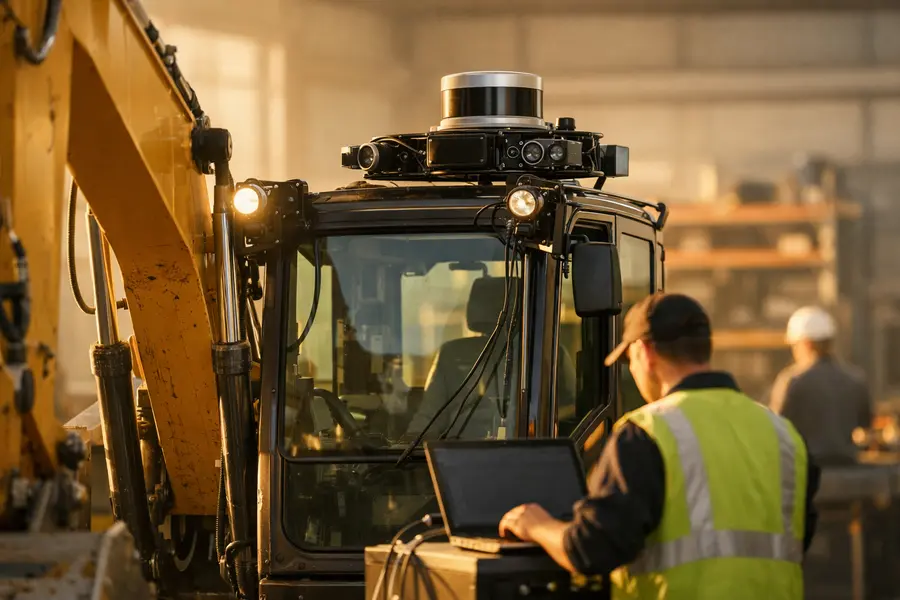
Gravis Robotics, the ETH Zurich spin-out, closed a $200M SoftBank-led Series A at a $1B valuation on August 17, becoming Europe's newest construction robotics unicorn.
- Gravis Robotics raised $200M from SoftBank in a sole-investor Series A, the largest in construction robotics history, valuing the company at $1B.
- The Gravis Rack retrofits excavators from Caterpillar, John Deere, JCB, Hitachi, and Volvo for autonomous or operator-assisted operation, delivering up to 30% productivity gains.
- Founded in 2022, Gravis raised just $23M nine months before this round; the step-up to unicorn status came without a disclosed revenue figure.
Lead
Gravis Robotics, the Zurich-based autonomous construction startup spun out of ETH Zurich in 2022, closed a $200 million Series A on August 17, 2026, with SoftBank Group as the sole investor. The round values the company at $1 billion, the first construction robotics unicorn in Europe. It follows a $23 million raise in November 2025 co-led by IQ Capital and Zacua Ventures, with strategic participation from Holcim, Pear VC, Sunna Ventures, and Armada Investment. The new capital is earmarked for scaling Gravis's retrofit autonomy platform across global heavy equipment fleets.
What Does Gravis Robotics Actually Build?
The company's product, the Gravis Rack, is a hardware-agnostic kit that combines sensors, onboard computing, and software into a single bolt-on unit for existing excavators and earthmovers. It supports more than a dozen brands, including Caterpillar, John Deere, JCB, Hitachi, and Volvo, across machines from 10-ton excavators to larger heavy equipment. Once installed, the system can operate autonomously on active job sites or in an operator-assisted mode.
Gravis claims up to 30% higher jobsite productivity versus peak manual operation. The platform has been deployed across four continents. CEO Ryan Luke Johns and CTO Dominic Jud co-founded the company with ETH Zurich robotics professor Marco Hutter, who serves on the board.
Why Is SoftBank Writing a Nine-Figure Check for a Three-Year-Old Company?
SoftBank's exclusive position in this Series A - no co-investors - concentrates both ownership and future governance influence in one backer. The Japanese conglomerate has been aggressively building a robotics portfolio outside China, and construction autonomy fits a clear pattern: target industries where physical labor scarcity is structural, not cyclical.
Construction carries a persistent workforce gap. In the United States alone, the sector has logged hundreds of thousands of unfilled positions annually for years, and that dynamic is sharper in Europe and parts of Asia. Wage inflation in developed markets pushes contractors to consider technology that reduces headcount dependency. Major infrastructure programs across the US, Europe, and the Middle East also require significant earthmoving capacity, tightening operator availability further.
Retrofitting existing fleets rather than replacing them is the critical commercial wedge here. It sidesteps equipment procurement delays that have slowed greenfield autonomous construction plays elsewhere and lowers the adoption barrier for contractors who already own machinery.
What Does This Round Imply About the Last One?
The November 2025 raise of $23 million priced Gravis well below unicorn status - the valuation was not disclosed, but a figure below $200 million would be consistent with comparable deep-tech pre-commercial rounds. A step to $1 billion in under nine months is either evidence that early deployment results significantly outperformed internal projections, or that SoftBank moved to preempt competing bids before valuations escalated further.
Holcim's presence among the earlier backers carries its own signal. One of the world's largest building materials companies placed a strategic bet before the unicorn milestone - a sign that the technology cleared some level of customer-grade scrutiny beyond controlled demonstration. That validation now compounds in value: prior investors sit on substantial paper gains, and Holcim has optionality on integrating Gravis systems into its own construction operations.
What Comes Next for the Platform?
Gravis has announced hiring plans alongside the fundraise, signaling headcount expansion in engineering and commercial roles. The company has framed its addressable market as a "trillion-dollar" sector bottlenecked by labor shortages - a framing every construction-tech startup uses, and one that is not the company's to validate.
The more immediate test is unit economics at scale. Pilots across four continents generate reference sites; they do not generate the recurring revenue contracts that sustain a $1 billion valuation. SoftBank's portfolio also includes construction-adjacent operators in Asia and the Middle East, which could serve as fast-track customer introductions and accelerate the path to commercial density.
Outlook
Gravis Robotics enters its next phase with the capital to move from proving the technology to scaling the business. The Gravis Rack's hardware-agnostic design is a genuine advantage in a fragmented equipment market, and the ETH Zurich pedigree has pulled serious institutional backing at an early stage. The $200 million runway buys time to sign the fleet-scale contracts that would justify the valuation on fundamentals rather than narrative. Whether SoftBank's concentrated bet reflects conviction or urgency will become clearer when the next revenue numbers surface.